Portable Camping Toilet
Camping Toilet – The Complete Guide to Portable Toilets for Outdoor Adventures A camping toilet is no longer a luxury for outdoor travelers. Instead, it has become a practical necessity.
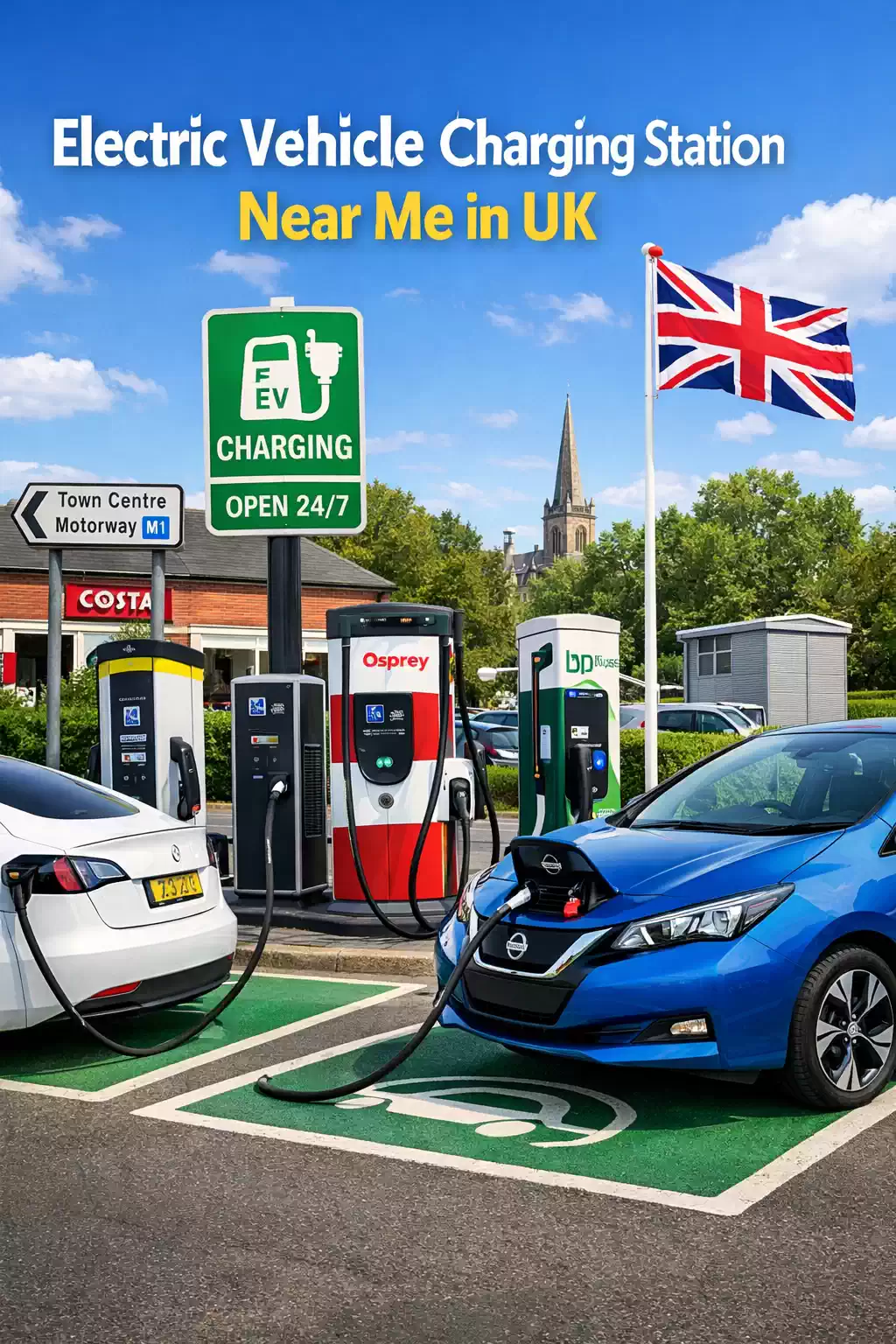
Electric vehicles are now a core part of travel across the United Kingdom. Whether you are commuting daily, planning a long motorway journey, or heading out on a camping trip in rural England, Scotland, or Wales, access to a reliable electric vehicle charging station near you is no longer optional—it is essential.
This guide is designed to help UK drivers quickly and confidently locate EV charging stations using postcodes, mobile tools, maps, and networks. It also explains how charging fits into long-distance and outdoor travel, making it especially relevant for campers, road-trippers, and adventure travellers across the UK.
Before searching for chargers, it helps to understand the basic charging categories available across the UK.

Slow chargers (3–7 kW) – Often found at campsites, hotels, and residential areas
Fast chargers (7–22 kW) – Common in public car parks and town centres
Rapid chargers (43–50 kW) – Ideal for motorway stops
Ultra-rapid chargers (100 kW+) – Best for long-distance travel
For camping trips, fast and rapid chargers are usually the most practical options, especially near A-roads and motorway services.
The easiest and most reliable method in the UK is postcode-based search. This allows you to find chargers close to your exact destination, campsite, or stopover point.
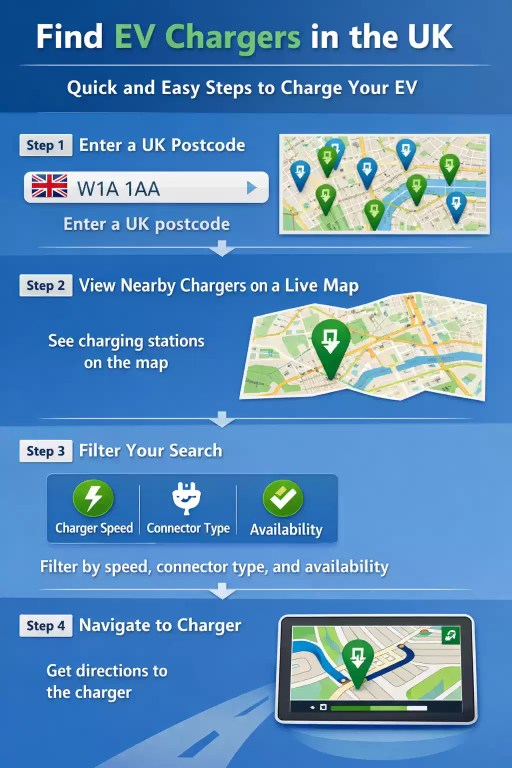
Enter a UK postcode
View nearby EV charging stations on a live map
Filter by charger speed, connector type, and availability
Navigate directly to the selected charger
This approach works whether you are in London, the Scottish Highlands, or coastal Cornwall.
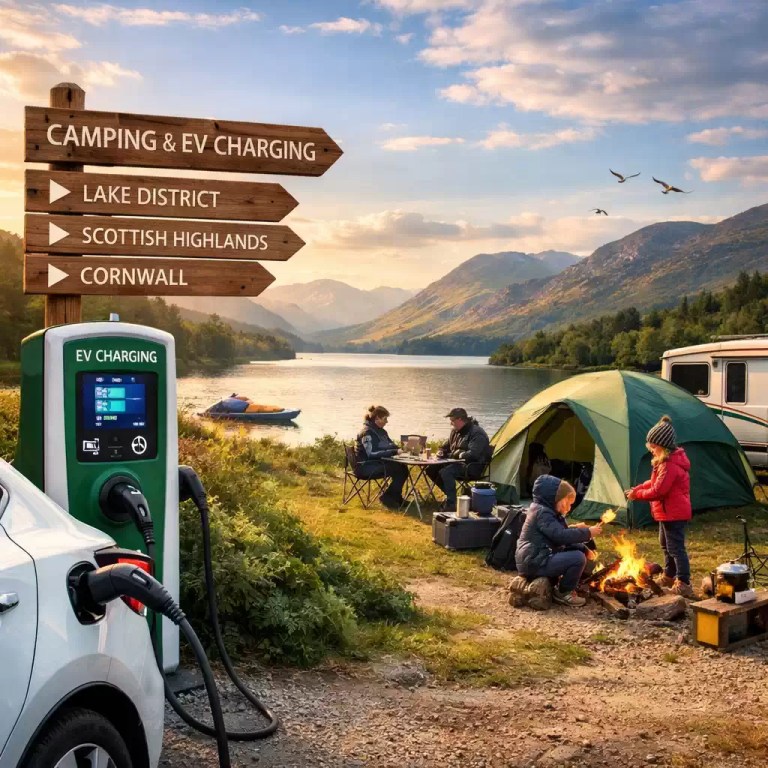
For campers, EV charging is now part of responsible trip planning. Many UK camping destinations are located away from dense urban infrastructure, making advance planning essential.
Motorway service areas en route
Town centres near national parks
Supermarkets with fast chargers
Holiday parks and caravan sites
While some modern campsites now offer EV charging points, availability is still limited. Most EV campers rely on nearby public charging stations rather than charging directly at the campsite.
Charging costs vary depending on the network and charger speed.
Slow / Fast chargers: Lower cost, longer charging time
Rapid chargers: Higher cost, much faster turnaround
Ultra-rapid chargers: Premium pricing, minimal wait time
For camping travellers, balancing cost and convenience is usually more important than absolute charging speed.
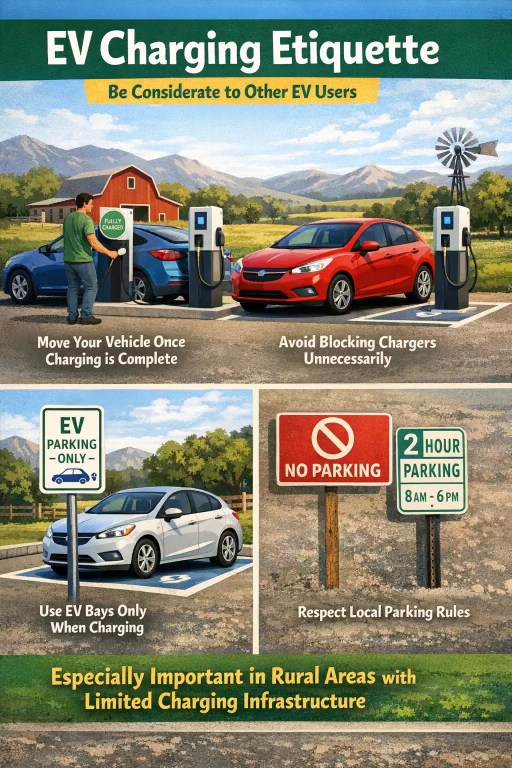
Good charging etiquette ensures smooth access for all EV users:
Move your vehicle once charging is complete
Avoid blocking chargers unnecessarily
Respect local parking rules
Use designated EV bays only when charging
These practices are especially important in rural areas with limited charging infrastructure.







Price Based Country test mode enabled for testing United Kingdom (UK). You should do tests on private browsing mode. Browse in private with Firefox, Chrome and Safari