Domain Authority in SEO UK: What It Means, How It Works & How to Improve It

A UK business owner opens an SEO report and sees several figures: organic traffic, referring domains, keyword positions, backlinks and a Domain Authority score of 24. A competitor appearing above the business in Google has a DA of 51.

The immediate reaction is understandable: Google must consider the competitor’s website more authoritative.

But that conclusion is too simplistic.

Domain Authority in SEO UK is useful as a comparative SEO metric, but Domain Authority is not an official Google metric and is not a direct Google ranking factor. The term DA is specifically associated with Moz and is intended to estimate the comparative ranking strength of a domain using its own proprietary methodology.

Google uses its own automated ranking systems and many different signals when deciding which pages are relevant and useful for a search.

This distinction matters because increasing a third-party authority score should never become the real objective of an SEO campaign.

Sustainable organic performance depends on a wider combination of technical SEO, search intent, relevant content, backlinks, website architecture, internal linking, topical depth, user experience and genuine brand authority.

The useful question is therefore not simply, “How do I increase my DA?”

It is: “How do I build a stronger website that deserves greater organic visibility?”

What Is Domain Authority in SEO?

Domain Authority is a third-party SEO metric designed to estimate how competitive a website domain may be in organic search compared with other domains.

Moz popularised the specific metric known as Domain Authority, commonly abbreviated to DA.

For someone beginning with what is SEO, SEO meaning or what does SEO stand for, SEO means Search Engine Optimisation: improving a website so search engines can discover and understand its content while relevant users can find it through organic search.

Domain Authority is one of many third-party SEO metrics used by marketers to analyse competitive strength. It should not be confused with Google’s own ranking systems.

Domain Authority infographic explaining DA as a comparative third-party SEO metric linked with website authority signals.

What Does a Domain Authority Score Represent?

DA is normally shown on a 1–100 scale.

In practical terms:

  • A higher score represents stronger comparative authority according to the provider’s model.
  • The score should be treated as relative rather than absolute.
  • Moving from a lower score to a moderate score should not be assumed to be equivalent to moving between two much higher values.
  • Comparison is most useful between genuinely competing websites.

A Sheffield accountant, for example, should not worry that a national newspaper has dramatically higher authority. The meaningful comparison is with accountancy businesses competing for the same commercial and local searches.

Is Domain Authority a Google Ranking Factor?

No. Domain Authority is not an official Google ranking factor.

Google does not use Moz’s DA number to decide where a webpage should rank. Google’s published documentation describes its own automated ranking systems as assessing many factors and signals to determine useful and relevant results.

There can nevertheless be correlation. Websites with strong editorial links, useful content and established reputations may perform strongly in organic search and also receive higher third-party authority scores.

Correlation, however, should not be confused with Google using the metric itself.

How Is Domain Authority Calculated?

The precise Domain Authority formula is proprietary, so businesses should be cautious of anyone claiming to know an exact weighting formula.

At a high level, authority scoring systems can consider signals associated with a site’s link profile, including:

  • Linking root domains
  • Backlink profile strength
  • Link diversity
  • Comparative link relationships
  • Other proprietary signals
  • Machine-learning modelling

The scoring methodology may also evolve as a tool provider updates its database or calculation model.

Why the Exact Formula Is Less Important Than the Trend

Reverse-engineering the score rarely produces a useful commercial strategy.

Instead, track DA alongside:

  • Relevant competitor authority
  • Quality referring domains
  • Organic keyword visibility
  • Search Console clicks
  • Organic traffic
  • Leads
  • Sales
  • Conversion rate

If your DA increases from 25 to 35 but qualified traffic and sales remain unchanged, the metric has not automatically created commercial value.

Domain Authority vs Domain Rating vs Authority Score

SEO platforms use their own proprietary authority metrics. They are related concepts, but they are not interchangeable.

Moz Domain Authority

Moz Domain Authority estimates comparative domain-level ranking strength and expresses it as a DA score.

Ahrefs Domain Rating

Ahrefs calls its domain-level backlink metric Domain Rating or DR. Ahrefs defines DR as the strength of a website’s backlink profile compared with other websites in its database, using a 100-point logarithmic scale.

DR therefore has a particularly strong focus on the backlink profile.

Comparison of Domain Authority, Domain Rating and Authority Score as separate third-party SEO metrics.

Semrush Authority Score

Semrush uses Authority Score. Its current methodology considers three broad components: link power, estimated organic traffic and factors intended to identify manipulation or spam within the link profile.

Therefore:

DA 40 ≠ DR 40 ≠ Authority Score 40

The same website can receive noticeably different scores from different platforms because the underlying databases and calculations are different.

Use the same tool and metric when comparing competitors or monitoring long-term changes.

What Is a Good Domain Authority Score?

There is no universal good Domain Authority score.

A useful DA benchmark depends on:

  • Industry
  • Competition
  • Website maturity
  • Business model
  • Geographic market
  • Link profile
  • Search results you are competing within

Imagine a Sheffield accountant whose website has a DA of 27. Comparing that number with the BBC, Amazon or a large international bank provides almost no actionable insight.

Instead, examine the accounting firms appearing for searches such as “small business accountant Sheffield” and related commercial terms.

Why Competitor Benchmarking Matters

Compare businesses with:

  • Similar services
  • Similar geographic markets
  • Comparable search intent
  • Similar customer audiences
  • Actual visibility within your target SERPs

That creates a realistic authority benchmark.

Do Not Chase DA for Its Own Sake

A business does not make money from its DA score.

If a campaign increases the metric but fails to strengthen organic traffic, relevant rankings, leads or sales, the strategy requires reassessment.

What Actually Builds Website Authority?

Real website authority is broader than one tool score.

A strong website usually develops through multiple connected areas:

  • Relevant backlinks
  • Expert content
  • Topical coverage
  • Brand recognition
  • Strong internal linking
  • Technical accessibility
  • Clear website architecture
  • First-hand expertise
  • Trustworthy information

Google describes its ranking systems as using many different factors, while its people-first content guidance discusses signals related to experience, expertise, authoritativeness and trustworthiness — E-E-A-T.
Website authority signals including backlinks, expert content, topical authority, technical SEO and internal links.

Backlinks Remain Important

A backlink is a link from another website to yours.

Links can help search engines discover pages and understand relationships between web content. Google has also stated that links can be useful signals when they are genuinely earned rather than manipulated.

Not every backlink has equal strategic value.

Content Builds Topical Authority

A specialist tax accountant publishing substantial guidance about corporation tax, VAT, payroll, company accounts and tax planning develops a much clearer topical footprint than a site containing five generic service pages.

Topical authority is therefore about the depth, relevance and coherence of coverage around a subject, rather than a standalone DA number.

Technical SEO Supports Authority

Strong content cannot perform efficiently if search engines struggle to crawl or index it.

A professional SEO audit or technical SEO audit may uncover blocked URLs, broken internal links, poor canonicals, duplicate pages, inefficient site architecture or indexation problems.

How Backlinks Influence Domain Authority

Backlinks are closely associated with many third-party website authority metrics because they provide measurable relationships between domains.

But backlinks SEO strategy should never become a competition to accumulate the highest raw number.

Linking Root Domains

A site receiving links from twenty genuinely relevant independent websites normally has a more diverse link profile than a site receiving hundreds of links from different pages on one domain.

This is why referring domains deserve attention alongside total backlink counts.

Link Quality

When evaluating links, consider:

  • Relevance
  • Editorial context
  • Reputation
  • Placement
  • Audience value
  • Naturalness

A link from a respected UK trade publication discussing your specialist expertise may be more useful than a link from an unrelated high-metric website.

Link Diversity

A natural authority profile can include relevant media, trade bodies, suppliers, partners, professional organisations and specialist publications.

Toxic or Manipulative Links

Avoid assuming every backlink is beneficial.

Be cautious with:

  • Link farms
  • Automated link blasts
  • Spam directories
  • Paid networks designed to manipulate rankings
  • Irrelevant bulk backlink packages

Google’s spam policies specifically prohibit link-related practices intended to manipulate search rankings, while paid links should be appropriately qualified where applicable.

This does not mean every poor-quality link automatically causes a penalty. It means businesses should not deliberately build manipulative link profiles.

How to Improve Domain Authority for a UK Website

If your objective is to improve Domain Authority, focus first on building genuine website authority. A stronger third-party score should be treated as a potential consequence of better SEO, not the campaign’s sole objective.

1. Publish High-Quality Expert Content

Create assets worth citing:

  • Comprehensive guides
  • Original research
  • Case studies
  • Industry analysis
  • Expert commentary
  • Useful resources
  • FAQs
  • Comparison content

A useful resource gives journalists, bloggers, suppliers and industry organisations a legitimate reason to reference your website.

2. Earn Relevant High-Quality Backlinks

Effective link building UK can involve:

  • Digital PR UK campaigns
  • Trade publications
  • Supplier relationships
  • Industry associations
  • Professional bodies
  • Business partnerships
  • Local organisations
  • Resource outreach
  • Expert commentary

Do not judge an opportunity purely by DA.

3. Strengthen Internal Linking

Internal links distribute context and navigation across your website.

Connect informational articles with relevant commercial pages and build logical relationships between pillar content, supporting articles, service pages and categories.

4. Fix Technical SEO Problems

Professional SEO audit services should investigate:

  • Crawl problems
  • Broken links
  • Redirect chains
  • Duplicate URLs
  • Canonical tags
  • XML sitemaps
  • Indexation
  • Mobile usability
  • Page performance

Technical improvements do not directly “add DA points”, but they help create a stronger search environment for content and commercial pages.

5. Build Topical Authority

Develop content clusters around the subjects central to your business.

An SEO consultancy, for example, might create interconnected resources covering technical SEO, keyword research, Local SEO, SEO audits, e-commerce SEO and content strategy.

How to Improve Domain Authority for a UK Website

If your objective is to improve Domain Authority, focus first on building genuine website authority. A stronger third-party score should be treated as a potential consequence of better SEO, not the campaign’s sole objective.

1. Publish High-Quality Expert Content

Create assets worth citing:

  • Comprehensive guides
  • Original research
  • Case studies
  • Industry analysis
  • Expert commentary
  • Useful resources
  • FAQs
  • Comparison content

A useful resource gives journalists, bloggers, suppliers and industry organisations a legitimate reason to reference your website.

2. Earn Relevant High-Quality Backlinks

Effective link building UK can involve:

  • Digital PR UK campaigns
  • Trade publications
  • Supplier relationships
  • Industry associations
  • Professional bodies
  • Business partnerships
  • Local organisations
  • Resource outreach
  • Expert commentary

Do not judge an opportunity purely by DA.

3. Strengthen Internal Linking

Internal links distribute context and navigation across your website.

Connect informational articles with relevant commercial pages and build logical relationships between pillar content, supporting articles, service pages and categories.

4. Fix Technical SEO Problems

Professional SEO audit services should investigate:

  • Crawl problems
  • Broken links
  • Redirect chains
  • Duplicate URLs
  • Canonical tags
  • XML sitemaps
  • Indexation
  • Mobile usability
  • Page performance

Technical improvements do not directly “add DA points”, but they help create a stronger search environment for content and commercial pages.

5. Build Topical Authority

Develop content clusters around the subjects central to your business.

An SEO consultancy, for example, might create interconnected resources covering technical SEO, keyword research, Local SEO, SEO audits, e-commerce SEO and content strategy.

6. Improve Brand Visibility

Participate genuinely in your market.

Industry commentary, digital PR, speaking opportunities, partnerships and original research can generate both brand recognition and legitimate online references.

SEO strategy for building website authority through backlinks, content, technical SEO and topical expertise.

Digital PR and Link Building for UK Businesses

Digital PR UK combines public-relations thinking with online authority building.

A UK manufacturer might contribute specialist commentary to an industry publication. A financial consultancy could publish original research. A tourism business could provide local expertise for a regional media feature.

Potential sources include:

  • UK industry publications
  • Regional newspapers
  • Trade associations
  • Professional organisations
  • Suppliers
  • Business partners
  • Universities where genuinely relevant
  • Community organisations
  • Original research campaigns

Relevance Is More Important Than Chasing DA

Do not ask only:

“What is this website’s DA?”

Also ask:

“Is this publication relevant to our industry, audience or market?”

A highly relevant specialist publication can provide brand, referral and topical value that a random “high-DA” website cannot.

Link Building Should Support Brand and Traffic

Strong backlinks can also contribute to:

  • Referral traffic
  • Brand discovery
  • Industry credibility
  • Partnership opportunities
  • Organic visibility

This makes link acquisition part of a broader business-development strategy rather than merely score manipulation.

Digital PR and Link Building for UK Businesses

Digital PR UK combines public-relations thinking with online authority building.

A UK manufacturer might contribute specialist commentary to an industry publication. A financial consultancy could publish original research. A tourism business could provide local expertise for a regional media feature.

Potential sources include:

  • UK industry publications
  • Regional newspapers
  • Trade associations
  • Professional organisations
  • Suppliers
  • Business partners
  • Universities where genuinely relevant
  • Community organisations
  • Original research campaigns

Relevance Is More Important Than Chasing DA

Do not ask only:

“What is this website’s DA?”

Also ask:

“Is this publication relevant to our industry, audience or market?”

A highly relevant specialist publication can provide brand, referral and topical value that a random “high-DA” website cannot.

Link Building Should Support Brand and Traffic

Strong backlinks can also contribute to:

  • Referral traffic
  • Brand discovery
  • Industry credibility
  • Partnership opportunities
  • Organic visibility

This makes link acquisition part of a broader business-development strategy rather than merely score manipulation.

Domain Authority and Local SEO in the UK

A local company should be particularly careful about overvaluing national authority scores.

A successful local SEO UK strategy depends on far more than DA.

Consider a Manchester plumber. A national home-improvement website may have dramatically higher third-party domain authority, but the plumber can still compete effectively for relevant local searches through a combination of:

  • Local relevance
  • Google Business Profile optimisation
  • Reviews
  • Location and service pages
  • Local citations
  • Local backlinks
  • Service relevance
  • Geographic proximity

Google describes local search visibility primarily around relevance, distance and prominence rather than any third-party DA score.
Local SEO authority signals including backlinks, reviews, business profile optimisation, citations and location relevance.

Local Authority Can Matter More Than Broad Authority

A well-optimised local business with a modest DA may outperform a stronger national domain for particular location-led searches where its page and business profile are more relevant.

This does not mean authority is irrelevant. It means local search uses a different competitive context.

Businesses investing in local SEO services UK should therefore analyse both website authority and genuine local signals.

Domain Authority for E-Commerce Websites

An e-commerce business should interpret domain-level metrics through commercial page performance.

A retailer may possess a healthy authority score while important category or product pages remain poorly optimised.

Category and Product Authority

Authority must be supported by a logical architecture that helps important pages become discoverable.

Internal Linking

Connect:

  • Categories
  • Subcategories
  • Products
  • Buying guides
  • Blog content

For example, a detailed guide to choosing winter camping equipment could naturally link into tents, sleeping bags and insulated-mat categories.

E-Commerce Link Building

Useful authority-building assets can include:

  • Product research
  • Buying guides
  • Original surveys
  • Industry commentary
  • Supplier relationships
  • Digital PR
  • Specialist resources

A strong DA has limited commercial value if category pages do not attract relevant searchers or convert them into customers.

Why Domain Authority Can Increase or Decrease

DA is a relative third-party metric, so the number can move even when a business has made no dramatic change to its website.

Possible reasons include:

  • New referring domains being discovered
  • Existing links disappearing
  • Competitors strengthening their profiles
  • Tool databases changing
  • Scoring models being updated
  • The wider comparison set changing

Ahrefs similarly notes that its DR can fluctuate as backlink profiles and comparative data change, illustrating why third-party authority metrics should be interpreted dynamically rather than as fixed grades.

Should You Worry About a Small DA Drop?

Usually, investigate the broader picture before reacting.

Compare the change with:

  • Organic traffic
  • Search visibility
  • Referring domains
  • Important keyword positions
  • Leads
  • Sales
  • Technical health

A one-point metric fluctuation accompanied by improving revenue is rarely a reason to redesign your entire SEO strategy.

Common Domain Authority Mistakes

Domain Authority becomes problematic when businesses turn an analytical metric into the objective itself.

Treating DA as a Google Ranking Score

Google does not rank websites according to Moz’s DA number.

Buying High-DA Links

A high metric alone does not prove that a link is relevant, editorially legitimate or valuable.

Comparing Unrelated Websites

Compare genuine search competitors, not the largest websites on the internet.

Chasing Quantity Over Relevance

One relevant editorial relationship may be more strategically useful than hundreds of unrelated links.

Ignoring Content Quality

Authority without useful, search-intent-aligned content is insufficient.

Ignoring Technical SEO

An unhealthy technical foundation can restrict crawling, indexing and organic performance regardless of backlink metrics.

Measuring DA Without Measuring Traffic or Conversions

A higher score that produces no improvement in relevant business outcomes is primarily a vanity achievement.

Common Domain Authority mistakes including irrelevant backlinks, incorrect comparisons and ignoring conversions.

Final Thoughts – Should You Focus on Domain Authority?

Return to the UK business owner who opened the SEO report and saw a DA of 24 while a competitor showed 51.

That number provides useful context, but it does not represent Google’s final judgement of either website.

The most productive way to use Domain Authority in SEO UK is as a comparative benchmarking and trend-analysis tool. Compare appropriate competitors, watch how authority changes over time and investigate the backlink relationships contributing to that picture.

But keep the real priorities wider.

Build strong technical foundations. Publish expert content. Develop topical depth. Earn relevant backlinks. Improve internal linking. Match genuine search intent. Strengthen the brand and measure qualified organic traffic, enquiries, conversions and revenue.

Businesses should aim to build genuine website authority rather than manipulate a third-party SEO score.

If your website’s authority, backlinks or organic visibility are underperforming, a professional SEO audit, technical SEO audit or wider SEO consultancy can help identify whether the real issue lies in the backlink profile, technical SEO, content strategy, internal architecture or competitive positioning.

How Should UK Businesses Measure SEO Authority?

Use a portfolio of SEO metrics instead of relying on a single authority number.

Monitor:

  • Domain Authority or your chosen equivalent
  • Referring domains
  • Quality backlinks
  • Organic keyword visibility
  • Google Search Console clicks
  • Organic traffic
  • Topical rankings
  • Local visibility where applicable
  • Leads
  • Sales
  • Conversion rate
  • Revenue

Moz, Ahrefs and Semrush can provide third-party competitive information, while Google Search Console and analytics platforms provide evidence about real search visibility and website performance.

SEO Authority Should Support Business Growth

A higher Domain Authority score is useful only when it supports stronger visibility, qualified traffic, leads, sales or another meaningful business objective.

A professional SEO audit UK project should therefore examine authority metrics alongside technical health, content, competitors and conversions rather than presenting DA as a standalone measure of SEO success.

Domain Authority, Topical Authority and E-E-A-T

These concepts overlap in everyday SEO discussion but mean different things.

Domain Authority

Domain Authority is a proprietary third-party comparative metric associated with Moz.

It produces a numerical score.

Topical Authority

Topical authority describes how comprehensively and convincingly a website covers a particular subject area.

It is not simply a DA calculation.

A specialist camping retailer might develop topical depth through authoritative resources covering tents, sleeping systems, campsite equipment, cooking gear, hiking and outdoor safety.

E-E-A-T

E-E-A-T refers to:

  • Experience
  • Expertise
  • Authoritativeness
  • Trustworthiness

Google explains that its automated systems consider a mixture of signals associated with these qualities, while the quality rater guidelines themselves do not directly determine rankings.

E-E-A-T should therefore not be treated as another numerical authority score.

The concepts can reinforce each other, but:

DA ≠ topical authority ≠ E-E-A-T ≠ Google ranking score

That distinction is essential for technically credible search engine optimisation UK strategy.

Final Thoughts – Should You Focus on Domain Authority?

Return to the UK business owner who opened the SEO report and saw a DA of 24 while a competitor showed 51.

That number provides useful context, but it does not represent Google’s final judgement of either website.

The most productive way to use Domain Authority in SEO UK is as a comparative benchmarking and trend-analysis tool. Compare appropriate competitors, watch how authority changes over time and investigate the backlink relationships contributing to that picture.

But keep the real priorities wider.

Build strong technical foundations. Publish expert content. Develop topical depth. Earn relevant backlinks. Improve internal linking. Match genuine search intent. Strengthen the brand and measure qualified organic traffic, enquiries, conversions and revenue.

Businesses should aim to build genuine website authority rather than manipulate a third-party SEO score.

If your website’s authority, backlinks or organic visibility are underperforming, a professional SEO audit, technical SEO audit or wider SEO consultancy can help identify whether the real issue lies in the backlink profile, technical SEO, content strategy, internal architecture or competitive positioning.

Frequently Asked Questions About Domain Authority in SEO

1. What is Domain Authority in SEO?

Domain Authority is a third-party SEO metric associated with Moz that estimates the comparative organic-search strength of a domain. It is commonly represented as a score from 1 to 100. DA is useful for benchmarking websites against relevant competitors, but it is not an official Google score and should be evaluated alongside backlinks, organic visibility, content, technical SEO and commercial performance.

2. Is Domain Authority a Google ranking factor?

No. Domain Authority is not an official Google ranking factor, and Google does not use Moz’s DA score to determine search positions. Google operates its own automated ranking systems using many different factors and signals. Some characteristics associated with higher-DA websites, such as strong links and useful content, can also support organic search performance, but Google is not ranking sites according to the DA number itself.

Google documents its own ranking systems separately from third-party SEO metrics.

3. What is a good Domain Authority score?

There is no universal good Domain Authority score. A useful benchmark depends on your industry, market, website maturity and the competing websites appearing for your target searches. A local Sheffield business should normally compare itself with relevant local and industry competitors rather than major national publishers. The commercial question is whether your website is becoming more competitive for searches that matter to your customers.

4. How can I improve my Domain Authority?

Focus on building genuine website authority rather than chasing the score directly. Publish expert content, earn relevant quality backlinks, strengthen internal linking, resolve technical SEO problems, develop topical depth and increase legitimate brand visibility. These activities can strengthen the overall website and may contribute to improvements in third-party authority metrics while also supporting more important outcomes such as organic traffic, leads and sales.

5. How long does it take to increase Domain Authority?

There is no fixed or guaranteed timeline for increasing Domain Authority. Changes depend on the existing link profile, website maturity, new referring domains, competitor activity, the speed at which third-party tools discover links and possible changes to their scoring models. Businesses should therefore monitor longer-term trends rather than expecting a specific DA increase within a predetermined number of weeks or months.

6. Are backlinks important for Domain Authority?

Yes. Backlinks and referring domains are strongly associated with domain-level authority metrics, but quantity alone should not drive strategy. Relevant editorial links from genuine websites are generally more useful to an overall SEO strategy than large numbers of unrelated links. Backlink analysis should consider relevance, quality, diversity, placement, referral potential and whether the links were acquired naturally and legitimately.

7. What is the difference between Domain Authority and Domain Rating?

Domain Authority is Moz’s proprietary comparative authority metric, while Domain Rating is Ahrefs’ proprietary metric for measuring the relative strength of a website’s backlink profile. Both use numerical scoring systems, but their calculations and databases differ. A DA of 40 and DR of 40 should therefore not be treated as equivalent. When benchmarking competitors, use the same tool and metric consistently.

Ahrefs describes DR as a 100-point comparative measure of backlink-profile strength.

8. Can a low-DA website rank higher than a high-DA website?

Yes. A lower-DA website can outrank a higher-DA domain for a particular search because rankings depend on far more than a third-party domain metric. Page relevance, search intent, content quality, local relevance, technical accessibility, links to the specific page and other signals may all affect organic visibility. DA should therefore be used as a comparative indicator rather than a prediction of every individual search result.

9. Does Domain Authority matter for Local SEO?

Domain Authority can provide useful competitive context, but Local SEO depends heavily on additional signals. Google Business Profile optimisation, service relevance, reviews, geographic proximity, location pages, citations and local backlinks can all be important. A locally relevant business with a lower DA can therefore compete effectively against a broadly stronger domain for location-specific searches.

Google describes local results primarily through relevance, distance and prominence.

10. Should I pay for high-DA backlinks?

Do not buy backlinks purely because a website advertises a high DA score. A third-party metric does not prove editorial quality, relevance or legitimacy. Evaluate the website, audience, context and reason for the link. Paid links intended to manipulate search rankings can conflict with Google’s spam policies, while legitimate sponsored placements should be appropriately qualified.

Google’s policies explicitly address manipulative link practices and the treatment of paid placements.

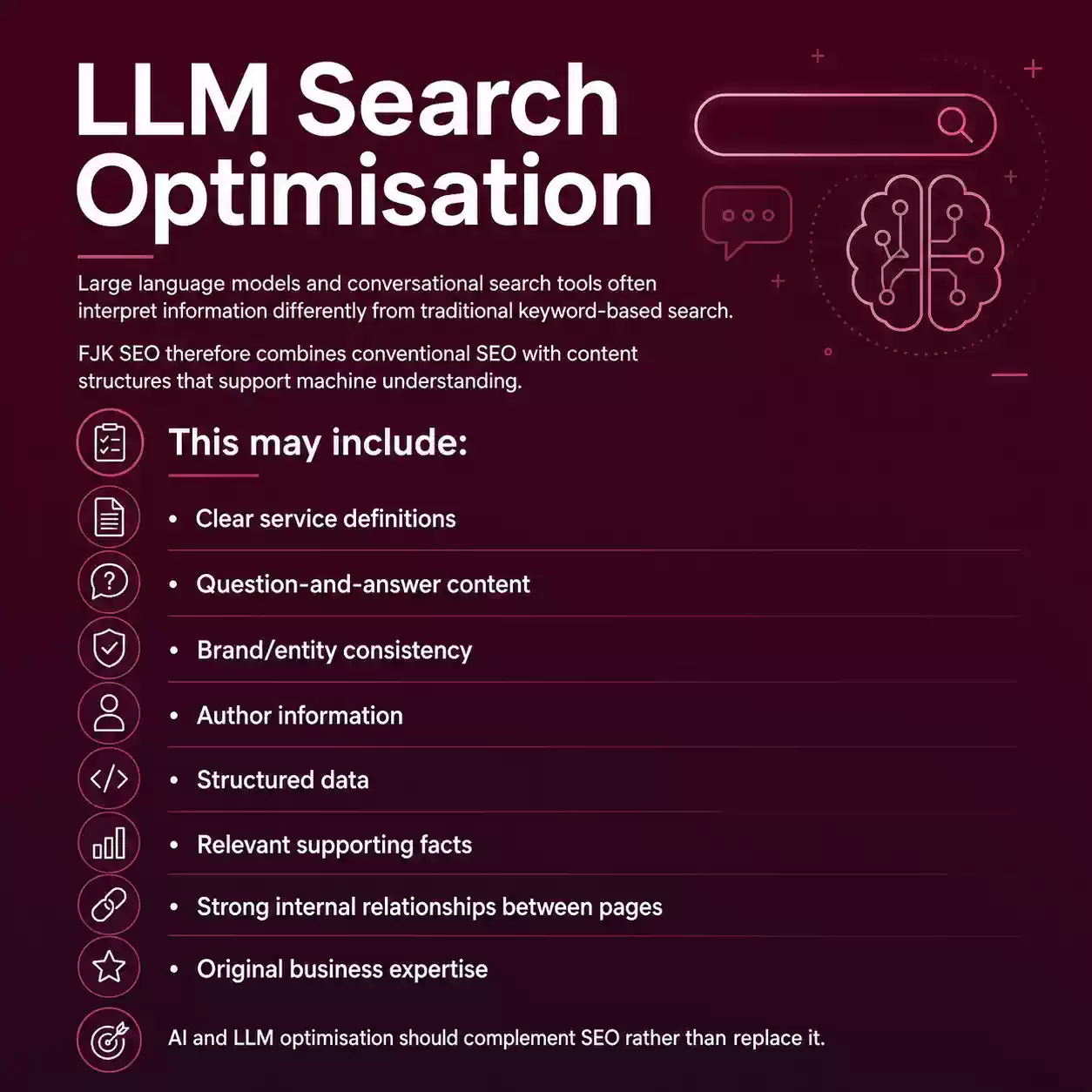
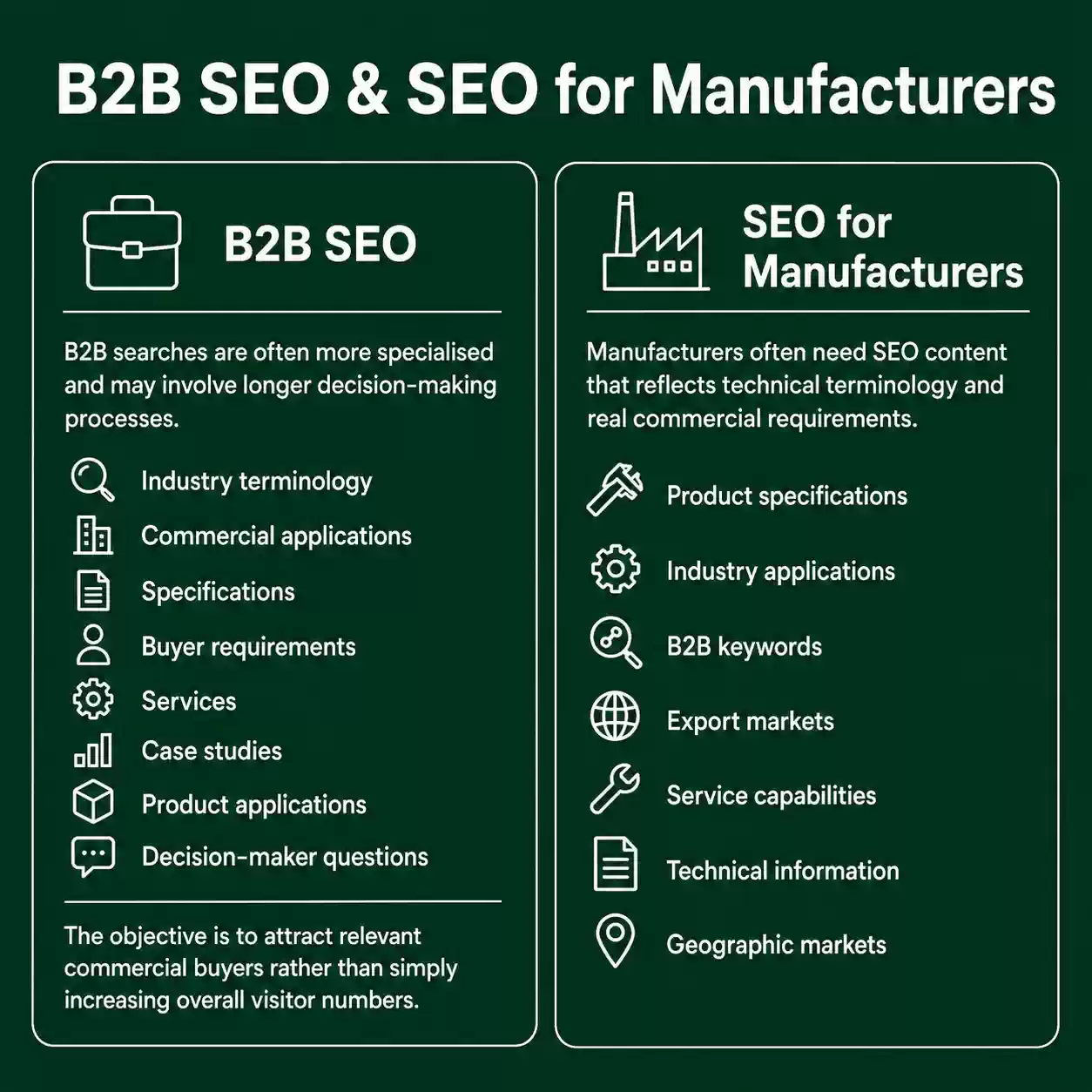
FJK SEO BANNER IMAGE -SEO UKHow FJK SEO UK Can Help

FJK SEO UK supports businesses that want organic search to become a measurable commercial channel rather than simply another marketing activity. The approach combines:

Technical SEO

Crawling, indexation, site architecture, internal linking and performance.

Keyword research, search-intent mapping and competitive analysis.

Commercial landing pages, expert-led content and topical development.

Google Business Profile optimisation, local search strategy and geographic visibility.

Building technically accessible, well-structured and genuinely useful content capable of competing across traditional and generative search experiences.

Category architecture, product optimisation, structured product information and commercial search visibility.

The goal is not simply to obtain rankings.

It is to connect rankings, visibility and content with qualified enquiries, customers and revenue.

Need a stronger organic search strategy for your UK business? Contact FJK SEO UK for an SEO audit and practical growth plan.

Share this:

Like this:

Like Loading…

Discover more from FJK SUBLI

Subscribe now to keep reading and get access to the full archive.

Continue reading