

Quick Answers for Beginners
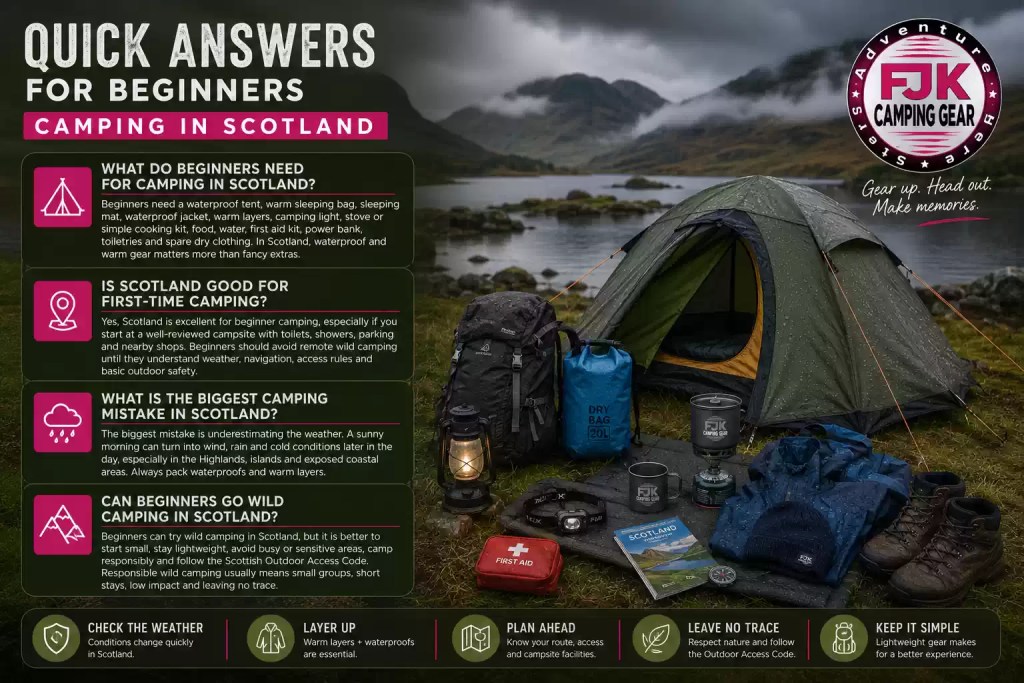
What do beginners need for camping in Scotland?
Beginners need a waterproof tent, warm sleeping bag, sleeping mat, waterproof jacket, warm layers, camping light, stove or simple cooking kit, food, water, first aid kit, power bank, toiletries and spare dry clothing. In Scotland, waterproof and warm gear matters more than fancy extras.
Is Scotland good for first-time camping?
Yes, Scotland is excellent for beginner camping, especially if you start at a well-reviewed campsite with toilets, showers, parking and nearby shops. Beginners should avoid remote wild camping until they understand weather, navigation, access rules and basic outdoor safety.
What is the biggest camping mistake in Scotland?
The biggest mistake is underestimating the weather. A sunny morning can turn into wind, rain and cold conditions later in the day, especially in the Highlands, islands and exposed coastal areas. Always pack waterproofs and warm layers.
Can beginners go wild camping in Scotland?
Beginners can try wild camping in Scotland, but it is better to start small, stay lightweight, avoid busy or sensitive areas, camp responsibly and follow the Scottish Outdoor Access Code. Responsible wild camping usually means small groups, short stays, low impact and leaving no trace.
Why Camping in Scotland Is Different
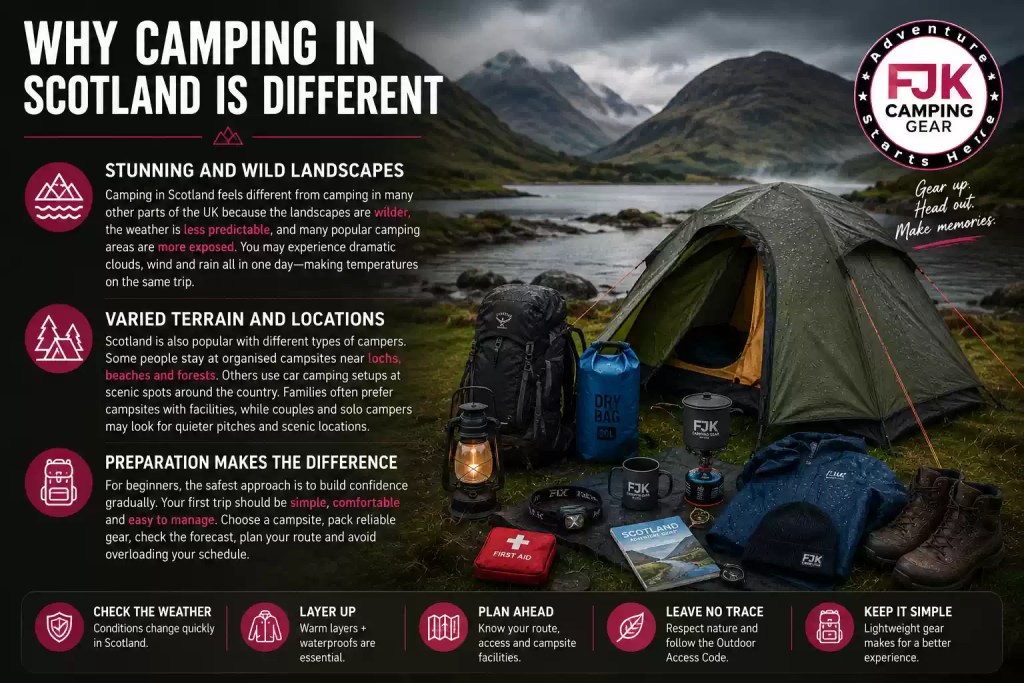
Camping in Scotland feels different from camping in many other parts of the UK because the landscape is wilder, the weather is less predictable, and many popular camping areas are more exposed. You may experience sunshine, drizzle, wind and chilly evening temperatures on the same trip.
Scotland is also popular with different types of campers. Some people stay at organised campsites near lochs, beaches and forests. Others use car camping setups for comfort. More experienced campers explore remote areas with lightweight gear. Families often prefer campsites with facilities, while couples and solo campers may look for quieter pitches and scenic locations.
For beginners, the safest approach is to build confidence gradually. Your first trip should be simple, comfortable and easy to manage. Choose a campsite, pack reliable gear, check the forecast, plan your route and avoid overloading your schedule.
Essential Gear Checklist for Camping in Scotland
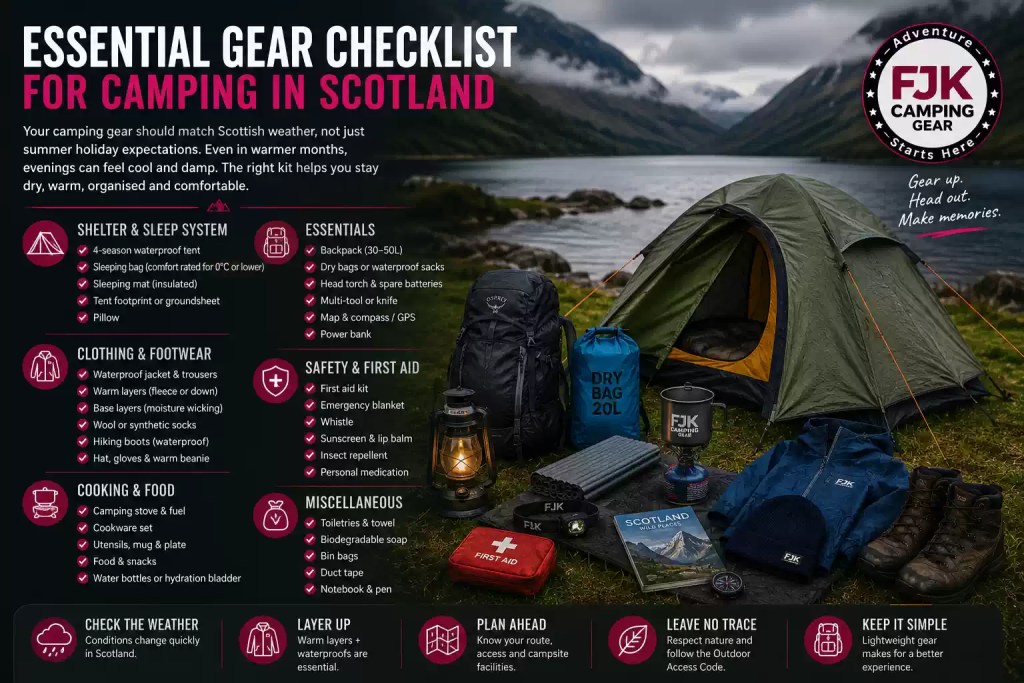
Your camping gear should match Scottish weather, not just summer holiday expectations. Even in warmer months, evenings can feel cool and damp. The right kit helps you stay dry, warm, organised and comfortable.
1. Tent and Shelter
A good tent is the foundation of your Scotland camping setup. Choose a tent with a waterproof flysheet, strong poles, reliable pegs and enough space for people and bags.
For beginners, a slightly larger tent is often more comfortable. A two-person tent is tight for two people with luggage, so couples may prefer a three-person tent. Families should consider standing height, separate sleeping areas and porch space for muddy boots.
Pack:
- Waterproof tent
- Tent footprint or groundsheet
- Strong pegs
- Mallet
- Spare guy lines
- Small repair kit
- Dry bag for wet gear
For Scotland, porch space is very useful. It gives you somewhere to keep boots, waterproofs and cooking equipment away from your sleeping area.
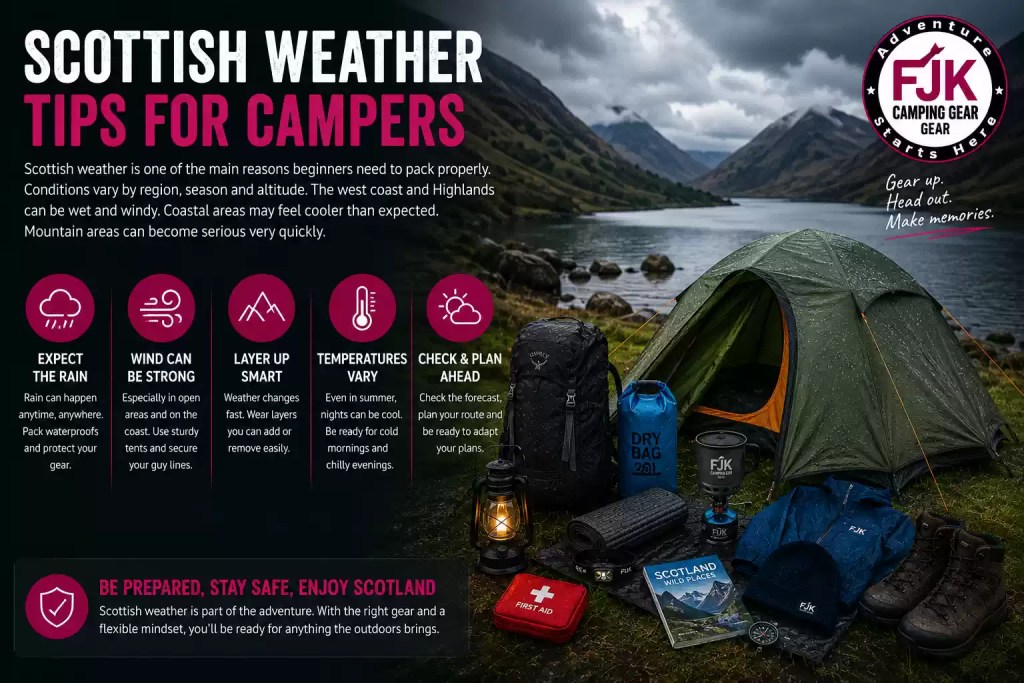
Scottish Weather Tips for Campers
Scottish weather is one of the main reasons beginners need to pack properly. Conditions vary by region, season and altitude. The west coast and Highlands can be wet and windy. Coastal areas may feel cooler than expected. Mountain areas can become serious very quickly.
Check the Forecast Twice
Check the forecast when planning, then check again before leaving. Weather can change, especially in exposed regions. For mountain areas, use mountain-specific forecasts rather than only general town forecasts.
Prepare for Rain Even in Summer
Rain does not need to ruin your trip if you are prepared. The key is to keep your sleeping area dry and have separate storage for wet clothing.
Rain tips:
- Pitch your tent before heavy rain arrives if possible
- Keep bags away from tent walls
- Use dry bags or plastic storage bags
- Put wet boots in the porch
- Keep one full set of clothes dry for sleeping
- Avoid touching the inside of the tent flysheet
A waterproof jacket and waterproof trousers are not optional for Scotland. They are core camping gear.
Prepare for Wind
Wind can make camping uncomfortable and unsafe if your tent is poorly pitched. Choose a sheltered pitch where possible, avoid exposed ridgelines as a beginner, and use all guy lines correctly.
Wind tips:
- Pitch with the lowest, strongest side facing the wind
- Use strong pegs
- Tighten guy lines evenly
- Avoid camping under weak branches
- Do not choose exposed ground just for the view
A scenic pitch is not always the safest pitch.
Keep Warm at Night
Beginners often feel colder at night than expected. Warmth comes from your full sleep system: sleeping bag, sleeping mat, dry clothes and a well-pitched tent.
Warmth tips:
- Change into dry clothes before sleeping
- Wear warm socks
- Use a beanie if cold
- Eat a warm meal before bed
- Use an insulated sleeping mat
- Keep the tent ventilated to reduce condensation
Do not block all ventilation. Condensation can make the inside of the tent damp.

Campsite Camping vs Wild Camping in Scotland
Scotland offers both formal campsite camping and responsible wild camping. Beginners should understand the difference before planning their trip.
Campsite Camping
Campsite camping is best for beginners, families, couples and anyone who wants facilities. You usually get toilets, showers, parking, drinking water and a safer place to practise pitching your tent.
Best for:
- First camping trip
- Families with children
- Car camping
- Couples wanting comfort
- Beginners testing new gear
- Longer stays
Campsites also make it easier to manage bad weather because you have access to facilities and nearby help.
Wild Camping
Wild camping in Scotland can be a beautiful experience, but it requires more responsibility. Under Scotland’s access rights, responsible wild camping is generally allowed on most unenclosed land, but campers must follow the Scottish Outdoor Access Code, respect local people, care for the environment and leave no trace.
Beginner wild camping advice:
- Start with one night
- Keep your group small
- Camp away from buildings, roads and farmland
- Avoid enclosed fields and crops
- Arrive late and leave early
- Take all litter home
- Use a stove, not an open fire
- Avoid busy areas showing signs of damage
- Check local restrictions before travelling
Some popular areas, including parts of Loch Lomond & The Trossachs National Park, have additional camping management rules, so always check before you go.
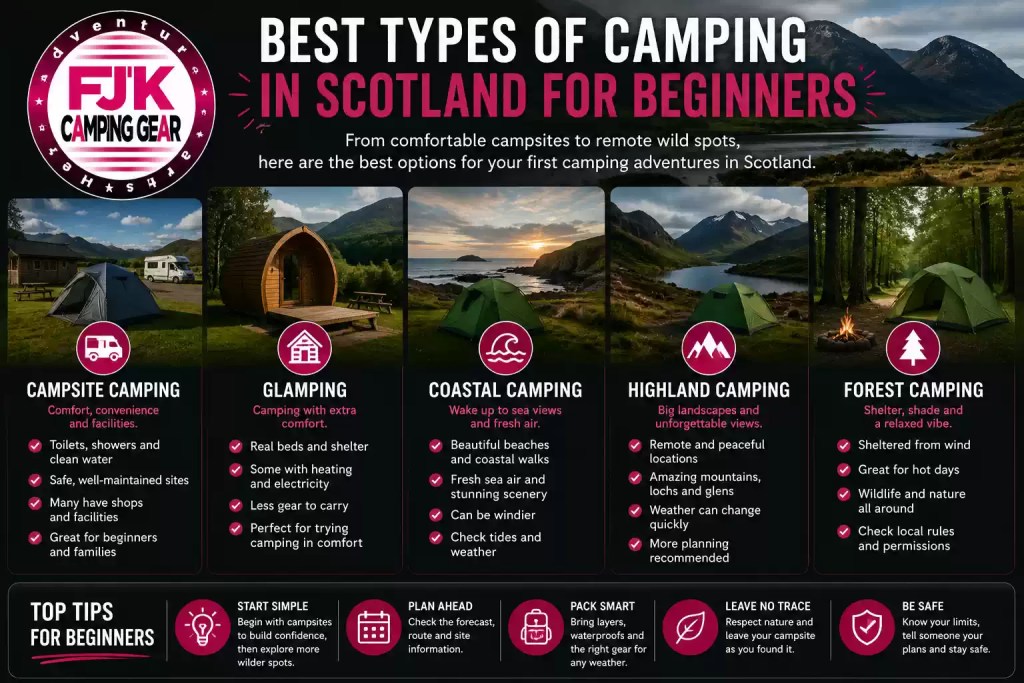
Best Types of Camping in Scotland for Beginners
Family Camping in Scotland
Families should start with a campsite that has toilets, showers, parking, nearby shops and family-friendly facilities. Choose a tent with enough space to stand, sleep and store bags.
Family camping essentials:
- Larger tent
- Extra blankets
- Warm kids’ clothing
- Simple meals
- Camping chairs
- Lanterns
- First aid kit
- Wet wipes and hand sanitiser
- Spare shoes
- Games or activities
For families, comfort and routine matter. Keep your first trip short and simple.
Couple Camping in Scotland
Couples can enjoy scenic campsites, lochside pitches and quiet rural locations. A three-person tent is often better than a two-person tent because it gives more room for bags and wet gear.
Couple camping essentials:
- Three-person tent
- Double sleeping mat or two comfortable mats
- Warm sleeping bags
- Compact cooking kit
- Two camping chairs
- Lantern
- Waterproof clothing
A simple overnight or weekend trip is a good way to test gear before longer Scottish road trips.
Solo Camping in Scotland
Solo camping gives freedom, but beginners should plan carefully. Choose a safe campsite first, especially if you are new to camping. Keep your setup lightweight and easy to manage alone.
Solo camping tips:
- Practise pitching your tent at home
- Tell someone your plan
- Keep your phone charged
- Arrive before dark
- Choose a campsite for your first solo trip
- Avoid remote routes until experienced
Solo campers should prioritise safety, warmth and simple organisation.
Car Camping in Scotland
Car camping is one of the easiest ways for beginners to enjoy Scotland. You can bring more comfort gear, including larger mats, chairs, extra blankets, storage boxes and better cooking equipment.
Car camping essentials:
- Larger tent
- Camping bed or thick mat
- Storage boxes
- Cooler bag
- Camping table
- Chairs
- Lantern
- Extra clothing
- Water container
Car camping is ideal for beginners because you can pack more without worrying about backpack weight.
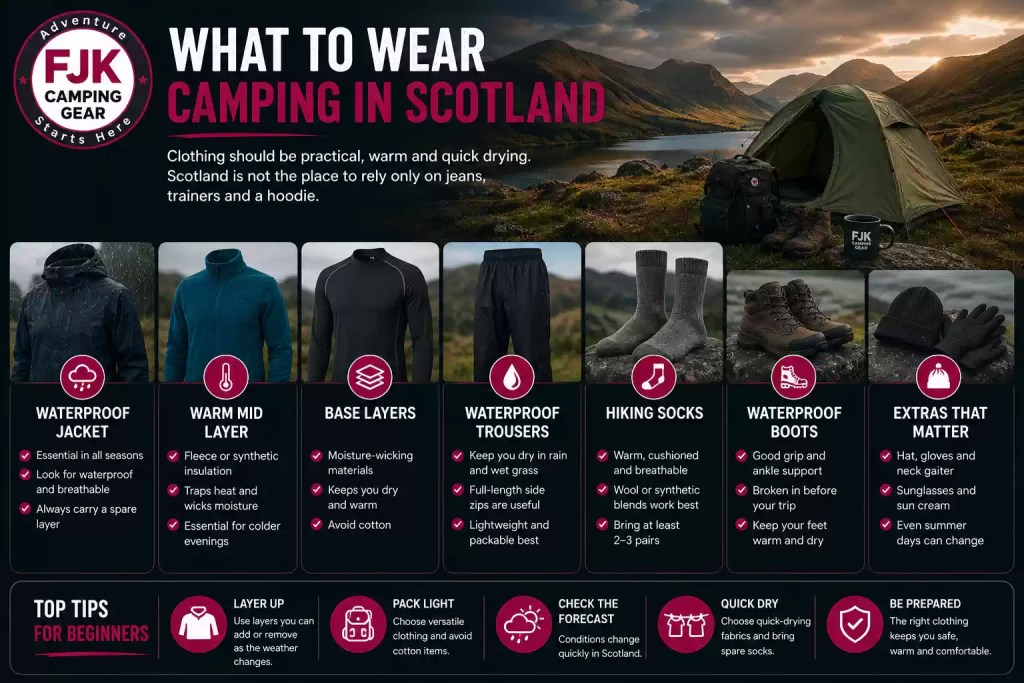
What to Wear Camping in Scotland
Clothing should be practical, warm and quick drying. Scotland is not the place to rely only on jeans, trainers and a hoodie.
Basic Clothing System
Base layer: Keeps moisture away from skin
Mid-layer: Adds warmth, such as fleece
Outer layer: Waterproof jacket and trousers
Footwear: Walking shoes or boots with grip
Spare clothes: Dry sleeping clothes and extra socks
Always keep one dry outfit for sleeping. Even if your day clothes become damp, your night clothes should stay protected inside a dry bag.

Food and Cooking Advice for Beginner Campers
Keep your first camping meals easy. Complicated meals create stress, washing up and extra packing.
Easy Camping Food Ideas
- Porridge
- Soup
- Pasta
- Rice packets
- Wraps
- Beans
- Noodles
- Sandwiches
- Cereal bars
- Fruit
- Tea, coffee or hot chocolate
For families, bring familiar food that children already like. For couples and solo campers, simple one-pot meals work well.
Food Storage Tips
Store food securely and keep your pitch tidy. Do not leave food scraps around your tent. Take rubbish home or use campsite bins where available.

Beginner Mistakes to Avoid When Camping in Scotland
1. Taking the Wrong Tent
A cheap festival tent may not cope well with Scottish rain and wind. Choose a proper camping tent with waterproofing, strong poles and secure pegging points.
2. Forgetting the Sleeping Mat
A sleeping bag alone is not enough. You need insulation from the ground.
3. Packing Too Much
Beginners often overpack. Focus on shelter, sleep, clothing, food, water, light and safety first.
4. Arriving Too Late
Pitching a tent in darkness, wind or rain is stressful. Arrive early enough to set up calmly.
5. Ignoring Condensation
Ventilation matters. Keep vents open where possible and avoid pressing bags against tent walls.
6. Wearing Cotton in Wet Weather
Cotton holds moisture and dries slowly. Use quick-drying outdoor clothing where possible.
7. Not Checking Local Rules
Wild camping rights come with responsibilities, and some areas have specific restrictions. Always check local guidance before your trip.
8. Leaving Rubbish Behind
Take all litter home, including food waste. Responsible camping protects Scotland’s landscapes for everyone.

Final Scotland Camping Checklist
1. Shelter
- Tent
- Groundsheet or footprint
- Pegs
- Mallet
- Guy lines
- Repair kit
2. Sleeping
- Sleeping bag
- Sleeping mat or camping bed
- Pillow
- Warm sleepwear
- Extra blanket
3. Clothing
- Waterproof jacket
- Waterproof trousers
- Fleece
- Base layers
- Walking trousers
- Warm socks
- Spare socks
- Hat and gloves
- Walking shoes or boots
4. Cooking
- Stove
- Fuel
- Pan or pot
- Mug
- Plate or bowl
- Cutlery
- Food
- Water container
- Washing-up items
- Bin bags
5. Lighting and Power
- Head torch
- Lantern
- Spare batteries
- Power bank
- Charging cables
6. Safety and Hygiene
- First aid kit
- Medication
- Hand sanitiser
- Toilet roll
- Sunscreen
- Insect repellent
- Map or offline navigation
- Emergency blanket
- Whistle
7. Comfort Extras
- Camping chairs
- Camping table
- Dry bags
- Towel
- Campsite shoes
- Book or games
- Extra snacks