


Why Camping Holidays Are Perfect for Dogs
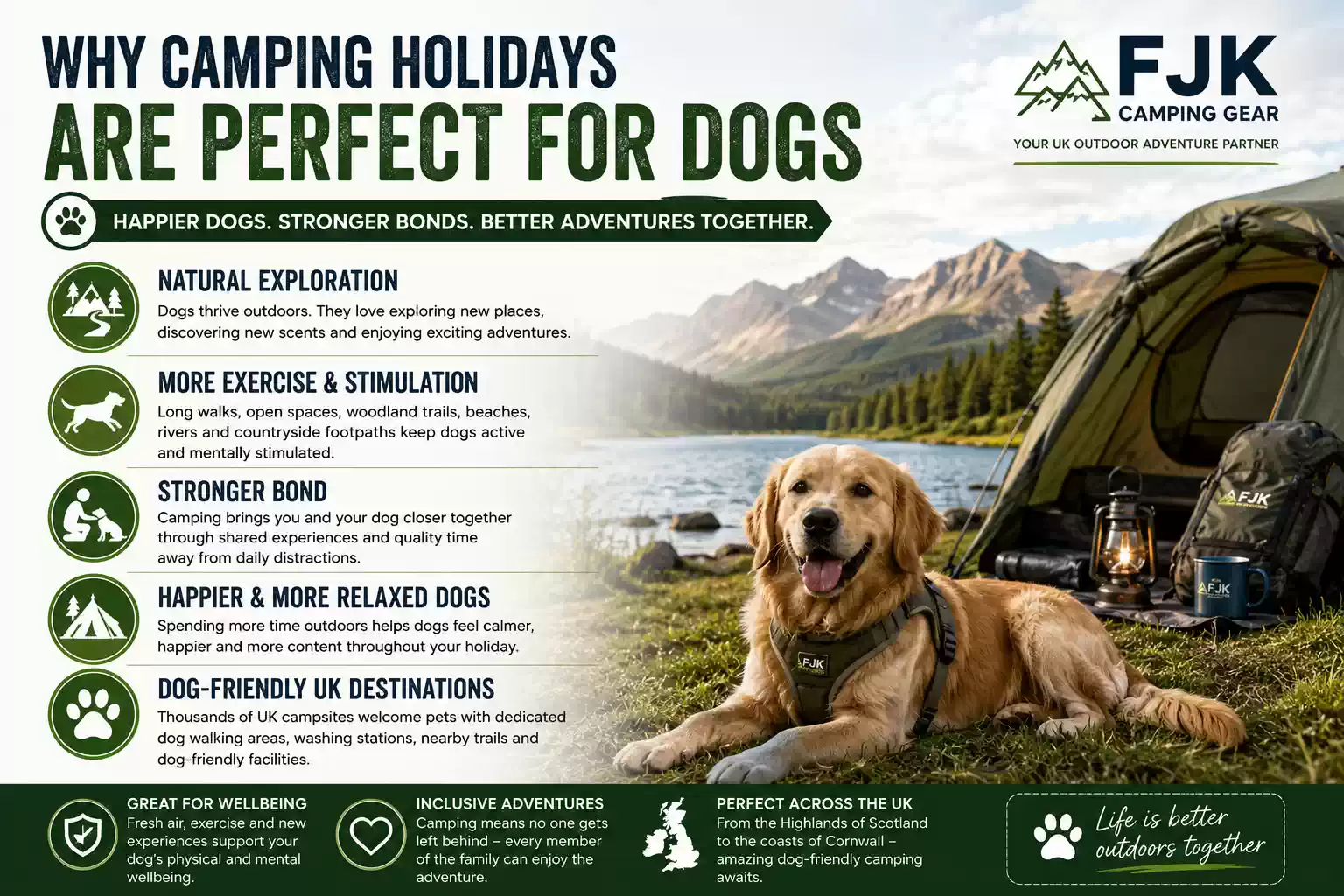 Dogs naturally thrive in outdoor environments. Most breeds enjoy exploring new locations, discovering new scents, spending more time with their owners, and engaging in physical activities such as walking, hiking, swimming, and playing.
Unlike traditional hotel holidays where dogs may spend significant time confined to rooms, camping allows them to experience a more natural and stimulating environment.
Many dogs become noticeably happier and more relaxed during camping trips because they spend the majority of their time outdoors. Long walks, open spaces, woodland trails, beaches, rivers, and countryside footpaths provide valuable mental stimulation and exercise.
Camping also strengthens the bond between owners and pets. Dogs enjoy spending extended periods with their families and participating in shared activities throughout the day.
The UK is particularly suitable for dog-friendly camping holidays because thousands of campsites actively welcome pets. Many sites offer dedicated dog walking areas, pet washing stations, nearby trails, and dog-friendly facilities.
Understanding UK Weather When Camping With Dogs

One of the most important factors when choosing dog-friendly camping gear is the British weather.
Anyone who has spent time camping in the UK understands how quickly conditions can change. A warm sunny morning can become a windy, rainy afternoon within hours. Even during summer, temperatures can fall dramatically overnight.
For dogs, these weather changes can have a significant impact.
Unlike humans, dogs cannot simply put on additional clothing or climb into a sleeping bag when temperatures drop. They rely heavily on their owners to provide suitable protection and shelter.
Rain creates particular challenges during camping trips. Wet dogs often become uncomfortable, muddy, and cold. Damp fur also makes tents wetter and more difficult to keep clean.
Wind can also affect dogs more than many owners realise. Coastal campsites, mountain locations, and exposed fields can become surprisingly cold after sunset.
Because of these conditions, dog camping gear should focus on weather resistance, insulation, waterproofing, and versatility.
Why Camping With Dogs Is Becoming More Popular in the UK
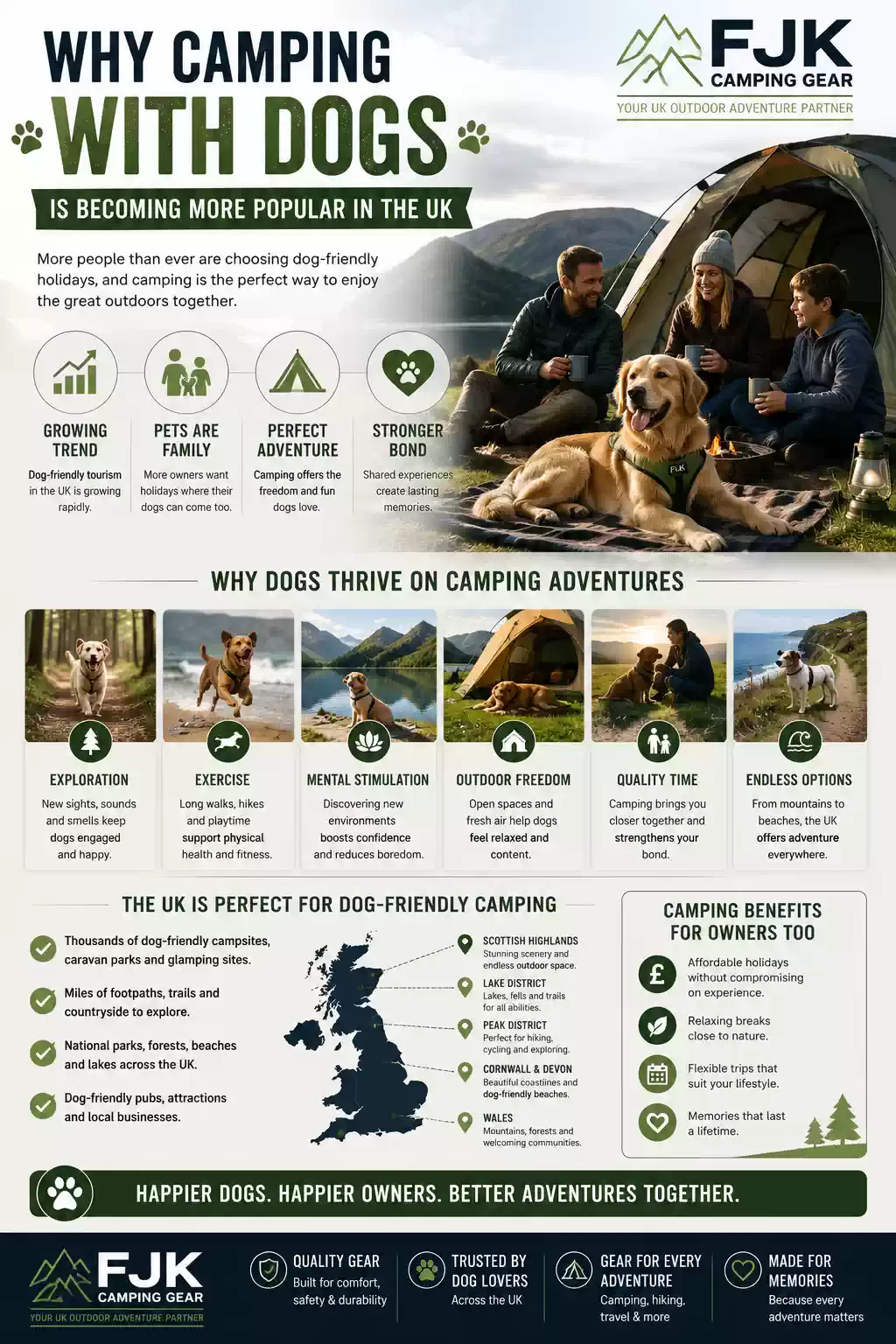
The growth of dog-friendly tourism across the UK has been remarkable in recent years. More accommodation providers, campsites, caravan parks, glamping locations, and holiday destinations now actively promote themselves as dog-friendly. This shift reflects changing travel habits among British consumers, many of whom prefer holidays where pets can accompany them rather than being left behind in kennels or with family members.
Camping naturally suits dogs because it provides many of the activities they enjoy most. Dogs thrive on exploration, exercise, and spending time with their owners. A typical camping holiday often includes woodland walks, countryside hikes, beach visits, lakeside strolls, and opportunities to discover entirely new environments. These experiences provide mental stimulation that many dogs rarely experience during everyday life.
Unlike hotels or urban accommodation where dogs may spend significant periods indoors, camping allows them to remain active throughout the day. The freedom of outdoor living often leads to happier and more relaxed pets. Many owners report that their dogs appear calmer and more content during camping holidays because they receive more exercise and attention than usual.
The UK is particularly well suited to dog-friendly camping because of its extensive network of footpaths, national parks, coastal trails, and countryside access routes. Destinations such as the Lake District, Peak District, Snowdonia, Cairngorms, Yorkshire Dales, and Northumberland offer countless opportunities for outdoor adventures with dogs. As interest in these destinations grows, so does demand for specialised camping gear designed specifically for pets.
Another reason for the popularity of dog-friendly camping is affordability. Bringing a dog camping is often significantly cheaper than arranging alternative care during a holiday. Many campsites either allow dogs free of charge or charge only a small additional fee. This makes camping one of the most economical holiday options for pet-owning families.
Planning Your First Dog-Friendly Camping Holiday

A successful camping trip begins long before arriving at the campsite. Careful planning helps identify potential challenges and ensures both owner and dog are properly prepared. For beginners, choosing an appropriate destination is often the most important decision.
Not all campsites are equally suitable for dogs. Some actively welcome pets and provide dedicated facilities, while others impose restrictions regarding where dogs may go and how they must be controlled. Before making a booking, it is important to review campsite policies regarding dogs, including lead requirements, exercise areas, pet fees, and access restrictions.
The location itself should also match your dog’s capabilities. Energetic breeds may thrive in mountainous regions with extensive walking opportunities, while older dogs or smaller breeds might prefer flatter terrain and shorter routes. Considering your dog’s fitness level helps avoid situations where activities become physically demanding or stressful.
Travel distance is another factor worth considering. Long journeys can be tiring for dogs unfamiliar with extended car travel. If this is your first camping trip together, selecting a campsite within a reasonable driving distance may help create a more positive experience.
Veterinary preparation is equally important. Ensuring vaccinations are current, microchip details are updated, and any necessary medications are packed reduces the risk of problems during the trip. Owners should also identify nearby veterinary clinics before travelling, particularly when visiting remote areas.
Training plays a significant role in camping success. Basic commands such as recall, sit, stay, and leave become particularly valuable in unfamiliar outdoor environments. Dogs that respond reliably to commands are generally easier to manage around campsites, walking trails, wildlife, and other campers.
Finally, owners should prepare for flexibility. Outdoor conditions can change unexpectedly, and adapting plans when necessary is often part of the camping experience. A flexible approach helps maintain safety and comfort while allowing everyone to enjoy the adventure.
Choosing the Right Dog-Friendly Campsite

The quality of your camping experience often depends heavily on the campsite you choose. Fortunately, the UK offers thousands of dog-friendly camping locations catering to a wide variety of preferences and budgets.
Family-friendly campsites often provide excellent facilities for dog owners. These sites frequently feature spacious pitches, nearby walking routes, designated dog exercise areas, and convenient access to countryside trails. Many also provide dog washing stations, which can be particularly useful after muddy walks or beach visits.
Coastal campsites remain especially popular among dog owners because they offer opportunities for beach walks and open spaces. However, it is important to check local regulations regarding dogs on beaches, as restrictions may apply during certain times of year.
National park campsites provide access to some of Britain’s most spectacular landscapes. Locations within the Lake District, Peak District, Snowdonia, and Scottish Highlands often attract dog owners seeking hiking opportunities and outdoor adventures. These campsites may require additional preparation due to variable weather conditions and more challenging terrain.
Smaller independent campsites can sometimes offer a more relaxed environment than large commercial holiday parks. Many rural sites welcome dogs and provide direct access to countryside footpaths, making them ideal for peaceful outdoor escapes.
When comparing campsites, consider factors such as pitch size, shade availability, water access, proximity to walking routes, and campsite rules regarding pets. Reading reviews from other dog owners can provide valuable insights into how welcoming and practical a site may be for camping with pets.
A campsite that genuinely accommodates dogs often contributes significantly to the overall success of the holiday, making research and planning worthwhile before booking.
Conclusion
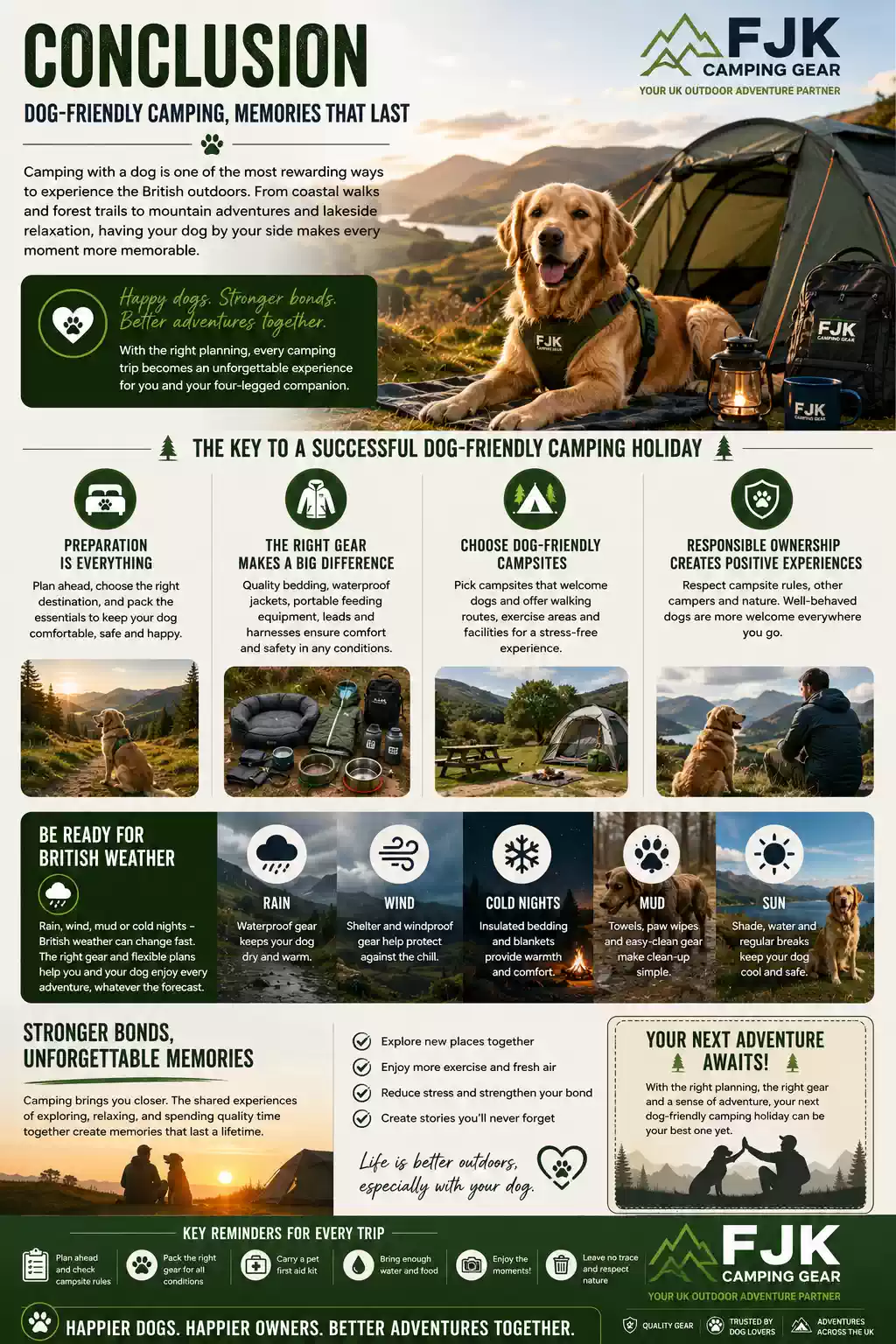
Camping with a dog is one of the most rewarding ways to experience the British outdoors. Whether you are exploring the dramatic coastline of Cornwall, walking through the forests of Northumberland, enjoying family holidays in Wales, or discovering the breathtaking landscapes of Scotland, having your dog by your side can make every adventure more memorable. Dogs thrive on fresh air, exercise, new surroundings, and quality time with their owners, making camping an ideal holiday choice for pet-loving families, couples, and solo travellers alike.
The key to a successful dog-friendly camping holiday lies in preparation. Choosing the right dog-friendly camping gear helps ensure your pet remains comfortable, safe, and happy throughout the trip. Quality bedding keeps dogs warm during cool British nights, waterproof jackets provide protection against unpredictable weather, portable feeding equipment supports hydration and nutrition on the move, and reliable leads and harnesses help maintain control in unfamiliar environments. These seemingly simple items can make a significant difference to your overall camping experience.
It is equally important to select campsites that genuinely welcome dogs and provide access to suitable walking routes, exercise areas, and outdoor facilities. Understanding campsite rules, respecting other campers, and practising responsible dog ownership help create positive experiences for everyone. Well-behaved dogs are more likely to be welcomed at campsites, beaches, walking trails, and holiday destinations throughout the UK.
British weather can never be guaranteed, which is why flexibility and preparation remain essential. From sunny summer weekends to windy coastal breaks and cooler autumn adventures, the right equipment allows you and your dog to adapt comfortably to changing conditions. By preparing for rain, mud, cold nights, and long days outdoors, you can avoid many of the common problems that first-time campers encounter.
Most importantly, camping offers an opportunity to strengthen the bond between you and your dog. The shared experiences of walking through forests, relaxing beside a tent, exploring new locations, and spending uninterrupted time together create lasting memories that many pet owners treasure for years. With the right planning, suitable dog-friendly camping gear, and a sense of adventure, your next camping holiday can become an unforgettable experience for both you and your four-legged companion.
Whether you are planning your very first camping trip with a dog or looking to improve your existing setup, investing in practical equipment and preparing thoroughly will help ensure every outdoor adventure is enjoyable, safe, and stress-free. The UK offers countless dog-friendly camping opportunities waiting to be explored, and with the right approach, you and your dog can enjoy them together with confidence.





Best Dog-Friendly Camping Gear for UK Campsites and Outdoor Holidays

Family Camping Essentials UK: What Parents Should Pack for a Stress-Free Trip

Warcombe Farm Camping Park: Complete Guide to Camping Near Woolacombe, North Devon

