


Introduction: Why Family Camping Needs Better Planning Than Solo Camping

Family camping in the UK can be one of the most rewarding ways to spend time outdoors, but it can also become stressful very quickly if parents arrive underprepared. A solo camper can manage with a basic tent, a sleeping bag, a stove, and a small backpack. A family, however, needs to think about sleep comfort, children’s clothing, wet weather, easy meals, campsite safety, toilet trips, muddy shoes, bedtime routines, spare layers, entertainment, and storage.
That is why a proper family camping essentials UK checklist is more than a simple list of gear. It is a practical plan for keeping everyone dry, warm, fed, rested, and comfortable. UK camping is not difficult, but the weather can change quickly, grass can become damp overnight, and even a sunny weekend can turn chilly once the sun goes down. Parents who prepare for those realities usually enjoy their trip much more than those who only pack for the perfect forecast.
For beginners, the best approach is not to buy every camping gadget available. The better strategy is to focus on the core camping essentials first: shelter, sleep, warmth, food, lighting, hygiene, safety, and simple entertainment. Once those basics are covered, family camping becomes much easier. Children settle better when they are warm and comfortable. Parents relax more when cooking is simple. The whole trip feels calmer when every item has a purpose.
This guide is written for UK families planning their first campsite trip, but it is also useful for couples, solo campers, car campers, and beginner wild campers who want a complete overview of what to take. The focus is practical, parent-friendly, and realistic. You do not need luxury equipment to enjoy camping, but you do need reliable gear that can handle British conditions.
Start With the Right Type of Family Camping Trip
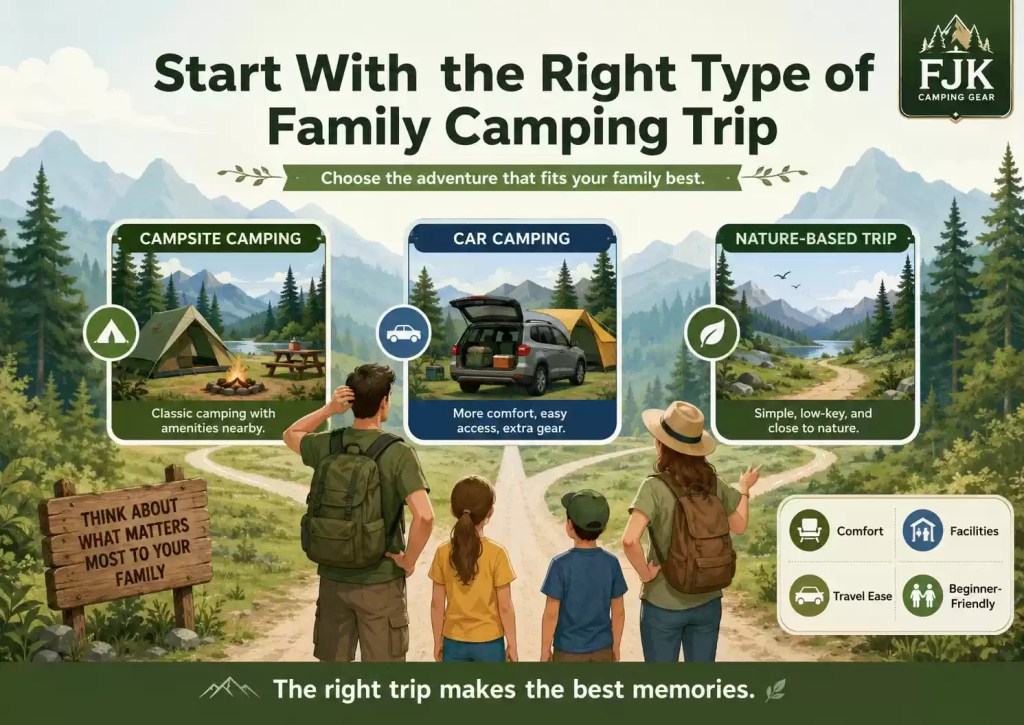
Before buying camping gear, parents should decide what type of trip they are actually planning. A family campsite weekend in Devon, Cornwall, Wales, the Lake District, Yorkshire, or Scotland needs a different setup from a lightweight wild camping trip. A car camping holiday gives you more space and comfort. A festival-style camp requires more compact and weather-resistant packing. A glamping break may only need clothing, food, lights, and bedding.
For most beginners, the easiest starting point is a family-friendly campsite with toilets, showers, drinking water, parking nearby, and a shop or café within reach. This removes much of the pressure from the first trip. Children can get used to sleeping outdoors without parents having to manage every survival detail. Campsites with play areas, washing-up stations, family bathrooms, and quiet hours are particularly helpful for first-time family campers.
Car camping is usually the best option for families. It allows parents to bring a larger tent, proper bedding, camping chairs, storage boxes, spare clothes, cooking gear, and comfort items for children. You do not have to carry everything on your back, and you can keep backup items in the car. This makes a huge difference when camping with toddlers, young children, or teenagers who may need extra layers, snacks, chargers, or entertainment.
Beginner wild camping is a different experience. It requires a lighter setup, better navigation, stricter respect for access rules, and a much stronger leave-no-trace mindset. Families should only attempt it after gaining confidence on managed campsites. For parents with young children, a quiet campsite or basic farm campsite is usually a safer and more comfortable first step.
Choosing the Best Family Tent for UK Camping
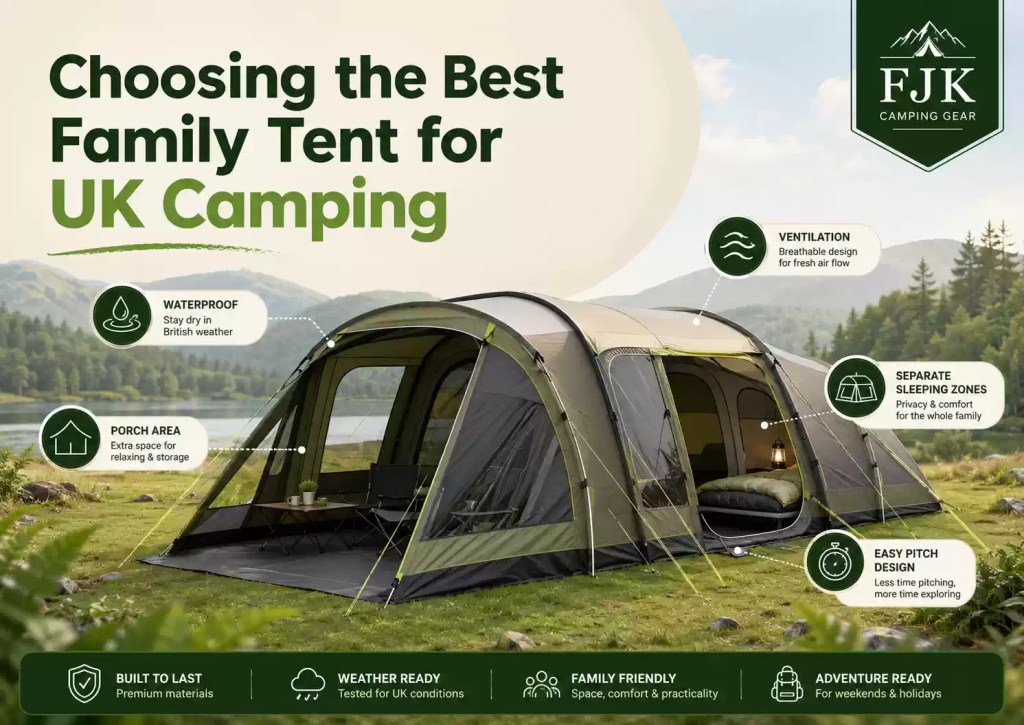
The tent is the foundation of a stress-free family camping trip. If the tent is too small, poorly ventilated, hard to pitch, or weak in wet weather, the whole trip becomes uncomfortable. A good family tent should be waterproof, stable, easy to pitch, and spacious enough for sleeping, changing clothes, and storing bags.
For UK family camping, parents should look for a tent with separate sleeping compartments, a living area, good headroom, a sewn-in groundsheet, strong zips, and decent ventilation. A porch or wet-room-style entrance is very useful because muddy boots, wet coats, and damp gear need somewhere to go before entering the sleeping area. Without that separation, the inside of the tent quickly becomes messy.
The most common mistake beginners make is buying a tent that exactly matches the number of people sleeping in it. A four-person tent may technically sleep four people, but it will feel tight once you add bags, pillows, clothes, shoes, toys, and sleeping mats. For a family of four, a five-person or six-person tent is often more comfortable. If you are car camping, extra space is usually worth it.
Air tents are popular with families because they are quick to pitch and remove the need for traditional poles. They are useful for parents who want a simpler setup, especially when arriving at a campsite with tired children. However, air tents can be heavier and more expensive. Pole tents are usually cheaper and still reliable if you choose a good design. Pop-up tents are convenient for short trips, but many are better suited to festivals, garden use, or fair-weather camping rather than longer family holidays in mixed UK weather.
A family tent should also be checked before the trip. Parents should pitch it at home or in the garden if possible. This helps identify missing pegs, damaged poles, faulty zips, or confusing instructions before arriving at the campsite. Practising once at home can save a lot of stress when the weather is windy, the children are hungry, and daylight is fading.
Sleeping Gear: The Difference Between a Good Trip and a Bad Trip
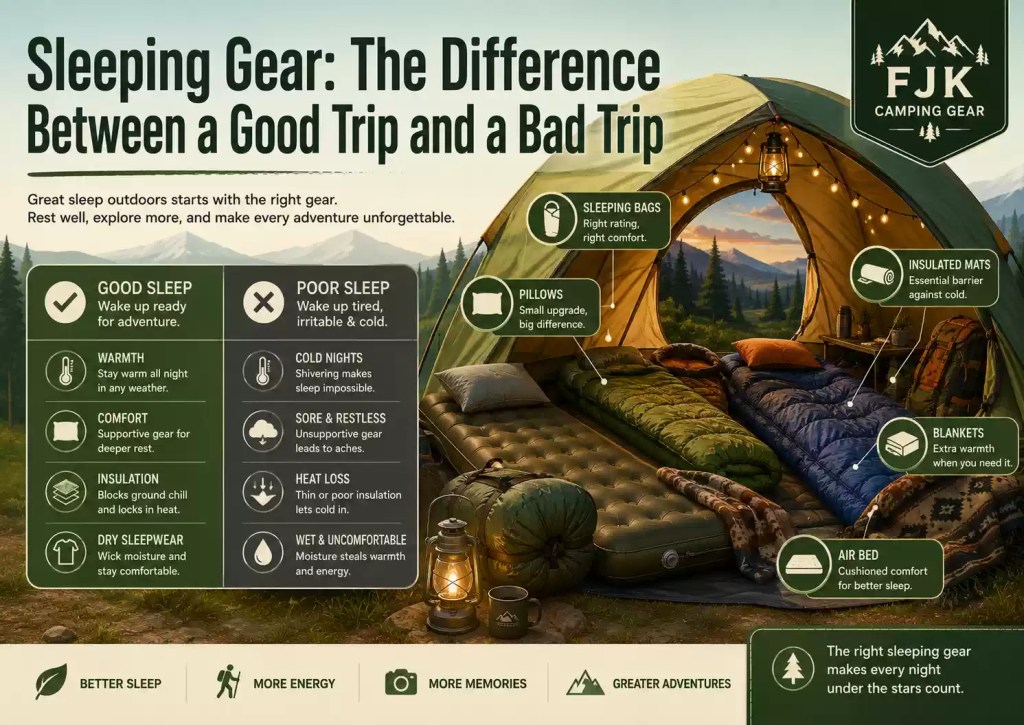
Sleep is one of the biggest factors in family camping. If parents and children sleep badly, the next day becomes harder. Everyone feels cold, tired, and irritable. The best family camping essentials are not always exciting, but good sleeping gear is worth taking seriously.
Each person needs a suitable sleeping bag. For UK camping, especially outside peak summer, choose sleeping bags with a comfort rating appropriate for the expected night temperature. Children often feel the cold more than adults, and UK nights can be surprisingly chilly even after a warm day. A sleeping bag that is too thin can make bedtime miserable.
For children, mummy-style sleeping bags can be warm, but some younger children prefer rectangular bags because they feel less restricted. Parents should choose comfort over technical features where possible. If a child dislikes the feel of a sleeping bag, they may sleep better with a blanket layered over or inside it. Bringing a familiar pillow or small blanket from home can also help children settle.
The sleeping surface matters as much as the sleeping bag. Families usually choose between air beds, self-inflating mats, foam mats, and camping beds. Air beds feel comfortable and are popular for car camping, but they can lose warmth from underneath unless paired with insulation. They can also deflate slightly overnight. Self-inflating mats are warmer, more stable, and easier to manage, but they may feel firmer. Foam mats are simple, cheap, and reliable, though not as comfortable for everyone. Folding camping beds raise you off the ground and can be comfortable, but they need more tent space.
For family camping in the UK, a practical setup is often a self-inflating mat or insulated mat for each sleeper, plus warm sleeping bags and extra blankets. If using an air bed, place a blanket or insulating layer between the air bed and the sleeping bag. This helps reduce cold coming from below.
Parents should also pack spare socks, warm sleepwear, and a dedicated bedtime layer for each child. Children should not sleep in damp clothes worn during the day. Even slightly damp leggings, socks, or hoodies can make them cold at night. A dry bedtime outfit is one of the simplest family camping essentials, but it makes a major difference.
Clothing for UK Family Camping
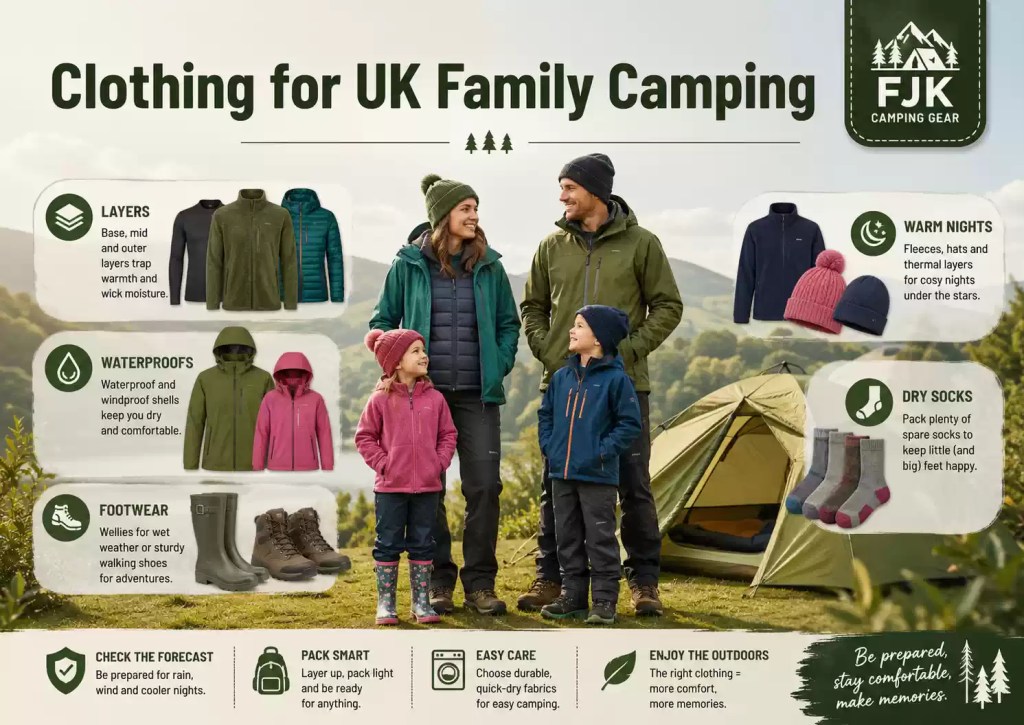
Clothing for UK camping should be based on layers rather than one thick outfit. The weather can shift from warm sunshine to drizzle, wind, and chilly evenings in the same day. Parents should pack clothes that can be added or removed easily.
A good family camping clothing system starts with comfortable base layers or T-shirts, then warm mid-layers such as fleeces or hoodies, followed by waterproof jackets. For children, waterproof trousers are very useful because grass, mud, and wet play areas can soak clothes quickly. Even in summer, a light waterproof jacket should be packed for every family member.
Footwear should be practical rather than fashionable. Trainers may be fine for dry campsite paths, but waterproof walking shoes, wellies, or sturdy outdoor shoes are better for wet grass and muddy fields. Campsites often become damp in the morning, even without rain. Children running around in normal trainers can end up with wet socks before breakfast.
Parents should pack more socks than they think they need. Wet socks are common on UK camping trips, and dry socks help keep children comfortable. Hats are also useful in both warm and cold weather. A sun hat protects children during sunny days, while a warm hat helps at night or early morning.
The best clothing approach is to separate outfits into simple storage bags. Each child can have a bag for day clothes, one for sleepwear, and one for dirty or wet clothes. This keeps the tent organised and prevents parents from searching through mixed bags every time someone needs a dry jumper.
Cooking and Food Essentials for Family Camping
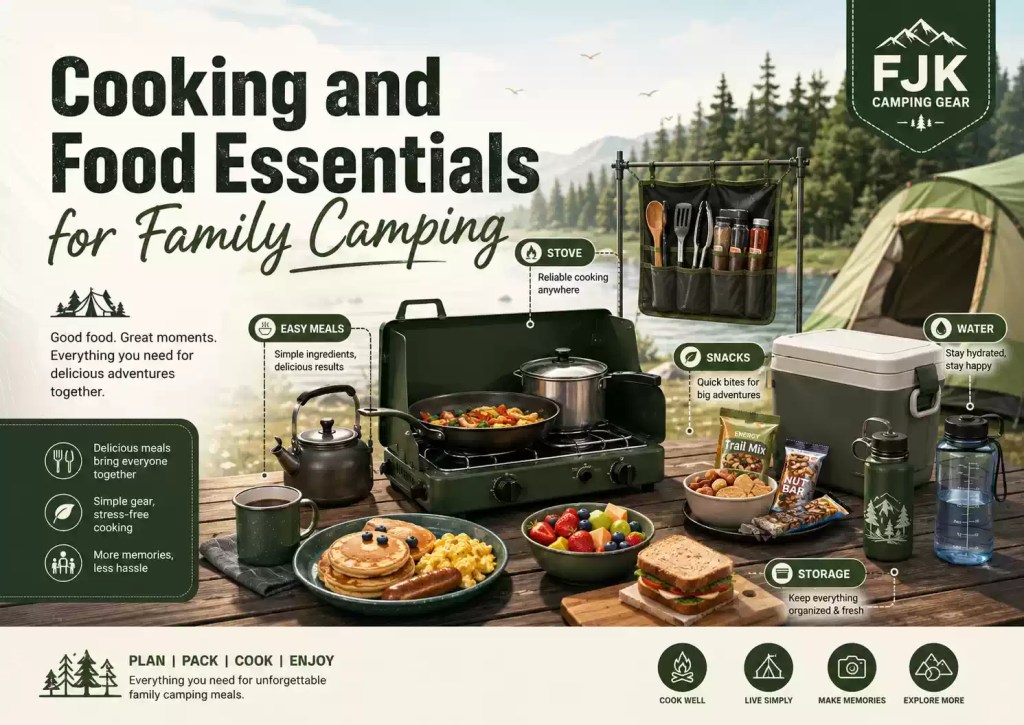
Food can either make family camping enjoyable or create unnecessary stress. Parents should avoid complicated meals on the first trip. The best campsite meals are simple, filling, and easy to cook with limited equipment.
A basic family camping kitchen needs a camping stove, fuel, lighter or matches in a waterproof container, cooking pot, frying pan, kettle, plates, bowls, mugs, cutlery, chopping board, sharp kitchen knife, washing-up bowl, sponge, tea towel, bin bags, food storage boxes, and a cool box. If the campsite allows electric hook-up and you have the correct camping-safe equipment, you may also use an electric kettle or small cooking appliance, but many families prefer a simple gas stove for flexibility.
Breakfast should be easy. Porridge, cereal, fruit, toast, eggs, and breakfast wraps work well. Lunch can be sandwiches, soup, pasta salad, or picnic-style food. Dinner should be realistic after a busy day outdoors. Pasta, rice, noodles, jacket potatoes, wraps, burgers, sausages, beans, and one-pot meals are campsite-friendly options. Parents should pre-plan meals before leaving home and avoid bringing random ingredients that do not combine into proper meals.
Snacks are essential when camping with children. Outdoor play, walking, beach days, and fresh air can make children hungry more often than usual. Easy snacks such as fruit, crackers, oat bars, sandwiches, biscuits, and crisps can prevent hunger-related stress. Parents should also keep water bottles filled and accessible.
Food storage is important. Keep food sealed to avoid attracting insects or animals. Store perishable items in a cool box with ice packs and avoid leaving food open inside the tent. A small camping table helps keep cooking organised and safer, especially when children are nearby.
Parents should also think about the first meal after arrival. Setting up camp can take longer than expected, so the first meal should be extremely easy. A packed lunch, ready-made sandwiches, or a simple heat-and-eat meal can prevent the classic problem of trying to cook while everyone is tired and hungry.
Lighting Essentials for Families
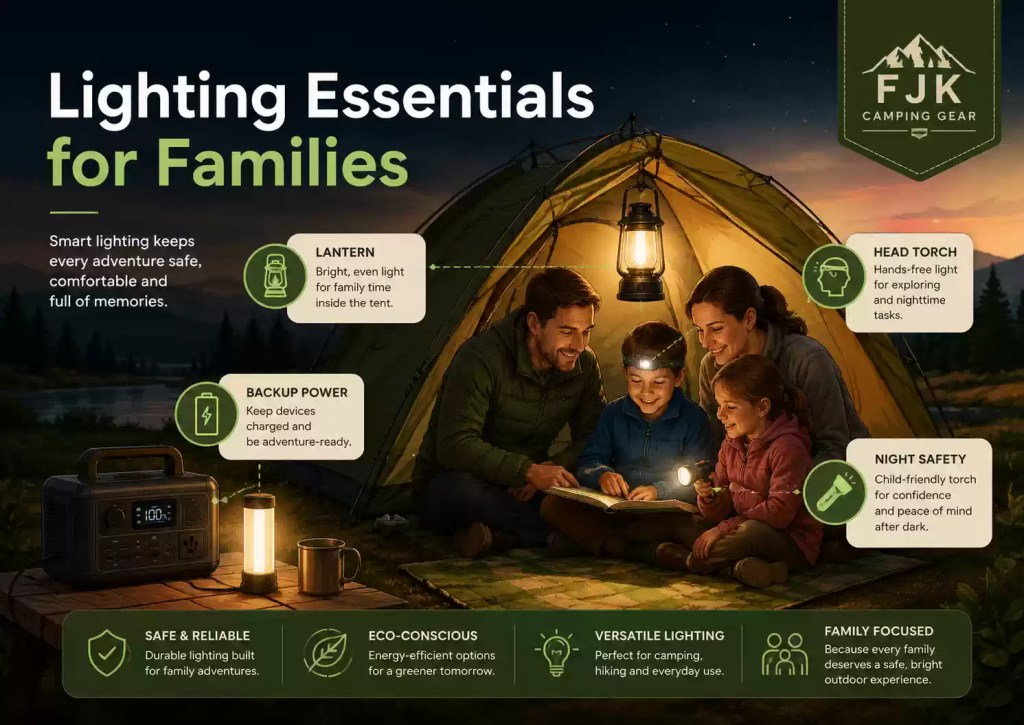
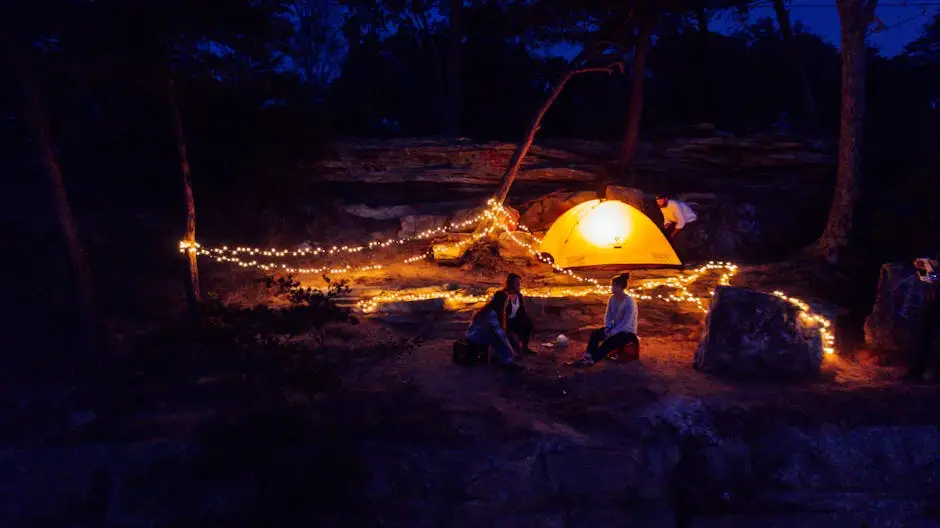
Lighting is one of the most underrated family camping essentials. Once it gets dark, simple tasks become much harder. Parents need lighting for the tent, cooking area, toilet trips, bedtime, and emergency situations.
A good family setup includes a main rechargeable lantern for the tent, a smaller lantern for the cooking area, head torches for adults, and child-safe torches for children. Head torches are especially useful because they keep hands free when carrying water, helping children, cooking, or searching for items.
Rechargeable camping lights are convenient, but parents should also carry a power bank or backup batteries. Solar lights can be useful during longer trips, although they depend on daylight. A soft night light inside the tent can help younger children feel secure and make night-time toilet trips easier.
Avoid relying only on a mobile phone torch. Phone batteries are needed for navigation, communication, weather updates, campsite information, and emergencies. A dedicated torch or lantern is far more practical.
Lighting should be placed safely. Do not hang heavy lanterns where they may fall on children, and avoid placing bright lights where they disturb neighbouring campers. Campsite etiquette matters, especially on family-friendly sites where quiet hours are expected.
Hygiene, Toiletries and Toilet-Trip Planning
Camping hygiene is simple if parents plan ahead. The main challenge is not cleanliness itself, but managing it in a smaller space with children, muddy shoes, and shared facilities.
Each family member should have a wash bag with toothbrush, toothpaste, soap, shampoo, hairbrush, deodorant where appropriate, and any personal care items. Quick-dry towels are useful because normal towels take longer to dry in damp weather. Wet wipes, tissues, hand sanitiser, and small packs of toilet roll are very useful, but wipes should be disposed of properly and never left outdoors.
For families with young children, toilet trips need extra planning. Choose a pitch within reasonable distance of the toilet block, but not so close that noise and foot traffic become annoying. Night-time toilet trips are easier when shoes, coats, torches, and toilet roll are kept near the tent entrance.
A small doormat or picnic rug near the tent entrance helps reduce mud inside. A separate bag for dirty clothes is essential. Parents should also pack spare plastic bags or dry bags for wet swimwear, muddy socks, and damp towels.
For babies and toddlers, nappies, changing mats, nappy bags, creams, spare clothes, and bedtime comfort items need to be packed carefully. Campsite bins may not always be close to the pitch, so parents should have a hygienic way to store waste temporarily until it can be disposed of properly.
First Aid and Family Safety Essentials
A first aid kit is not optional for family camping. It does not need to be huge, but it should cover common campsite issues such as small cuts, grazes, blisters, insect bites, headaches, minor burns, and allergies.
A practical first aid kit should include plasters, blister plasters, antiseptic wipes, bandages, tweezers, bite cream, pain relief suitable for adults and children, any prescribed medication, allergy medication where needed, and a small digital thermometer. Parents should check expiry dates before the trip.
Sun protection is also part of safety. UK weather can feel mild, but children can still burn during cloudy or breezy days. Pack sun cream, hats, sunglasses, and refillable water bottles. Insect repellent can also be useful, especially near lakes, rivers, woodland, and long grass.
Parents should explain basic campsite safety to children before arrival. Children should know where the tent is, what the campsite boundaries are, where the toilets are, and what to do if they cannot find their parents. Younger children should not wander alone. Older children should have clear rules about where they can go, especially near water, roads, campfires, or cooking areas.
Cooking safety matters. Stoves should be used outside the sleeping area and placed on a stable surface. Children should be kept away from hot pans, boiling water, and fuel. Barbecues and cooking equipment should never be used inside tents because of fire risk and dangerous fumes.
Weather Preparation for UK Family Camping

The UK weather is one of the biggest reasons parents need a proper family camping checklist. Even in summer, families should prepare for rain, wind, chilly evenings, damp mornings, and occasional heat.
Before travelling, check the forecast for the actual campsite location rather than only the nearest city. Coastal campsites can be windier. Hill and moorland campsites can be colder. Woodland sites may feel sheltered but can stay damp. If strong wind or heavy rain is forecast, parents should reconsider the trip or contact the campsite for advice.
A waterproof tent is essential, but waterproof clothing is just as important. Children still want to play when it rains, and waterproof jackets and trousers allow them to enjoy the outdoors without soaking their main clothes. A tarp or shelter can also be useful for creating a dry cooking or sitting area, depending on campsite rules.
Warm layers should be packed even in July and August. Night-time temperatures can drop, especially in rural areas. Fleece layers, warm socks, hats, and extra blankets help families stay comfortable.
Parents should also plan for drying space. Wet coats, towels, and clothes need somewhere to go. A small washing line, clips, and hangers can be useful, but check campsite rules before attaching anything to trees or structures. Inside the tent, avoid letting wet clothes touch sleeping bags or bedding.
Wind is often more difficult than rain. A tent must be pegged correctly, with guy lines tensioned properly. Extra pegs and a mallet are worth packing. If arriving in bad weather, wait for safer conditions if possible before pitching, especially with a large family tent.
Packing for Children: Comfort, Routine and Entertainment
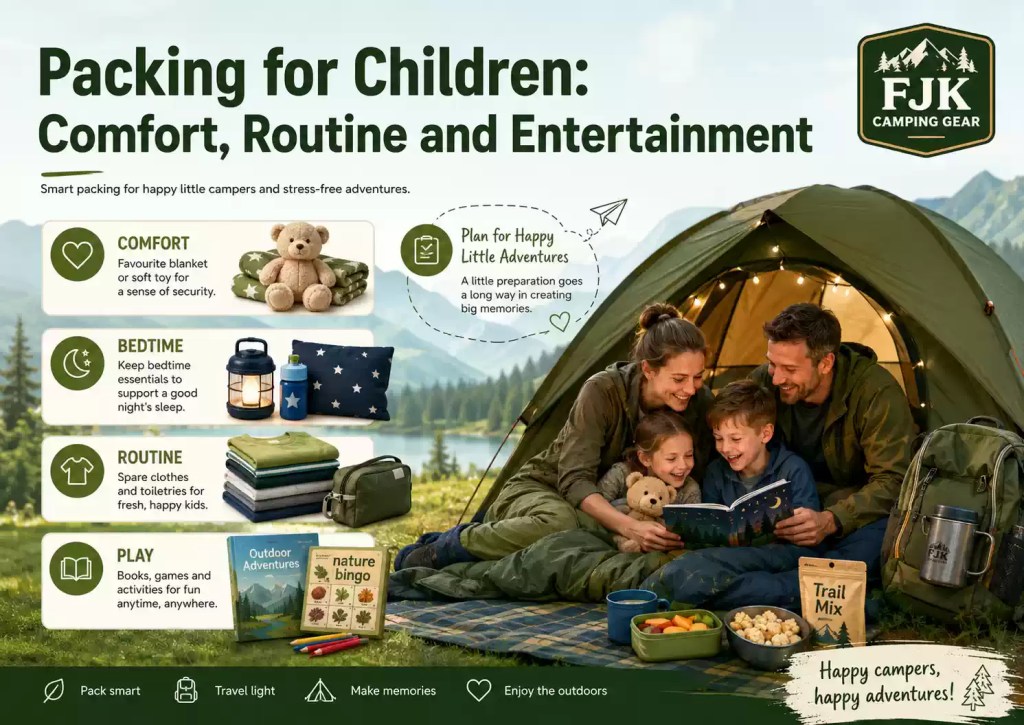
Children do not need a huge number of toys when camping, but they do need comfort and routine. A familiar bedtime item, favourite blanket, small soft toy, or storybook can help children settle in a new environment.
Entertainment should be simple and outdoor-friendly. Balls, frisbees, colouring books, cards, travel games, nature spotter sheets, buckets and spades, binoculars, and simple craft items can keep children busy. For rainy periods, pack a small indoor activity bag. This can prevent boredom when everyone is stuck inside the tent.
Parents should avoid overpacking noisy or bulky toys. Campsites are shared spaces, and part of camping is enjoying a slower, simpler routine. Children often enjoy exploring, collecting leaves, watching birds, helping with small camp tasks, and sitting under blankets with a hot drink.
A child-friendly camping routine helps. Keep meals at fairly normal times, create a clear bedtime process, and allow extra time for everything. Camping tasks take longer with children, especially when walking to toilet blocks, changing clothes, brushing teeth, and getting into sleeping bags.
For toddlers, containment and supervision are important. A picnic blanket, small chair, or travel high chair can be useful. For older children, give small responsibilities such as carrying their torch, organising their shoes, filling water bottles with help, or packing their own day bag.
Storage and Organisation Inside the Tent
A messy tent quickly becomes stressful. Family camping creates a lot of small items, and if everything is loose, parents waste time searching for socks, torches, chargers, snacks, and toiletries.
Storage boxes are extremely useful for car camping. One box can hold cooking gear, one can hold food, one can hold lights and tools, and one can hold spare clothing or waterproofs. Clear boxes make it easier to see what is inside. Soft bags are better for sleeping compartments because they take up less space.
Every item should have a place. Shoes should stay near the entrance. Wet clothes should go into a separate bag. Torches should be kept where they can be found in the dark. Toiletries should be packed together. First aid should be accessible but away from small children.
Packing cubes or labelled bags are very helpful for families. Each child can have their own clothing bag, making it easier to find outfits. Parents can also pack a separate “arrival bag” with the items needed immediately: mallet, pegs, tent instructions, snacks, water bottles, waterproofs, and first meal items.
The car can also be used as extra storage, but avoid making constant trips back and forth for essential items. Keep night-time, safety, and weather items inside the tent or very close to hand.
Camping Furniture That Makes Family Trips Easier
Camping furniture is not essential for survival, but it makes family camping much more comfortable. Chairs, tables, and storage surfaces reduce mess and make mealtimes easier.
Each family member should have a camping chair if space allows. Children’s camping chairs are useful because they give children a defined place to sit during meals. A folding table is one of the best family camping items because it gives parents a clean surface for cooking, eating, preparing snacks, and organising gear.
A picnic blanket is also useful for dry weather. It gives children a place to play, eat, or rest outside the tent. In damp weather, a waterproof-backed blanket is better.
For longer trips, a camping cupboard or organiser can help keep food and cooking equipment tidy. However, beginners do not need to buy everything at once. Start with chairs and a table, then upgrade later if family camping becomes a regular activity.
Power, Phones and Charging Essentials
Modern family camping often involves phones, cameras, tablets, lights, and rechargeable devices. Parents do not need to turn the trip into a technology holiday, but reliable power is useful for safety and convenience.
A power bank is essential for charging phones and small devices. For longer trips, a larger camping power bank may be helpful, especially if using rechargeable lanterns. If booking a pitch with electric hook-up, make sure you have the correct outdoor-rated camping cable and equipment. Household extension leads are not suitable for campsite use.
Children may want tablets or devices, especially during rain, but it is sensible to set limits before the trip. Download maps, campsite details, booking confirmation, entertainment, and emergency information before leaving home, especially in rural areas with weak signal.
Do not rely on phones for every task. Paper notes, printed booking details, a physical torch, and a simple map can still be useful. Battery life disappears quickly when using navigation, cameras, weather apps, and torches.
Campsite Arrival: What Parents Should Do First
The first hour at the campsite sets the tone for the whole trip. Parents should arrive with enough daylight to pitch calmly. Arriving late with tired children, rain, and an unfamiliar tent is one of the easiest ways to create stress.
After checking in, look carefully at the pitch. Avoid obvious dips where water may collect. Check wind direction, nearby trees, toilet block distance, play areas, bins, and campsite roads. If you have a choice, pick a pitch that balances convenience and quiet.
Pitch the tent before unpacking everything else. Keep children safely occupied while adults focus on getting the shelter up. Once the tent is secure, set up sleeping areas, then cooking and seating areas. Do not start cooking until the tent is stable and essential items are organised.
It helps to give children a simple job, such as holding peg bags, placing shoes near the entrance, or arranging their sleeping bags. This makes them feel involved and reduces boredom.
Once the basic camp is ready, walk children around the campsite. Show them the toilets, washing-up area, bins, reception, play area, and any out-of-bounds zones. This gives them confidence and helps avoid confusion later.
Campsite Etiquette for Families
Good campsite etiquette makes the trip better for everyone. Family campsites are usually relaxed, but they still rely on respect between campers.
Noise should be kept reasonable, especially early in the morning and late at night. Children may wake early, so parents should prepare quiet activities for the morning. Ball games should be played away from tents and cars. Torches should not be shone into other tents.
Keep the pitch tidy. Food waste, wrappers, and loose items can blow away or attract animals. Use campsite bins properly and recycle where facilities are available. Washing-up should be done in designated areas rather than at drinking water points unless the campsite allows it.
Respect quiet hours, speed limits, and campsite rules. If the campsite does not allow open fires or barbecues, do not ignore the rule. These rules are usually there for safety, land protection, and neighbour comfort.
Teaching children campsite etiquette is part of the experience. It helps them understand shared outdoor spaces and builds good camping habits for future trips.
What Parents Should Pack for Babies and Toddlers
Camping with babies and toddlers is possible, but it needs extra preparation. The key is to keep routines simple and pack for warmth, hygiene, feeding, and sleep.
For babies, parents should bring enough nappies, wipes, nappy bags, changing mats, baby blankets, suitable sleepwear, feeding equipment, sterilising method if needed, baby food, bottles, and comfort items. A travel cot may be useful if the tent has enough space, though some families prefer a safe sleeping setup that matches their usual routine.
Toddlers need plenty of spare clothes because mud, food spills, and wet grass are almost guaranteed. Waterproof suits or puddle suits are very useful in UK conditions. Wellies are often better than trainers for campsite play.
Bedtime can be harder in a tent because evenings are lighter in summer and campsite noise may be unfamiliar. A familiar blanket, bedtime story, and soft light can help. Parents should expect bedtime to take longer than usual.
Safety supervision is constant with toddlers. Campsites may have cars, guy lines, water points, dogs, cooking equipment, and uneven ground. Choose a pitch where supervision is manageable and avoid setting up too close to roads or water.
What to Pack for Older Children and Teenagers
Older children and teenagers can enjoy camping more when they have some independence and responsibility. They may not need as many comfort items, but they still need proper clothing, sleeping gear, and entertainment.
Teenagers should have their own torch, water bottle, warm layer, waterproof jacket, and small day bag. They may also want a power bank, headphones, books, games, or sports equipment. However, parents should still set campsite rules clearly, especially around curfew, phone use, and where they can go.
Older children can help with pitching, cooking, washing up, and organising gear. This makes the trip feel more like a shared adventure rather than a parent-managed holiday.
For families with children of different ages, sleeping arrangements matter. Some family tents have separate bedrooms, which can help older children feel more comfortable. Privacy becomes more important as children grow, so choose a tent layout that suits your family.
Food Planning for a Stress-Free Family Camping Weekend
A simple weekend food plan can remove a lot of pressure. For a two-night family camping trip, parents should plan every meal before leaving home.
The first day should be the easiest. Lunch can be packed from home. Dinner can be pasta, wraps, hot dogs, or a pre-prepared one-pot meal. Breakfast on the second day can be cereal, porridge, eggs, or toast. Lunch can be sandwiches or picnic food. Dinner can be a simple cooked meal. The final morning should be quick because packing up takes time.
Parents should prepare ingredients at home where possible. Chopping vegetables, marinating food, portioning snacks, and packing spices or sauces into small containers saves time at the campsite. It also reduces the amount of waste and washing-up.
Bring more drinks than expected. Water bottles should be refilled regularly, and warm drinks can make chilly mornings and evenings more comfortable. Hot chocolate is often a simple treat for children after a wet or cold day.
Avoid relying entirely on campsite shops. They are useful for forgotten items, but they may be expensive or limited. A nearby supermarket is helpful, but driving out for missing basics can interrupt the trip.
The Parent-Friendly Family Camping Checklist
A complete family camping checklist should begin with shelter. Pack the tent, poles or air pump, pegs, mallet, footprint if used, repair tape, spare guy lines, and a small brush for clearing dirt from the tent. Bring a tarp or shelter if you need extra covered space and the campsite allows it.
For sleeping, pack sleeping bags, mats or air beds, pillows, blankets, sleepwear, warm socks, and comfort items for children. If using an air bed, bring the pump and check whether it needs batteries, mains power, or a car connection.
For cooking, pack the stove, fuel, lighter, kettle, pans, utensils, plates, bowls, cups, cutlery, chopping board, washing-up kit, bin bags, cool box, food containers, and water bottles. Add easy meals, snacks, breakfast food, tea, coffee, and children’s favourites.
For clothing, pack layered outfits, waterproof jackets, waterproof trousers, warm fleeces, spare socks, underwear, sleepwear, hats, gloves if needed, wellies or waterproof shoes, and a bag for wet clothes.
For hygiene, pack toiletries, towels, toilet roll, hand sanitiser, wipes, tissues, nappy items if needed, hairbrush, sun cream, insect repellent, and personal medication.
For safety, pack a first aid kit, torches, lanterns, power banks, emergency contact details, campsite booking information, and any medical essentials.
For comfort and entertainment, pack camping chairs, a table, picnic blanket, books, simple games, outdoor toys, chargers, and bedtime comfort items.
This may sound like a lot, but families do not need luxury versions of everything. The goal is to cover the basics well, not to fill the car with unnecessary gadgets.
What Not to Pack for Family Camping
Overpacking can make camping stressful. Too much gear fills the tent, clutters the car, and makes packing up harder. Beginners often bring items they never use while forgetting simple essentials such as spare socks or a torch.
Avoid packing too many toys, too much clothing without a system, complicated cooking equipment, breakable plates, large household pillows if space is limited, and unnecessary decorative items. Do not bring expensive electronics unless you have a safe way to store and charge them.
Large family tents already take time to pitch and pack away. Adding too many extras can turn a relaxing weekend into a logistics exercise. Parents should focus on practical comfort rather than campsite perfection.
It is also sensible to avoid brand-new gear that has never been tested. New stoves, air beds, tents, and lanterns should be checked before the trip. Discovering a missing pump or faulty zip at the campsite can create avoidable stress.
Common Family Camping Mistakes to Avoid
The first major mistake is choosing the wrong campsite. A remote, basic campsite may sound peaceful, but it may not be ideal for a first trip with children. Beginners usually do better with clean toilets, showers, drinking water, family facilities, and nearby shops or attractions.
The second mistake is arriving too late. Pitching a family tent in the dark is difficult, especially with children. Arrive early enough to set up, cook, and settle before bedtime.
The third mistake is underestimating the cold. UK nights can be chilly even in summer. Thin sleeping bags, no insulation underneath, and damp clothes can make children uncomfortable. Warm layers and dry sleepwear are essential.
The fourth mistake is cooking meals that are too complicated. Campsite cooking should be simple, especially on the first trip. Parents should choose meals that require minimal preparation, short cooking times, and easy washing up.
The fifth mistake is poor organisation inside the tent. Loose clothing, wet shoes, missing torches, and mixed food bags create daily frustration. Storage boxes and simple packing systems solve most of this.
The sixth mistake is ignoring wind and rain. A tent should be properly pegged, guy lines should be used, and waterproofs should be accessible. Rain is manageable when you are prepared for it.
The seventh mistake is trying to do too much. Family camping does not need a packed itinerary. Children often enjoy the campsite itself. Leave time for slow mornings, simple walks, outdoor play, and relaxed meals.
Campsite Camping vs Car Camping vs Wild Camping
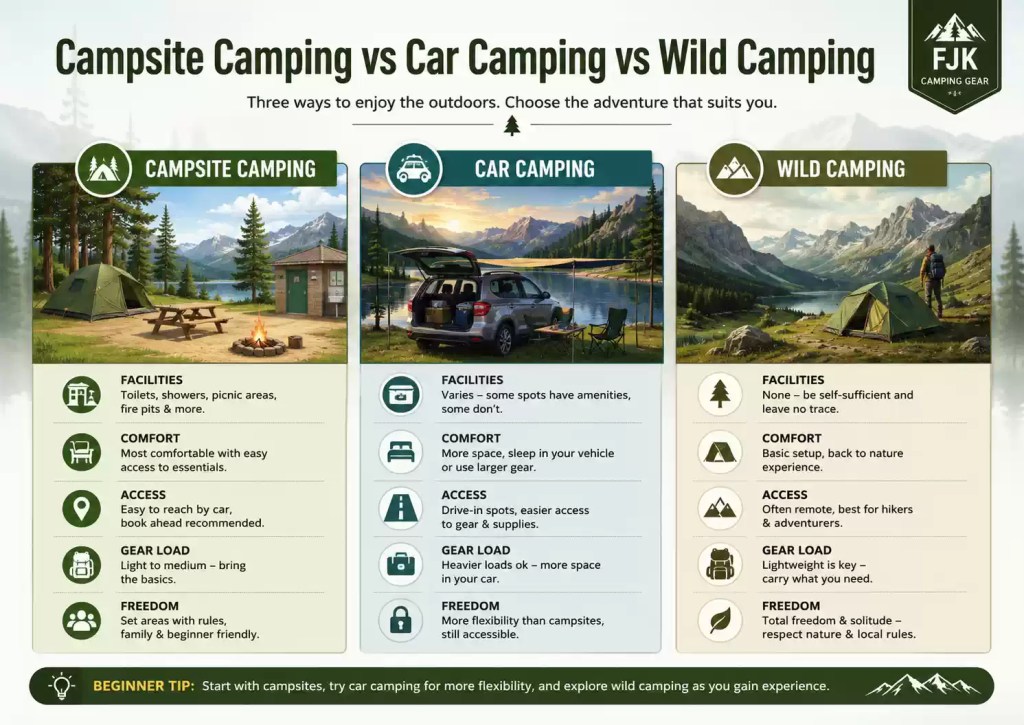
Campsite camping is the best starting point for most families. It gives access to toilets, water, showers, bins, and help if something goes wrong. It is suitable for beginners, young children, nervous campers, and parents who want a comfortable first experience.
Car camping is a style of campsite camping where your vehicle is nearby and you can bring more equipment. It is ideal for family tents, air beds, chairs, tables, cool boxes, toys, and extra clothing. For UK families, car camping is usually the most practical and stress-free option.
Wild camping is more advanced. It usually means carrying lighter gear, using fewer facilities, and following stricter outdoor responsibility. In many parts of England and Wales, wild camping requires landowner permission. Scotland has broader responsible access rights, but campers must still follow local guidance, avoid damage, leave no trace, and respect restrictions. Families interested in wild camping should gain experience on campsites first.
For beginner parents, the best route is to start with a one or two-night campsite stay. After that, try a slightly more basic campsite. Only then consider more remote camping styles if the family enjoys the experience.
How to Keep Children Warm at Night
Keeping children warm at night is one of the most important parts of family camping. The key is insulation, dry clothing, and sensible layering.
Children should change into dry sleepwear before bed. Even if their daytime clothes feel only slightly damp, they can make children cold overnight. Warm socks, thermal-style layers, fleece pyjamas, and a hat can help in cooler months.
The sleeping mat matters because the ground pulls heat away from the body. A warm sleeping bag on a poor mat will still feel cold. Use an insulated mat or add a blanket underneath. If using an air bed, add an insulating layer between the bed and sleeping bag.
Do not overdress children to the point where they sweat, because damp clothing can make them colder later. Instead, use breathable layers and add blankets if needed. Keep spare blankets nearby so parents can adjust during the night.
A warm drink before bed can help children feel cosy, but avoid too much liquid if toilet trips are likely. Make sure torches and shoes are ready in case someone needs the toilet during the night.
Rainy Day Camping With Kids
Rain does not have to ruin a family camping trip. In the UK, it is better to expect some rain and prepare for it. Children often enjoy wet-weather camping if they have the right clothing.
Waterproof jackets, trousers, and wellies allow children to play outside without soaking their main clothes. A covered tent entrance or porch helps keep the sleeping area dry. A tarp or shelter can create a dry sitting area if allowed.
Parents should pack rainy-day activities such as cards, colouring books, small games, books, and simple crafts. Snacks and warm drinks also help during wet weather.
The main rule is to keep wet items away from sleeping areas. Wet coats, muddy boots, and damp towels should stay near the entrance or in a separate storage area. Sleeping bags must stay dry at all costs.
If the weather becomes unsafe due to strong wind, flooding, or severe conditions, parents should prioritise safety over continuing the trip. There is no shame in leaving early or changing plans.
Final Thoughts: Pack for Comfort, Weather and Calm Family Routines
Family camping in the UK does not need to be stressful. The secret is not packing every possible item; it is packing the right essentials for shelter, sleep, warmth, food, lighting, hygiene, safety, and children’s comfort.
Parents should prepare for real UK conditions. That means waterproof clothing, warm bedtime layers, reliable lighting, simple meals, and a tent that can handle rain and wind. A good family camping checklist removes uncertainty and helps everyone relax.
For a first trip, choose a family-friendly campsite, arrive early, keep meals simple, and avoid overloading the schedule. Children do not need a perfect holiday to enjoy camping. They need warmth, food, sleep, space to play, and parents who are not overwhelmed by missing gear.
With the right preparation, family camping becomes more than a budget holiday. It becomes a shared outdoor experience, a confidence-building adventure, and a simple way to enjoy the best of the UK countryside, coast, forests, lakes, and campsites.
FAQs
1. What are the most important family camping essentials in the UK?
The most important family camping essentials in the UK are a waterproof tent, warm sleeping bags, insulated sleeping mats or camping beds, waterproof clothing, spare socks, a camping stove, simple food, drinking water bottles, lanterns, torches, a first aid kit, toiletries, and storage bags. Families should also pack comfort items for children, especially for bedtime.
2. What should parents pack for camping with children?
Parents should pack all normal camping basics plus extra child-focused items such as spare clothes, waterproof trousers, wellies, snacks, comfort blankets, favourite bedtime items, simple games, child-safe torches, sun protection, insect repellent, and any medication. Younger children may also need nappies, wipes, changing mats, travel cots, and extra sleepwear.
3. How do you keep kids warm while camping?
Children stay warmer when they sleep in dry clothes, use a suitable sleeping bag, sleep on an insulated mat, wear warm socks, and have extra blankets available. Parents should avoid letting children sleep in damp daytime clothes. A warm hat and fleece layer can help during colder nights.
4. What size tent is best for family camping?
A family should usually choose a tent larger than the exact number of sleepers. A family of four will often feel more comfortable in a five-person or six-person tent because bags, shoes, toys, and clothes take up space. Separate bedrooms and a living area make family camping much easier.
5. Is an air bed or sleeping mat better for family camping?
Air beds can feel comfortable for car camping, but they can be colder underneath unless insulated. Self-inflating mats are often warmer and more stable. For UK family camping, comfort and insulation both matter. If using an air bed, add a blanket or insulating layer between the air bed and sleeping bag.
6. What food should families take camping?
Families should take simple meals that are easy to cook and clean up. Good options include porridge, cereal, sandwiches, wraps, pasta, noodles, rice, soup, eggs, beans, sausages, fruit, snack bars, and hot drinks. Parents should plan meals before travelling and prepare ingredients at home where possible.
7. How do beginners prepare for UK camping weather?
Beginners should check the forecast, pack waterproof jackets, bring warm layers, use a reliable waterproof tent, carry extra socks, and prepare for chilly nights. Rain and wind are common UK camping challenges, so families should pack for mixed conditions even in summer.
8. What are common family camping mistakes to avoid?
Common mistakes include choosing the wrong campsite, arriving too late, bringing sleeping bags that are not warm enough, forgetting waterproofs, cooking complicated meals, failing to organise the tent, and overpacking unnecessary items. Beginners should start with a short campsite trip and keep the setup simple.
9. Can families go wild camping in the UK?
Families can wild camp only where it is legal or where they have landowner permission. Rules differ across the UK. In much of England and Wales, wild camping usually requires permission. Scotland has broader responsible access rights, but campers must still follow local rules, avoid damage, and leave no trace. Beginners with children should usually start on managed campsites before attempting remote camping.

Best Dog-Friendly Camping Gear for UK Campsites and Outdoor Holidays

Family Camping Essentials UK: What Parents Should Pack for a Stress-Free Trip

Warcombe Farm Camping Park: Complete Guide to Camping Near Woolacombe, North Devon

Land’s End Camping and Glamping Guide: Best Places to Stay and What to Pack


Rechargeable & Solar Camping Lights

