


Land’s End Camping and Glamping Guide: Best Places to Stay and What to Pack
Land’s End is one of the most dramatic places in Britain to plan a camping or glamping trip. Sitting at the far western edge of Cornwall, it offers sea views, coastal walks, beaches, sunsets, fresh air and that proper “end of the country” feeling many UK campers look for.
For beginners, Land’s End camping and glamping is especially attractive because you can enjoy the outdoor lifestyle without travelling too far from facilities, villages, cafés, beaches and established campsites. It is a strong choice for families, couples, solo travellers, car campers and first-time campers who want a memorable coastal trip without making things too complicated.
Land’s End Camping and Glamping describes itself as a family-run camping and glamping site near Sennen Cove, offering sea-view pitches, pods and dark skies, which shows why the area is gaining search interest among UK campers.
This guide explains where beginners should start, what type of camping suits different travellers, what to pack for Cornwall weather, and the mistakes to avoid before your first trip.
Why Land’s End Is Popular for Camping and Glamping

Land’s End combines several things UK campers love: coastal scenery, walking routes, beaches, open skies and easy access to classic Cornwall attractions. It is not just a place to pitch a tent; it is a full outdoor experience.
For many beginners, this is important. Your first camping trip should not feel like a survival test. It should feel manageable, comfortable and enjoyable. Land’s End gives you the chance to enjoy the outdoors while still being close to proper facilities.
The area is also useful for different camping styles:
Families can choose campsites or glamping pods with better comfort and easier facilities.
Couples can enjoy sea views, sunsets and quieter touring pitches.
Solo campers can use Land’s End as a base for coastal walks and simple campsite stays.
Car campers can bring more comfort items such as air beds, chairs, cool boxes and cooking equipment.
Beginner wild campers should be careful, because wild camping rules in England are restrictive and usually require landowner permission. The Countryside Code advises visitors to respect signs, protect nature, take litter home and minimise disturbance when visiting the coast and countryside.
Quick Answer:
1. Is Land’s End Good for Camping and Glamping?
Yes, Land’s End is a strong choice for camping and glamping if you enjoy coastal scenery, walking routes, beaches, sunsets and a slightly wilder edge-of-Cornwall atmosphere. It is especially suitable for campers who want access to Sennen Cove, Gwynver Beach, Porthcurno, the South West Coast Path and the wider west Cornwall coastline.
2. Why Land’s End Appeals to UK Campers
Land’s End is not a typical soft countryside camping destination. It has a stronger coastal identity. The landscape feels open, dramatic and weather-shaped. Cliffs drop towards the Atlantic, beaches sit below steep fields and headlands, and the light changes quickly through the day. On a calm evening, it can feel peaceful and cinematic. On a wet or windy day, it reminds campers why good waterproofs, strong tent pegs and sensible layers matter.
3. What Makes Land’s End Camping Different from Inland Camping?
Camping near Land’s End is different from pitching in a sheltered inland field.
The first difference is wind. Even in warmer months, the Atlantic breeze can make evenings feel cooler than expected.
The second difference is moisture. Coastal air can feel damp, and grass can stay wet in the morning.
The third difference is walking terrain. Land’s End and the surrounding coastline are ideal for walking.
4. Best Areas to Stay Near Land’s End
Choosing where to stay depends on the type of trip you want. Land’s End itself is the landmark, but many campers choose nearby villages, coves and coastal areas because they offer easier access to beaches, walking routes, cafés, touring pitches or quieter countryside.
Sennen and Sennen Cove
Sennen is one of the most popular bases for camping near Land’s End. It gives you access to one of west Cornwall’s best-known beach areas, surf-friendly Atlantic scenery and a practical location for walking or driving to Land’s End.
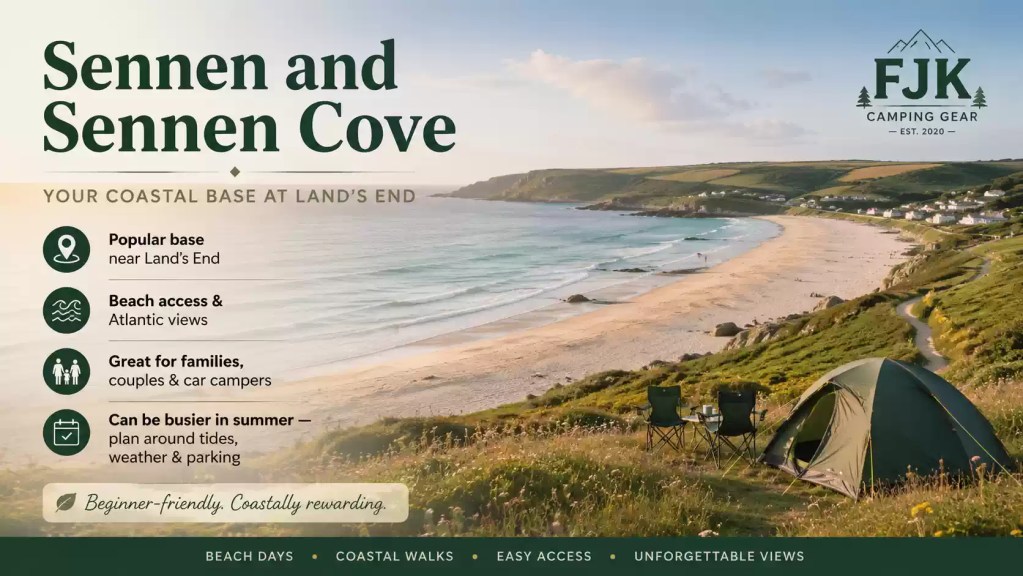
For beginners, Sennen works well because it feels like a proper coastal holiday location. You have sea air, beach access, walking opportunities and campsite options nearby. It can suit families who want a beach-focused trip, couples who want sunsets and coastal walks, and car campers who want a practical base rather than a remote pitch.
The main thing to remember is that beach-focused areas can be busier in summer. If you want a quiet camping break, check how close the site is to roads, beaches and popular walking routes. If you are travelling with children, plan beach days around tides, weather and parking rather than assuming every day will be simple.
Land’s End and Trevescan
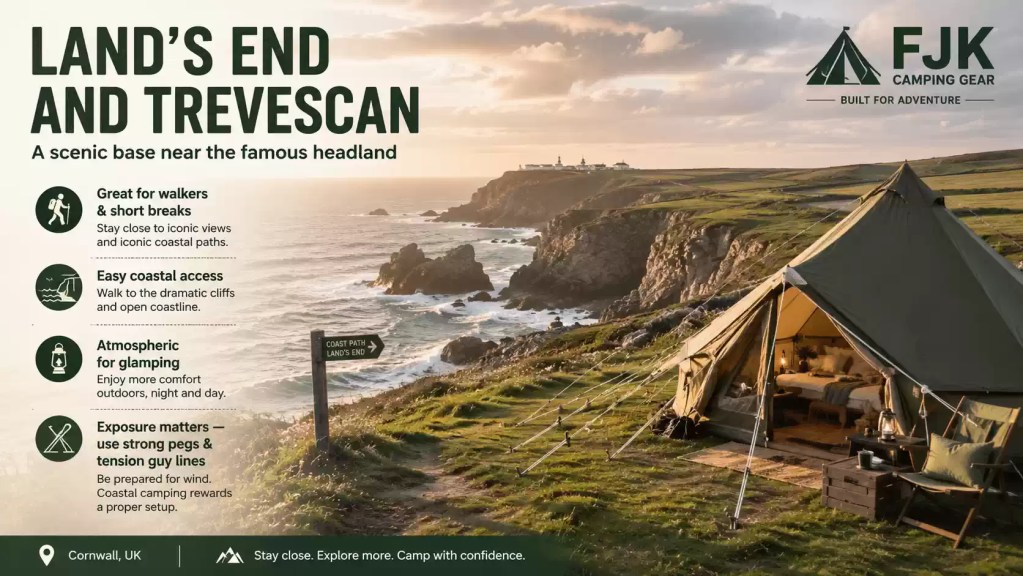
Staying close to Land’s End gives you the appeal of being near the famous headland itself. This can suit walkers, short-break visitors and people who want to say they camped near the most westerly point of mainland England.
The area around Trevescan and Land’s End can be useful for those who want walking access to the coast and a strong sense of place. It is also practical if you want to avoid driving every time you visit the landmark area. For glamping, this kind of location can feel especially atmospheric because you get the outdoor setting with more comfort at night.
The key consideration is exposure. The closer you are to the open coast, the more important wind preparation becomes. If you are tent camping, choose appropriate pegs, tension your guy lines, and avoid treating the tent like a festival pop-up. Coastal camping rewards proper setup.
Porthcurno and Treen
Porthcurno and Treen are excellent for campers who want dramatic scenery, beach access, walking and a quieter village-style feel. Porthcurno is known for its beautiful beach and proximity to the Minack Theatre, while Treen is often associated with traditional camping and walking access to the surrounding coast.
This area can suit walkers, couples, solo campers and families who want a scenic base with a slightly more tucked-away feel. It can also be useful for those who want to explore the coast east of Land’s End rather than staying only around Sennen.
Beginners should be aware that some traditional campsites operate differently from larger commercial holiday parks. Booking systems, arrival rules, pitch arrangements and facilities can vary. Always check the current policy before setting off, particularly in peak summer.
Penzance and the Wider West Cornwall Area
Penzance is not Land’s End itself, but it can be a practical base if you want easier transport, shops, restaurants and wider access to west Cornwall. For some beginners, especially those who are nervous about remote camping, staying closer to larger services can reduce stress.
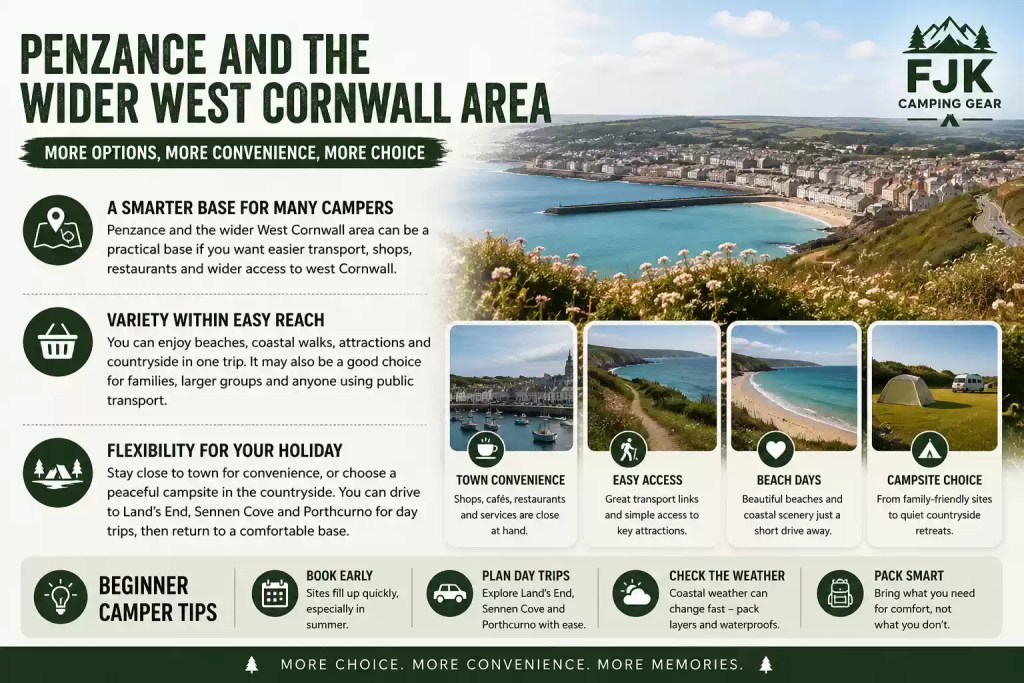
This option suits campers who want a mixed holiday: some camping, some town convenience, some beach time, some day trips. It may also work for travellers using public transport. However, if your dream is a cliff-top camping atmosphere, you may prefer Sennen, Trevescan, Treen or nearby countryside sites.
Best Types of Camping Near Land’s End
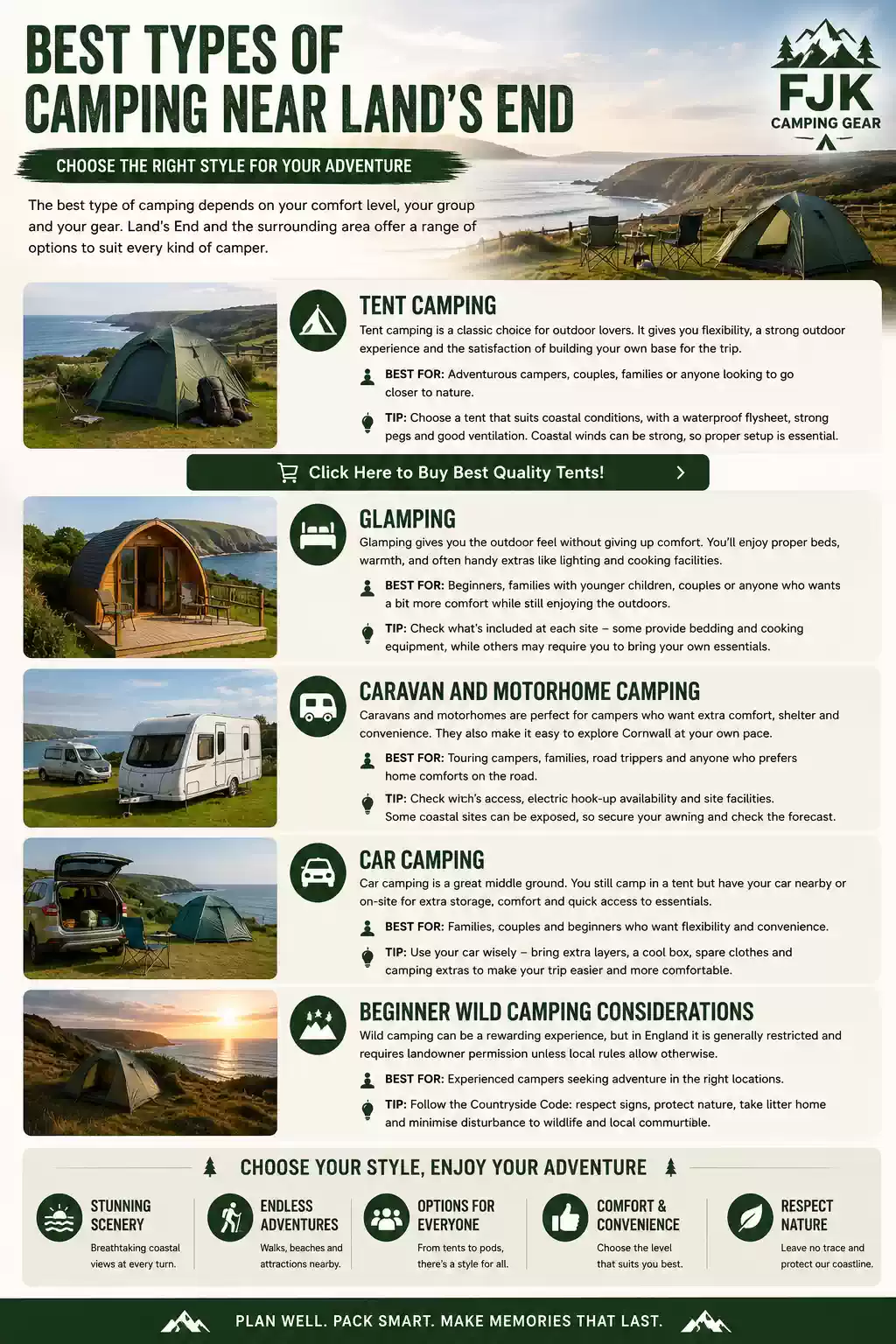
The best type of camping depends on your comfort level, your group and your gear. A couple with a small tent has very different needs from a family with children, a campervan owner, or someone booking a glamping pod.
Tent Camping
Tent camping is the classic choice for Land’s End. It gives you flexibility, a strong outdoor experience and the satisfaction of building your own little base for the trip. It is also usually the most gear-dependent option.
For beginners, the most important decision is tent quality. A cheap, weak tent may be fine for a garden sleepover, but exposed coastal camping is less forgiving. Look for a tent with a waterproof flysheet, a sewn-in groundsheet, good ventilation, enough sleeping space and a porch or storage area. Families should avoid choosing a tent that is technically large enough but too cramped for real use. A four-person family often needs more than a basic four-person sleeping area once bags, shoes, wet coats and children’s items are included.
Tent camping near Land’s End suits people who enjoy simple routines: setting up camp, making tea outside, walking to viewpoints, returning to a warm sleeping bag and waking up to sea air. It does not suit people who dislike damp grass, night-time toilet walks or the need to organise gear carefully.
Glamping
Glamping near Land’s End is ideal for beginners who want the coastal outdoor experience without immediately buying a full camping setup. It can also work well for couples, families with younger children, or people who want a short break with less packing.
The advantage of glamping is reduced friction. You usually do not need to pitch a tent, worry as much about sleeping comfort, or carry as much bulky kit. You still get the atmosphere of staying close to nature, but with more structure and comfort.
The disadvantage is that glamping can cost more and may offer less flexibility than bringing your own tent. You should also check exactly what is included. Some glamping units include bedding and cooking basics; others require you to bring more than expected. Never assume. Read the booking details carefully.
Caravan and Motorhome Camping
Caravans and motorhomes can be excellent for Land’s End because they provide better shelter from wind and rain. They also work well for road trips through Cornwall, especially if you want to move between beaches, villages and walking routes.
For touring campers, the key points are access, pitch type, hook-up availability, levelling, waste disposal and site rules. Some Cornish roads can be narrow, so it is worth checking directions rather than relying only on sat nav. A campsite with clear access from a main route may be easier for beginners than one reached by tight lanes.
Caravans and motorhomes suit travellers who want comfort, storage and weather protection. They are less suitable if you want a minimal back-to-nature feel or if you are not comfortable driving larger vehicles on rural roads.
Car Camping
Car camping is a practical middle ground for UK beginners. You still sleep in a tent, but you keep the car nearby or use it as part of your storage system. This makes packing less stressful because you can bring a few extra comfort items, such as a larger sleeping mat, camping chairs, a cooler, spare blankets and a proper cooking box.
Near Land’s End, car camping works well because the weather can change quickly. Having spare layers, dry clothes and extra food in the car gives you more resilience. It is also helpful for families, because children often need more changes of clothes than adults expect.
The mistake to avoid is bringing too much. A car full of loose bags can become chaotic. Use packing crates or labelled bags so you can find waterproofs, cooking items, sleeping kit and toiletries quickly.
Beginner Wild Camping Considerations
Beginner wild camping is a different subject from campsite camping. In England, wild camping is generally restricted and requires landowner permission unless specific local arrangements apply. Around sensitive coastal areas, it is especially important to protect the landscape, avoid disturbing wildlife, follow local rules and leave no trace.
For beginners visiting Land’s End, a proper campsite or glamping site is usually the better choice. You get toilets, water, safer parking, clearer rules and less risk of accidentally camping somewhere unsuitable. If you are interested in wilder-feeling camping, choose a simple campsite with a natural setting rather than attempting unauthorised camping.
Best Places to Stay: How to Compare Campsites and Glamping Options
Rather than choosing a campsite only because it appears first in a search result, compare your options against your actual needs. The “best” place is not the same for everyone.
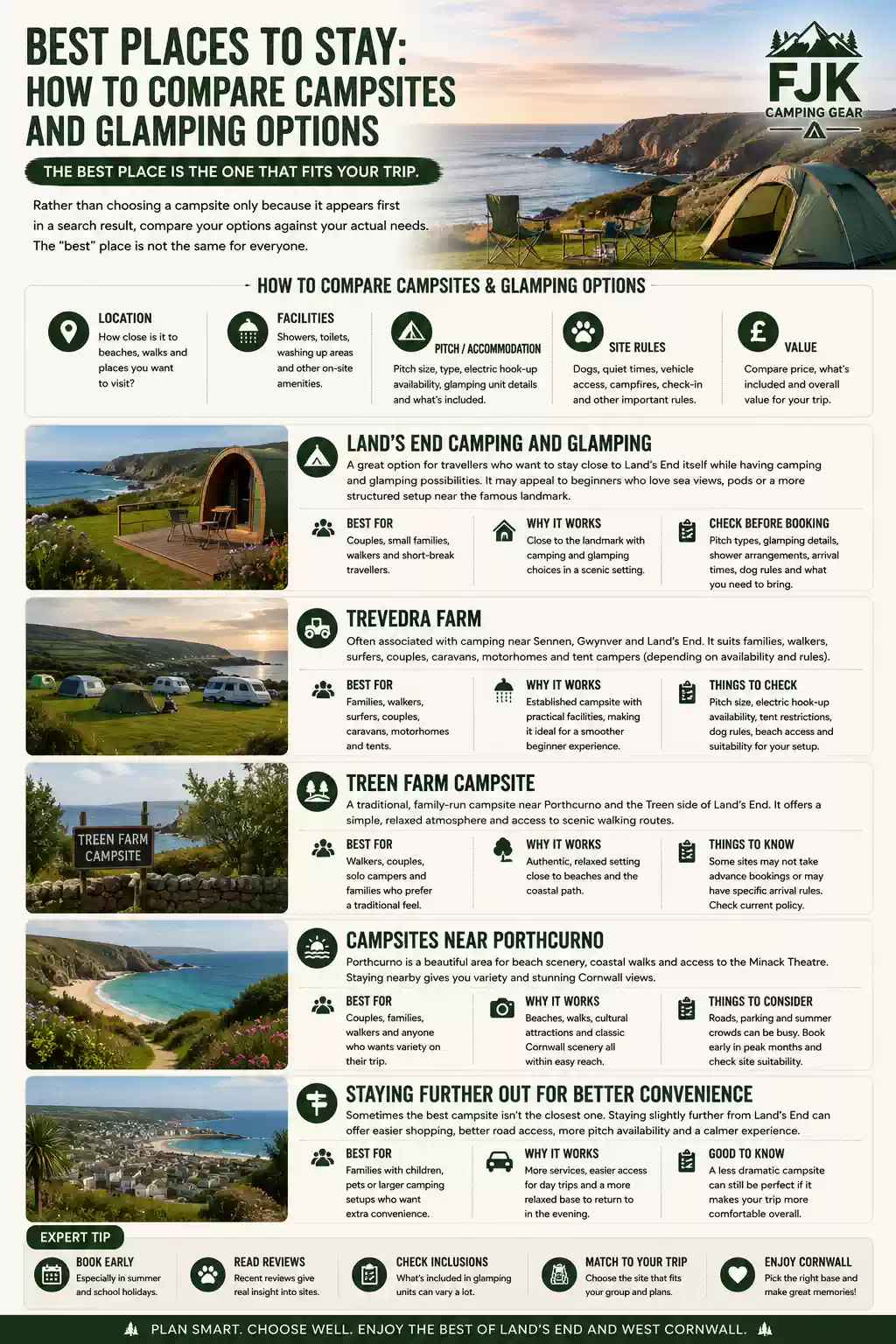
Land’s End Camping and Glamping
Land’s End Camping and Glamping is a relevant option for travellers who want to stay close to Land’s End itself while having camping and glamping possibilities. It may appeal to beginners who like the idea of sea views, pods or a more structured setup close to the famous landmark.
This kind of site can be a strong fit for couples, small families, walkers and short-break travellers. If you are new to camping, glamping can be a useful way to test the outdoor lifestyle without committing to a full tent, sleeping system and cooking setup.
Before booking, check current pitch types, glamping unit details, shower arrangements, arrival times, dog rules and what you need to bring. For glamping especially, confirm whether bedding, cooking equipment and lighting are provided.
Trevedra Farm
Trevedra Farm is often associated with camping near Sennen, Gwynver and Land’s End. It can suit families, walkers, surfers, couples, caravans, motorhomes and tent campers, depending on pitch availability and current site rules.
A site like this is useful if you want a more established campsite setup with practical facilities. For beginners, that can make the trip smoother. Having a campsite base with showers, toilets and basic services can help you focus on enjoying Cornwall rather than worrying about logistics.
When comparing Trevedra or similar sites, check pitch size, electric hook-up availability, tent size restrictions, dog rules, access to beaches and whether your group’s setup is suitable. Larger family tents need more space and stronger pitching discipline than small two-person tents.
Treen Farm Campsite
Treen Farm Campsite is a traditional option near the Porthcurno and Treen side of the Land’s End area. It may appeal to campers who prefer a simple, family-run campsite atmosphere and access to scenic walking routes.
Traditional campsites can feel more authentic and relaxed than highly commercial holiday parks, but beginners must read the rules carefully. Some sites may not take advance bookings or may have specific arrival procedures. This can be fine for experienced campers but stressful for first-timers during peak season if not planned properly.
Treen and the surrounding area can suit walkers, couples, solo campers and families who want to explore dramatic beaches and the coastal path. Pack sensibly, arrive with realistic expectations and avoid assuming every campsite works like a large chain site.
Campsites Near Porthcurno
Porthcurno is a beautiful area for visitors who want beach scenery, coastal walks and access to the Minack Theatre. Staying nearby can be a strong choice for travellers who want a scenic base slightly away from the main Land’s End visitor focus.
For beginners, the advantage is variety. You can enjoy beach time, walking, cultural attractions and classic Cornwall views in one trip. The challenge is that roads, parking and summer crowds can require planning. Book early if travelling in peak months and check whether your chosen site suits your tent, campervan or family size.
Staying Further Out for Better Convenience
Sometimes the best campsite is not the closest one. Staying slightly further from Land’s End can give you easier shopping, better road access, more pitch availability or a calmer family experience. This can be especially useful if you are travelling with young children, pets or a larger camping setup.
A slightly less dramatic campsite can still work beautifully if it gives you a comfortable base. You can drive to Land’s End, Sennen, Porthcurno and nearby beaches during the day, then return to a calmer site in the evening.
Camping Near Land’s End for Different Types of Traveller
Families with Children
Families need a campsite that reduces stress. That usually means toilets and showers within a reasonable distance, safe pitch spacing, clear rules, parking, washing-up facilities and enough room for children to move around without constantly getting underfoot.
For family camping near Land’s End, a good tent layout matters. Separate sleeping compartments can help children settle. A porch area is useful for shoes, beach toys, waterproofs and towels. A picnic blanket or ground mat creates a clean area for snacks and games.
Pack more warm layers than you think you need. Children can get cold quickly after beach time or when the sun drops. Also pack simple entertainment for wet weather: cards, colouring, small games, books and snacks. A family camping holiday can be wonderful, but only if you plan for slower mornings, sandy clothes, tired legs and changing moods.
Couples
Couples can enjoy Land’s End as a romantic coastal escape, especially outside the busiest school holiday periods. A small tent, glamping pod or campervan can all work well.
For a couple’s camping trip, comfort is often worth prioritising. A good sleeping mat, warm sleeping bag, compact chairs, lantern and simple cooking setup can transform the experience. Many people underestimate how much better camping feels when they can sit comfortably outside in the evening rather than crouching on damp grass.
Couples should also plan one or two low-effort meals. It is tempting to imagine elaborate campsite cooking, but after a windy coastal walk, simple food often feels best. Bring easy breakfasts, hot drinks and a reliable stove if your campsite allows cooking.
Solo Campers
Solo camping near Land’s End can be rewarding for confident beginners, walkers and people who want quiet time by the coast. The area gives plenty of opportunity for reflective walks, photography and simple outdoor routines.
Solo campers should prioritise safety and organisation. Choose a recognised campsite, tell someone where you are staying, check phone signal, carry a power bank, and avoid risky cliff-edge walking in poor visibility. Pack light enough to manage everything alone but not so light that you compromise warmth or waterproofing.
A small tent with a porch, a comfortable sleeping mat, a headtorch and a compact cooking setup are usually enough for a short solo trip. The key is to keep your system simple and repeatable.
Car Campers
Car campers have the advantage of storage. This is useful in Cornwall because you may want beach gear, walking kit, waterproofs, cooking items and sleeping gear all in one trip.
Use the car wisely. Keep frequently used items accessible: waterproof jacket, water bottle, snacks, towel, first aid kit and spare socks. Store sleeping gear in dry bags or sealed bags. Keep cooking gear in one crate and avoid mixing food with wet clothing.
Car camping is especially good for beginners because it gives you backup. If the weather turns, you can retreat to the car for a short reset, drive to a café, or keep extra layers dry.
Dog Owners
Dog-friendly camping near Land’s End can be enjoyable, but it needs careful planning. Dog rules vary by campsite, beach and season. Some beaches have seasonal restrictions, and coastal paths require responsible control, especially near livestock, cliff edges and other walkers.
Pack a lead, long line if appropriate, dog towel, collapsible bowl, food, waste bags, ID tag and a familiar blanket. After beach walks, rinse or wipe paws and keep your dog warm if the evening turns cool. Never leave dogs unattended in tents, cars or glamping units.
A dog-friendly campsite is not automatically a stress-free campsite. Check rules in advance and plan your days around your dog’s temperament, fitness and comfort.
What to Pack for Camping Near Land’s End
Packing for Land’s End means preparing for sun, wind, rain and cooler evenings. The goal is not to bring everything you own. The goal is to bring the right basics and keep them organised.
Shelter Kit
Your shelter is the foundation of the trip. For Land’s End and west Cornwall, choose a tent that can cope with wind and rain. A beginner-friendly family tent should have enough space, a waterproof flysheet, strong poles, reliable zips, ventilation and a practical porch.
Pack tent pegs suitable for firm or coastal ground. Standard thin pegs may not be enough in exposed conditions. Bring a mallet, spare pegs, guy lines and a small repair kit. A footprint or groundsheet protector can help keep the tent base cleaner and reduce wear.
Do not pitch casually. Face doors away from the strongest wind if possible, tension guy lines properly and avoid leaving loose fabric flapping. A well-pitched average tent often performs better than a good tent pitched badly.
Sleep System
A good sleep system matters more than many beginners realise. Poor sleep makes the whole trip harder, especially with children.
Your sleep system includes a sleeping mat or camping bed, sleeping bag, pillow and night layers. The mat is not just for comfort; it also insulates you from the ground. For coastal camping, a self-inflating mat or insulated sleeping mat is usually more comfortable than a thin foam roll mat. Air beds can feel luxurious but may be cold without insulation underneath, so choose carefully.
Use sleeping bags suitable for UK temperatures. Even in summer, coastal nights can feel cool. Bring a warm layer for sleeping, such as a fleece or thermal top, but avoid overdressing to the point where you sweat and become damp.
Clothing Layers
Layering is the safest clothing strategy for Land’s End camping. Pack a base layer or T-shirt, fleece or warm mid-layer, waterproof jacket and comfortable trousers. Add spare socks, warm hat and lightweight gloves if travelling outside high summer.
Avoid relying on one thick coat. Several layers are more flexible. You can adjust as the weather changes, which it often does on the Cornish coast.
For children, pack extra changes. Sand, rain, spills and puddles can use up clothing quickly. Keep one dry set sealed for sleeping.
Waterproofs
Waterproofs are not optional for UK coastal camping. A waterproof jacket should be easy to access, not buried at the bottom of the car. Waterproof trousers are useful for walkers, children and anyone camping in wetter months.
The most common beginner mistake is packing a fashion raincoat rather than a practical waterproof. For coastal walks, choose something that handles wind-driven rain and has a hood that stays up. A packable jacket can work for short summer trips, but more serious walking needs better protection.
Footwear
For campsite life, bring easy shoes or sandals for walking to the facilities. For coastal paths, bring walking shoes or boots with grip. For beaches, bring footwear you do not mind getting sandy or wet.
Do not rely only on new boots. Break them in before the trip. Blisters can ruin a walking holiday quickly. Pack blister plasters and spare socks.
Cooking Kit
Your cooking kit depends on campsite rules and your level of ambition. Many beginners do best with a simple stove, kettle, pan, mugs, plates, cutlery, lighter, washing-up bowl, sponge, tea towel and food storage.
Plan easy meals. Pasta, porridge, soup, wraps, eggs, pre-chopped vegetables, hot drinks and snacks are more realistic than complicated recipes. Cornwall has plenty of food options, but campsite breakfasts and evening drinks still need planning.
Always follow campsite rules on stoves, barbecues and fire safety. Never cook inside a tent unless the setup is specifically designed and safe for it. Carbon monoxide risk is serious, and ventilation matters.
Lighting and Power
A headtorch is one of the best small items a beginner can buy. It keeps your hands free for night-time toilet trips, cooking, finding pegs or helping children. Also bring a lantern for inside or outside the tent.
Pack a power bank for phones, especially if you are walking or using your phone for maps. Keep cables organised in a small pouch. If using electric hook-up, make sure you have proper camping-rated equipment, not household extension leads.
Beach Gear
Land’s End trips often include beach time, especially around Sennen and Porthcurno. Pack towels, swimwear, warm layers for after swimming, sun cream, refillable bottles, a beach bag and a simple picnic blanket.
The beach can be warm in the sun and chilly in the wind. Children may need hooded towels or dry robes. Adults should bring a spare layer rather than assuming a sunny beach day stays warm.
Walking Kit
For short coastal walks, pack a daypack, water, snacks, waterproof jacket, map or offline route, phone, power bank, headtorch and small first aid kit. For longer walks, add extra layers and check the route carefully.
Do not underestimate the coast path. Distances can feel harder than expected because of climbs, uneven ground and wind. Beginners should start with shorter routes and build confidence.
Toiletries and Practical Items
Pack wash bag, towel, flip-flops or shower shoes, toilet roll, hand sanitiser, medication, sunscreen, insect repellent, lip balm and a small quick-dry towel. A microfibre towel can be useful when space is limited.
A small doormat or old towel outside the tent helps control mud and sand. Packing cubes or dry bags help separate clean, dirty and wet items.
Beginner Camping Checklist for Land’s End
Here is a practical checklist for a beginner-friendly Land’s End camping trip:
- Tent with poles, pegs and guy lines
Mallet and spare pegs
Groundsheet or footprint
Sleeping bags
Sleeping mats or camping beds
Pillows
Warm night layers
Waterproof jackets
Fleece or mid-layers
Walking shoes or boots
Spare socks and underwear
Campsite shoes
Camping chairs
Table or picnic blanket
Stove and fuel
Kettle or cooking pot
Plates, bowls, mugs and cutlery
Cool box or food bag
Water bottles
Washing-up kit
Headtorches
Lantern
Power bank and charging cables
First aid kit
Sun cream
Towels
Toiletries
Rubbish bags
Beach bag
Map or offline route app
Dog essentials if travelling with pets
Games or wet-weather entertainment for children
Camping Checklist Printable – Free UK Download
Looking for a reliable camping checklist printable for your next UK adventure? Our free, easy-to-use PDF helps you pack smart and avoid last-minute stress. Designed specifically for UK weather and campsite conditions, it covers essentials like tents, sleeping gear, cooking equipment, clothing layers, and safety items.
Whether you’re planning a summer weekend in the Lake District or a family camping trip in Scotland, this camping checklist printable keeps everything organised in one place.
Download your free UK camping checklist printable today and camp with confidence.
What to Wear Camping Near Land’s End
The best clothing for Land’s End camping is practical rather than fashionable. You want clothes that dry reasonably quickly, layer easily and cope with wind.
For daytime, wear comfortable trousers or shorts depending on the season, a T-shirt or base layer, fleece and waterproof jacket. For evenings, add warmer layers. For sleeping, keep a dry set of clothes that never leaves the tent except for bedtime.
Avoid denim for walking or wet weather. It dries slowly and becomes uncomfortable. Choose walking trousers, leggings, softshell trousers or quick-dry layers instead.
For beach days, pack swimwear, towel, sun hat and warm layer. Many beginners forget that the walk back from the beach can feel cold after swimming, especially if the wind picks up.
Camping Food Ideas for Beginners
Food can make or break a camping trip. The trick is to keep it simple.
For breakfast, choose porridge, cereal, eggs, toast, fruit, yoghurt or breakfast wraps. For lunch, choose sandwiches, wraps, pasties, salads or picnic food. For dinner, choose pasta, rice dishes, soup, chilli, noodles or one-pan meals.
Bring plenty of snacks for walking days: cereal bars, nuts, fruit, crisps, biscuits and chocolate. For families, snacks are not a luxury; they are a mood-management tool.
Hot drinks are important. Tea, coffee or hot chocolate can turn a chilly morning into something enjoyable. A kettle is one of the most useful campsite items.
Weather Preparation for Cornwall Camping
Cornwall’s weather can be beautiful, but it is rarely something to ignore. Land’s End is exposed to Atlantic conditions, so prepare for change.
Check the forecast before travelling, but pack for a range of conditions. Even if the forecast looks dry, bring waterproofs. Even if the day looks warm, bring evening layers. Even if you are camping in summer, make sure your sleeping bag is warm enough.
Wind is the biggest factor for tent campers. If strong winds are forecast, reconsider exposed pitches, check your tent rating and ask campsite staff for advice if available. Avoid pitching under unstable branches or in poorly drained dips.
Rain management is about systems. Keep wet items outside the sleeping area. Use the porch for boots and waterproofs. Keep bedding away from tent walls. Ventilate the tent to reduce condensation.
Best Walks and Things to Do Near Land’s End
Camping near Land’s End gives you access to some of Cornwall’s most memorable walking and coastal scenery. Beginners do not need to attempt long hikes to enjoy the area.
Sennen Cove to Land’s End
This is one of the classic short coastal walks in the area. It suits many visitors because it offers dramatic views without requiring a full-day hike. The route can be adjusted depending on ability, weather and confidence.
For beginners, this is a good first walk if conditions are calm. Wear proper footwear, keep away from cliff edges, carry water and allow more time than the distance suggests. Stop often and enjoy the views rather than rushing.
Land’s End to Porthcurno
This is a more demanding route and better suited to walkers with decent fitness and preparation. It offers spectacular coastal scenery, but it should not be treated like a casual stroll. Pack layers, water, snacks and navigation.
This walk can be a highlight of a camping trip, especially for couples or solo walkers. Families with younger children may prefer shorter sections rather than committing to the full route.
Porthcurno and the Minack Theatre Area
Porthcurno is a strong day-trip option from Land’s End. It combines beach scenery, cultural interest and dramatic cliff views. In peak season, plan parking and timings carefully.
Bring beach layers, walking shoes if exploring paths, and sun protection. The area can be busy, so early starts may make the day easier.
Sennen Cove Beach Day
Sennen Cove is ideal for a classic Cornwall beach day. For families, bring towels, layers, water, snacks, sun cream and a windbreak if you use one. For beginners, remember that beach days still need weather planning. A sunny morning can become breezy by late afternoon.
Check local safety information before swimming or surfing. The Atlantic can be powerful, and beach conditions change.
Campsite vs Glamping vs Caravan: Which Should You Choose?
If you are completely new to outdoor holidays, glamping is the easiest entry point. It gives you comfort and atmosphere without requiring a full gear investment.
If you want the classic camping experience and are happy to learn, tent camping is the best value and most flexible option. Choose a campsite with facilities and avoid travelling during extreme weather for your first trip.
If you already own or can hire a campervan or motorhome, touring can be comfortable and practical. It works well for road trips and mixed-weather holidays.
If travelling as a family, choose the option that protects sleep quality. Tired children and uncomfortable adults can make camping feel harder than it needs to be. A larger tent, better sleeping mats or glamping upgrade may be worth the cost.
Beginner Mistakes to Avoid
1. Choosing the Wrong Tent
A tent that is too small, too weak or too hard to pitch can ruin the trip. Choose a tent suitable for UK weather and your group size.
2. Ignoring Wind
Coastal wind is not a minor detail. Peg the tent properly, use guy lines and choose your pitch carefully.
3. Packing Too Much Loose Gear
Loose bags create chaos. Use crates, packing cubes or dry bags. Keep cooking, sleeping, clothing and beach items separate.
4. Forgetting Warm Layers
Even summer evenings can feel cool. Pack fleece layers, warm socks and sleeping clothes.
5. Not Testing Gear Before Travel
Pitch your tent at home if possible. Test your stove, lantern, mats and pump. Beginners should not discover missing parts at the campsite.
6. Arriving Too Late
Pitching in the dark is stressful. Arrive with enough daylight to set up calmly.
7. Relying Only on Phone Signal
Download maps, booking details and directions before travelling. Carry a power bank.
8.Underestimating Condensation
Ventilate the tent and keep bedding away from walls. Condensation does not always mean the tent is leaking.
9. Overplanning Each Day
Camping takes time. Cooking, washing up, packing beach bags and getting children ready all take longer outdoors. Leave space in the schedule.
Family Camping Tips for Land’s End
Family camping works best when the setup is simple and repeatable. Give each person a bag or packing cube. Keep shoes near the door. Keep torches in the same place every night. Make a clear wet-weather plan.
Children often enjoy campsite routines: helping with pegs, carrying water, setting up chairs, using headtorches and choosing snacks. Give them small jobs. It makes the trip feel like an adventure rather than a disruption.
Plan short outings rather than long forced marches. A beach morning, campsite lunch and short evening walk can be better than a full day of rushing.
Dog-Friendly Camping Tips
If bringing a dog, check campsite rules and beach restrictions before booking. Pack lead, long line if used safely, towel, bowl, food, waste bags, ID tag and familiar bedding.
Keep dogs under control near livestock and cliff paths. Do not assume every beach allows dogs all year. Plan shaded rest, water breaks and quieter times away from crowds.
Suggested 3-Day Land’s End Camping Itinerary
Day 1: Arrival and Easy Setup
Arrive in the afternoon with plenty of daylight. Pitch the tent, organise sleeping areas and make a simple meal. Take a short local walk if time allows, but do not overdo the first evening. Focus on getting comfortable.
Day 2: Sennen Cove and Land’s End
Start with breakfast at camp, then head towards Sennen Cove or the Land’s End area. Choose a manageable walk, pack water and waterproofs, and leave time for the beach or viewpoints. Return to camp before everyone is exhausted.
Day 3: Porthcurno or Slow Campsite Morning
If the weather is good, visit Porthcurno or explore another nearby coastal route. If the weather is poor, enjoy a slower morning, hot drinks, local cafés or a short drive. Pack down carefully and dry gear at home if needed.
Final Thoughts: Is Land’s End Camping Worth It?
Land’s End camping and glamping is absolutely worth considering if you want a UK coastal trip with dramatic scenery, memorable walks and a proper sense of adventure. It suits beginners, but only when planned sensibly. This is not the place to rely on weak gear, poor waterproofs or last-minute assumptions.
Choose the right base, pack for changing weather, keep your setup simple and respect the coastal environment. Whether you stay in a tent, campervan, caravan or glamping pod, the best Land’s End trips are built around comfort, flexibility and realistic planning.
For first-time campers, the aim is not perfection. The aim is confidence. Start with reliable shelter, warm sleep, waterproof clothing, simple food and good lighting. Once those basics are covered, the rest of the trip becomes much easier to enjoy.
If you are building your first UK camping setup, focus on practical gear that works across more than one trip: a waterproof tent, comfortable sleeping mat, warm sleeping bag, folding chairs, camp lighting, daypack and weather-ready clothing. With the right basics, Land’s End can become more than a famous signpost. It can become the starting point for many better-planned outdoor holidays.
FAQs
1. Is Land’s End good for camping?
Yes, Land’s End is good for camping if you enjoy coastal scenery, walking, beaches and dramatic Atlantic views. Beginners should choose a recognised campsite or glamping site with suitable facilities.
2. Is glamping near Land’s End better for beginners?
Glamping can be better for complete beginners because it reduces the need for tent, sleeping and cooking equipment. It is also useful for couples and families who want more comfort.
3. What should I pack for camping near Land’s End?
Pack a waterproof tent, sleeping bag, sleeping mat, warm layers, waterproof jacket, walking shoes, headtorch, lantern, stove, water bottle, first aid kit, towels and beach gear.
4. Can families camp near Land’s End?
Yes, families can camp near Land’s End, especially if they choose a campsite with toilets, showers, parking and enough pitch space. Families should pack extra clothing, snacks, warm layers and wet-weather entertainment.
5. Do I need waterproof gear for Cornwall camping?
Yes, waterproof gear is strongly recommended. Cornwall’s coastal weather can change quickly, and Land’s End can be windy and damp even in warmer months.
6. Is camping near Sennen Cove suitable for beginners?
Camping near Sennen Cove can be suitable for beginners if they choose the right campsite, book early in peak season and prepare for coastal weather.
7. What is the best camping style near Land’s End?
The best style depends on your needs. Tent camping is classic and flexible, glamping is easiest for beginners, caravans and motorhomes offer comfort, and car camping is practical for families.
8. Can I wild camp near Land’s End?
Wild camping in England generally requires landowner permission. Beginners should use recognised campsites or glamping sites to avoid legal, safety and environmental issues.
9. What should I wear for walks near Land’s End?
Wear comfortable walking shoes or boots, layered clothing, a waterproof jacket and weather-appropriate trousers. Carry water, snacks, a map or offline route and a charged phone.
10. What mistakes should beginner campers avoid?
Avoid arriving late, choosing a weak tent, ignoring wind, packing poor waterproofs, forgetting warm layers, failing to test gear and planning too much into each day.

Best Dog-Friendly Camping Gear for UK Campsites and Outdoor Holidays

Family Camping Essentials UK: What Parents Should Pack for a Stress-Free Trip

Warcombe Farm Camping Park: Complete Guide to Camping Near Woolacombe, North Devon

Land’s End Camping and Glamping Guide: Best Places to Stay and What to Pack


Rechargeable & Solar Camping Lights

