



Why Your First Camping Trip Feels Confusing
Your first camping trip can feel confusing because there are many small decisions to make before you leave home. Many beginners think camping is only about taking a tent, sleeping bag and food, but once planning starts, the checklist becomes much bigger. You need to consider shelter, sleeping gear, cooking equipment, lighting, safety items, hygiene products, clothing layers, food, water and comfort essentials. In the UK, the weather can change quickly, so packing for rain, wind, cold evenings and damp ground is very important, even during summer.
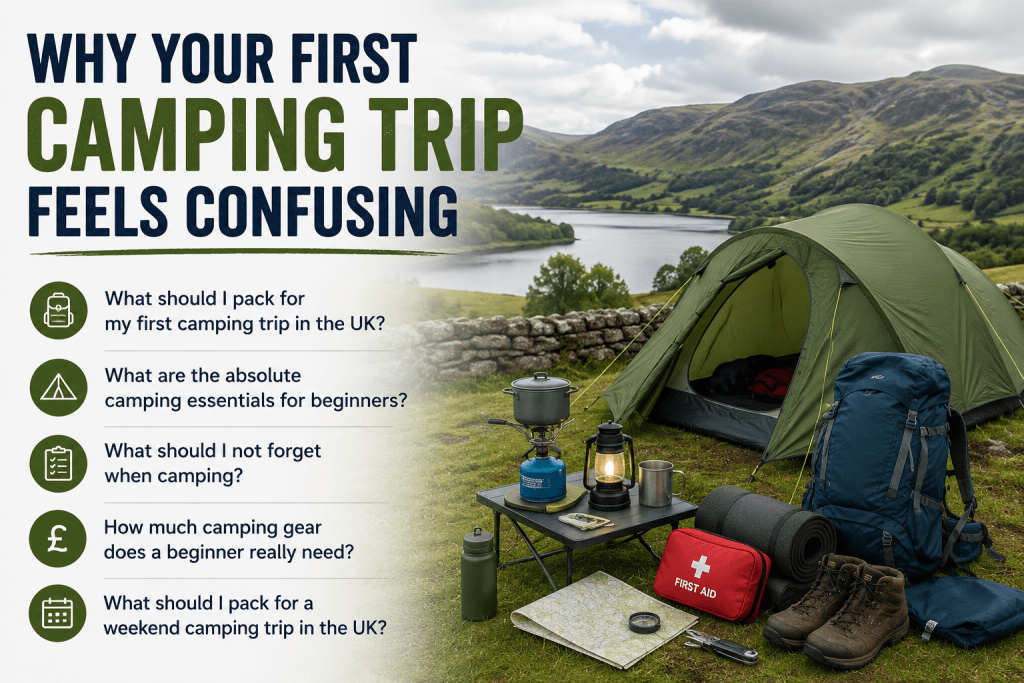
Another reason beginners feel confused is the fear of overpacking or forgetting something essential. Some items are necessary for safety and comfort, while others are only useful extras. Without a clear plan, it becomes difficult to know what is truly needed for a weekend campsite stay. A proper UK camping checklist helps solve this problem by breaking everything into simple sections. It allows you to pack step by step, avoid last-minute stress and feel more confident before your trip.
Once the basics are organised, camping becomes much easier to enjoy. Instead of worrying about missing gear, you can focus on relaxing, exploring nature and enjoying your first outdoor adventure.
What Should Beginners Pack for Camping in the UK?
Clothing is very important because UK weather can change quickly. Pack base layers, a fleece or insulated mid-layer, waterproof jacket, waterproof trousers, warm socks, hat, gloves and sturdy walking boots. For cooking, bring a camping stove, fuel, cookware, utensils, mugs, plates, food, snacks and enough drinking water.

Lighting and power items are also essential, including a headtorch, lantern, torch, spare batteries and power bank. Safety and hygiene items should include a first aid kit, hand sanitiser, wipes, toilet roll, sun cream, insect repellent and rubbish bags. A camping chair, small table and blanket can make the campsite more comfortable. A clear UK camping checklist helps beginners pack smart, stay organised and enjoy their first trip with confidence.
Why a UK Camping Checklist Matters for Beginners
UK Weather Can Change Quickly
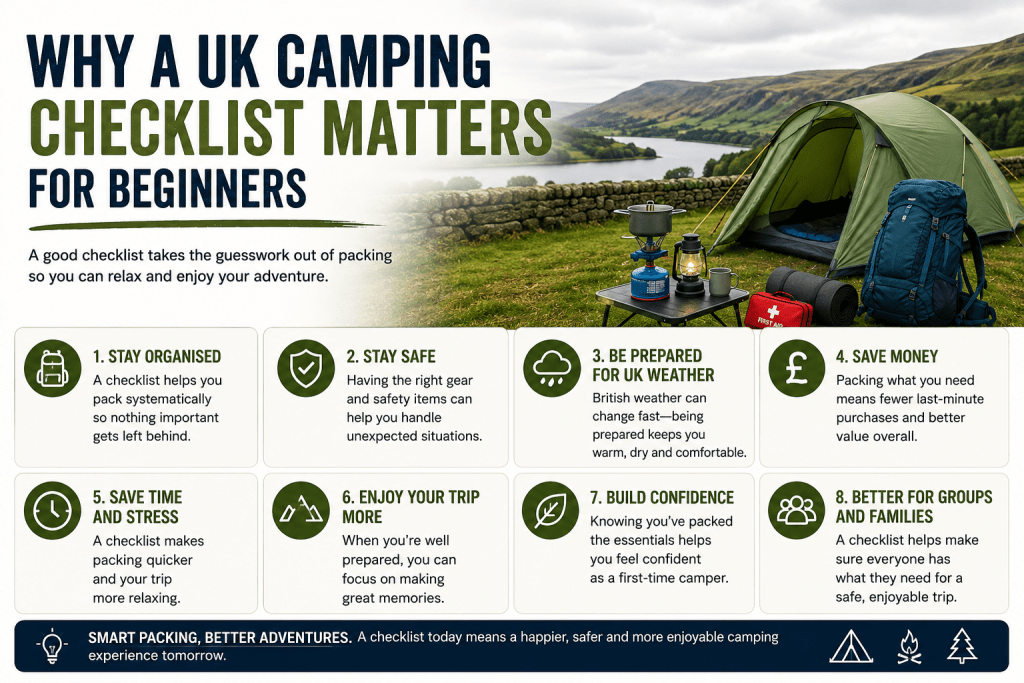
UK weather can change quickly, so beginners should always pack for more than one condition. A sunny morning can turn into rain, wind or a cold evening, especially in rural campsites, coastal areas, the Lake District, Wales or Scotland. For camping, this means waterproof clothing, warm layers, spare socks and a good groundsheet are just as important as your tent and sleeping bag. Even in summer, nights can feel chilly and damp. Packing smart helps you stay dry, warm and comfortable. A simple UK camping checklist makes it easier to prepare for sudden weather changes and enjoy your trip safely.
Campsite Facilities Are Not Always the Same
Campsite facilities are not always the same, especially across the UK. Some campsites offer hot showers, clean toilets, washing-up areas, electric hook-ups, small shops, Wi-Fi, and family-friendly play areas. Others may be more basic, with only a toilet block, water point, and simple pitch space. Before booking, beginners should check what is included so they can pack properly. Facilities can also vary by season, weather, location, and campsite size. A remote countryside campsite may feel peaceful but have fewer services, while a holiday park may offer more comfort. Always read the campsite details before your trip.
Beginners Often Overpack or Forget Essentials
Beginners often overpack or forget essentials because they are unsure what a real camping trip actually needs. It is common to pack too many clothes, extra gadgets, heavy cooking items, or unnecessary accessories, while forgetting simple but important things like a torch, spare batteries, warm layers, waterproof clothing, bin bags, first-aid items, or enough drinking water. This can make the trip uncomfortable, especially in the UK where weather can change quickly.
The best approach is to pack with a clear camping checklist. Start with the basics: shelter, sleeping gear, cooking equipment, clothing, food, lighting, hygiene items, and safety essentials. Then add extras only if they genuinely improve comfort. For example, a camping chair, power bank, dry bags, and a small repair kit can be more useful than carrying too many bulky items.
Beginners should also think about the type of campsite they are visiting. A campsite with toilets, showers, and a shop may require less gear than a remote campsite with fewer facilities. Packing smart means taking what you need without making your bag or car overloaded. A simple, organised checklist helps beginners feel prepared, confident, and ready to enjoy their first camping trip.
Comfort Matters on Your First Trip
Comfort matters on your first camping trip because it can decide whether you enjoy the experience or feel stressed throughout the journey. Many beginners focus only on the tent, but a good night’s sleep, warm clothing, dry gear, and simple campsite comfort items are just as important. If you are cold, tired, wet, or uncomfortable, even a beautiful campsite can feel difficult.
Start with your sleeping setup. A sleeping bag suitable for UK temperatures, a comfortable sleeping mat or camping bed, and a small pillow can make a big difference. The ground can feel colder and harder than expected, especially at night, so proper insulation is important. A warm blanket or extra fleece layer can also help during cooler evenings.
Comfort also comes from being organised. Keep your clothes, food, toiletries, and lighting items in separate bags or storage boxes so you can find them easily. A head torch, camping lantern, folding chair, and waterproof footwear can make daily campsite life much easier. These small items may seem simple, but they help you relax, move around safely, and enjoy your surroundings.
For beginners, it is also useful to choose a campsite with basic facilities such as toilets, showers, water points, and nearby parking. This reduces pressure and makes the first trip feel more manageable. You do not need luxury, but you do need practical comfort.
The goal of your first camping trip should not be to survive with the least amount of gear. It should be to learn, enjoy nature, and build confidence. When you sleep well, stay warm, and keep your essentials organised, camping becomes more enjoyable. A comfortable first trip gives you a better chance of wanting to camp again.

Essential Camping Checklist Table
| Category | What to Pack | Why It Matters |
|---|---|---|
| Shelter | Tent, pegs, mallet, groundsheet | Keeps you protected from rain, wind and damp ground |
| Sleeping | Sleeping bag, mat, pillow, blanket | Helps you stay warm and comfortable overnight |
| Cooking | Stove, fuel, cookware, lighter, utensils | Lets you prepare hot meals and drinks |
| Food & Water | Easy meals, snacks, refillable bottles | Keeps energy levels up during the trip |
| Clothing | Waterproof jacket, warm layers, spare socks | Helps you stay dry and warm in UK weather |
| Lighting | Lantern, head torch, spare batteries | Essential after dark |
| Hygiene | Toiletries, towel, wipes, toilet roll | Keeps the campsite experience comfortable |
| Safety | First aid kit, medication, emergency contacts | Helps manage small problems quickly |
| Comfort | Camping chair, table, picnic blanket | Makes the campsite more enjoyable |
| Extras | Power bank, bin bags, booking confirmation | Useful items beginners often forget |
How to Use This Checklist
Start with must-have camping essentials first, such as your tent, sleeping bag, sleeping mat, suitable clothing, food, water, lighting, cooking basics, hygiene items, and safety kit. Once the important items are covered, you can add comfort items, especially if you are travelling by car and have extra space. Camping chairs, pillows, storage boxes, extra blankets, and a larger cooler can make the trip easier without overloading your setup. Luxury gear should stay optional, not essential, because beginners do not need to buy everything for their first trip. Also adjust your checklist depending on whether you are camping solo, as a couple, or with family, as each trip will need different space, food, and comfort planning.
Beginner Packing Rule
Pack for warmth, dryness, sleep, food, light and safety first. Everything else is secondary.
Shelter Essentials for Your First Camping Trip
Tent
Choose a tent slightly larger than the number of people using it, especially for a first camping trip. A 2-person tent can feel tight when two people also need space for bags, shoes, and camping essentials. For better comfort, many beginners prefer sizing up by one person. Family campers may need extra standing space, separate sleeping areas, and storage for clothes, food, and equipment. Before buying, check the tent’s waterproof rating, ventilation, and overall stability for UK weather. Pop-up tents are quick and easy to pitch, but they are not always the best choice for wind, heavy rain, or rough campsite conditions.
Groundsheet or Tent Footprint
A tent footprint or groundsheet helps protect the base of your tent from stones, rough ground, and general wear. It also helps reduce dampness coming up from the ground, which is especially useful on wet grass or muddy UK campsites. Using a footprint can make your tent easier to clean after the trip because most of the mud stays on the separate sheet instead of the tent floor. For beginners, it is a simple but practical item that can improve comfort, protect your gear, and help your tent last longer.

Tent Pegs, Guy Lines and Mallet
Standard tent pegs may not suit every campsite surface, as hard ground, soft grass, sandy soil, or muddy pitches can all need different levels of grip. It is always useful to bring spare pegs in case some bend, break, or go missing during setup. A mallet is also easy to forget, but it makes pitching the tent much quicker and safer than using your hands or random objects. Guy lines are important for keeping the tent stable in windy conditions, especially on exposed UK campsites. A few extra pegs, properly secured guy lines, and a simple mallet can make your tent setup much stronger.
Waterproofing and Ventilation
Waterproofing helps keep rain out of your tent, which is especially important when camping in the UK’s changeable weather. A good waterproof rating, sealed seams, and a properly fitted rainfly can help protect your sleeping area and gear from getting wet. Ventilation is just as important because it reduces condensation inside the tent. Avoid blocking vents fully, even during cooler nights, as trapped moisture can make the inside feel damp. After your trip, try to dry the tent before storing it. Packing it away wet can cause bad smells, mildew, and long-term damage to the fabric.
Common Beginner Shelter Mistakes
Common tent mistakes can make a first camping trip more difficult than expected. One of the biggest mistakes is choosing a tent that is too small, leaving little room for bags, shoes, and comfortable sleeping space. Beginners may also forget simple but important items like spare pegs or a mallet, which can make pitching the tent frustrating. Pitching under trees without checking for loose branches or safety risks is another mistake to avoid. It is also wise to test your tent at home before travelling, so you know how to set it up properly. Always consider wind direction when pitching, as this helps improve stability and comfort.
Sleeping Gear Checklist for UK Camping
Sleeping Bag
Choose a sleeping bag based on its season rating and the conditions you expect during your trip. UK nights can feel cold even in summer, especially in open campsites, coastal areas, or hilly locations. When buying, check the comfort temperature, not just the extreme rating, because the comfort rating gives a more realistic idea of how warm the bag will feel. Mummy sleeping bags are usually warmer because they fit closer to the body and reduce heat loss, while rectangular sleeping bags feel roomier and more relaxed. Synthetic sleeping bags are also a practical choice for beginners, as they usually handle damp conditions better than some budget down bags.
Sleeping Mat or Camping Bed
The ground can pull heat from your body during the night, making you feel colder than expected even inside a sleeping bag. A sleeping mat helps by adding both insulation and comfort between you and the ground. Inflatable mats are a good choice when you want to save space and carry less bulk, while foam mats are simple, durable, and less likely to puncture. For car camping, a camping bed can offer better comfort and height from the ground, but it is usually bulkier and less practical for backpacking. Choosing the right sleeping surface can make your first camping trip much more comfortable.

Camping Pillow
A camping pillow gives better sleep support and can make your first trip much more comfortable. Travel pillows are a good option because they are lightweight, compact, and easy to pack. Some campers use a soft bag filled with spare clothing as a quick pillow alternative, but it does not always give proper neck support. For most beginners, a small camping pillow or inflatable pillow is more comfortable and helps improve sleep quality, especially after a long day outdoors.
Extra Blanket or Thermal Layer
An extra blanket is useful for cooler nights and can make camping feel more comfortable, especially in the UK where temperatures can drop after sunset. It is a good addition for family camping because children may need extra warmth during the night. A blanket can also help if your sleeping bag is not warm enough for the conditions. You can use it inside the sleeping bag for added insulation or over the top for extra comfort. For car camping, bringing one or two spare blankets is a simple way to stay warmer and sleep better.
What Beginners Often Get Wrong About Sleeping Gear
Common sleeping mistakes can make a camping trip cold and uncomfortable. Buying only the cheapest sleeping bag may seem like a saving, but it may not provide enough warmth for UK nights. Beginners often forget that insulation underneath is just as important as the sleeping bag itself, because the ground can pull heat from the body. Wearing damp clothes to bed is another mistake, as moisture makes you feel colder during the night. Always pack dry socks and a spare warm layer for sleeping. Spring and autumn nights can be much colder than expected, so check temperatures before travelling and pack accordingly.
Cooking and Food Checklist for Beginners
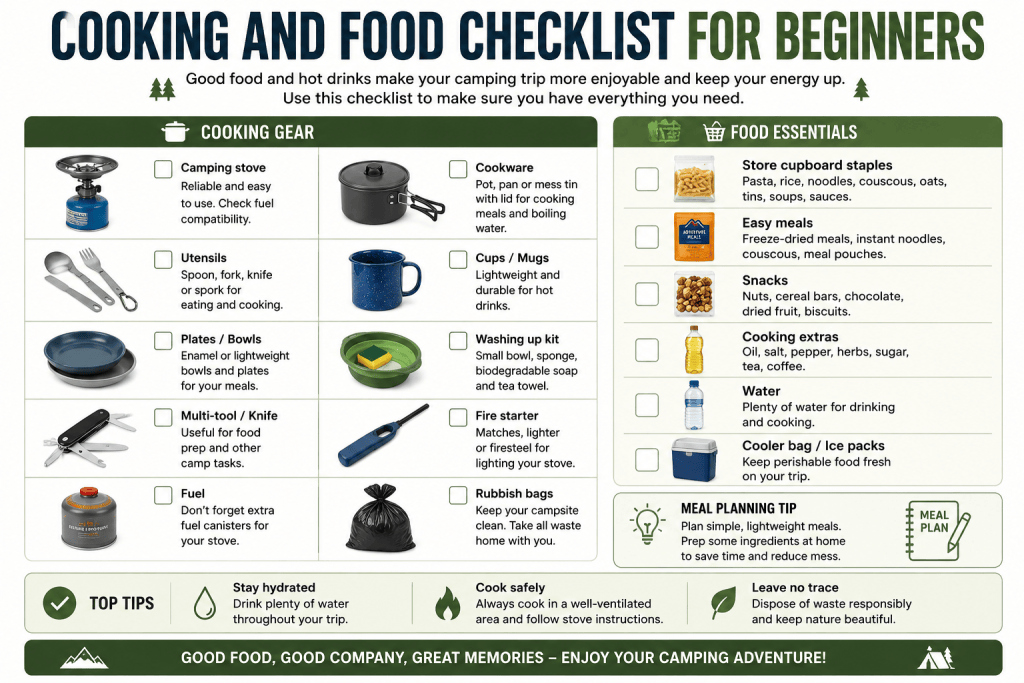
Camping Stove and Fuel
A simple camping stove is enough for most beginners and can handle basic meals, hot drinks, and quick breakfasts. Before travelling, always check the campsite rules for BBQs, open flames, and stove use, as some sites have restrictions for safety reasons. Bring the correct fuel for your stove and make sure you know how to use it before the trip. Place the stove on a stable, flat surface and keep it well away from tent fabric, dry grass, and other flammable items. Never cook inside a closed tent, as this can be extremely dangerous and may also cause condensation, smells, and fire risk.
Cookware and Utensils
For beginner camping, a small cooking kit is usually enough. Pack a small pan or basic cookware set, a kettle for hot drinks, a mug, a plate or bowl, and simple cutlery such as a fork, spoon, and knife. A small chopping board is useful for preparing food safely, while a washing-up sponge and tea towel help keep your cooking area clean after meals. Do not forget a lighter or matches, and keep them in a waterproof case so they stay dry in wet UK campsite conditions. These simple items make campsite cooking easier, cleaner, and more organised.
Easy Camping Food Ideas
Beginner-friendly camping meals should be simple, quick, and easy to prepare with basic equipment. Porridge is a good breakfast option because it is warm, filling, and easy to cook. Pasta, soup, instant noodles, beans, eggs, and rice packets are useful for quick campsite meals, especially after a long day outdoors. Wraps and sandwiches are ideal for lunches because they need little or no cooking. Trail mix and fruit are also handy snacks to keep energy levels up during walks, hikes, or family activities. Tea and coffee are small comforts that can make cold mornings and relaxed campsite evenings much more enjoyable.
Food Storage and Cool Box
Food storage is important for keeping your camping meals fresh, clean, and safe. Keep food sealed in bags, tubs, or containers to protect it from insects, dampness, and dirt around the campsite. Use a cool box for chilled items such as milk, cheese, cooked meat, eggs, and fresh ingredients, especially during warmer weather. Avoid leaving food outside overnight, as it may attract animals or become spoiled. It is also useful to pack dry foods separately, such as pasta, rice packets, bread, snacks, tea, and coffee. Good food organisation makes campsite cooking easier and helps prevent waste.
Water and Drinks
A refillable water bottle is an essential item for any camping trip, especially for beginners. Before travelling, check whether your campsite has a drinking water supply, water taps, or washing-up points. Some basic campsites may have limited facilities, so it is sensible to bring extra water for drinking, cooking, and washing. Staying hydrated is important during walks, hikes, and outdoor activities. In colder weather, hot drinks such as tea, coffee, or hot chocolate can also improve comfort and help you feel warmer around the campsite. Planning your water supply properly makes the trip safer, easier, and more enjoyable.
Beginner Cooking Mistakes
Common campsite cooking mistakes can make meal times stressful for beginners. Packing complicated meals may sound nice, but simple food is usually better for a first camping trip. It is also easy to forget stove fuel, which can leave you unable to cook or make hot drinks. Washing-up items are another common thing people miss, so remember to pack a sponge, tea towel, and small washing-up liquid. Taking too much fresh food can also cause waste, especially if you do not have enough cool box space. Before travelling, always check campsite cooking rules for BBQs, open flames, and stove use.
Clothing Checklist for UK Camping Weather
Waterproof clothing is essential for camping in the UK because rain can arrive suddenly, even when the forecast looks clear. A waterproof jacket should be one of the first items on your packing list, as it helps keep your upper body dry during walks, campsite setup, and wet evenings. Waterproof trousers are also useful, especially if you plan to hike, walk through long grass, or stay on a damp campsite. Beginners should avoid relying only on a hoodie, because hoodies absorb water quickly and can make you feel cold. Proper waterproof layers help you stay dry, warm, and comfortable outdoors.

Warm Layers
Warm layers are important for camping because temperatures can drop quickly, especially in the evening or overnight. A fleece or insulated mid-layer helps trap warmth and is easy to wear under a waterproof jacket. A hoodie can also be useful for relaxed campsite comfort, but it should not replace proper warm clothing in colder conditions. For cooler nights, a base layer can add extra warmth without taking up much space in your bag. A warm hat is also worth packing for spring, autumn, coastal, or hill camping, where wind and cold air can make the campsite feel much colder than expected.
Footwear
Footwear is an important part of a beginner camping checklist because wet, muddy, or uneven ground can quickly make the trip uncomfortable. Comfortable walking shoes are useful for general campsite use, short walks, and travelling around the area. Waterproof boots are better for muddy campsites, wet grass, hiking routes, or rainy UK conditions. It is also helpful to pack flip-flops or sliders for shower blocks, as campsite floors can be wet and shared by many visitors. Spare socks are essential because dry feet help you stay warm, comfortable, and protected during the trip. Good footwear makes camping safer and easier.
Spare Clothes
Spare clothes are important for keeping comfortable during a camping trip, especially in the UK where rain, mud, and damp conditions are common. Always pack dry sleepwear so you have clean, warm clothing to change into at night. Extra underwear and spare socks are also essential, as wet or dirty clothes can quickly make you feel cold and uncomfortable. It is a good idea to store clothes in dry bags or plastic bags to protect them from rain, spills, and tent condensation. Keeping one set of clothes dry for sleeping can make a big difference to your comfort.
Simple Clothing Checklist
For beginner camping, pack clothing that keeps you comfortable in changing UK weather. T-shirts or base layers are useful for daytime wear and cooler nights, while a fleece or hoodie adds warmth around the campsite. A waterproof jacket is essential for sudden rain, and walking trousers are better than jeans because they dry faster and feel more comfortable outdoors. Spare socks are important, especially if the ground is wet or muddy. Also pack dry sleepwear, a warm hat for cold evenings, comfortable footwear for walking, and shower footwear such as flip-flops or sliders for campsite facilities.
What Not to Wear Camping
When camping, avoid clothing that becomes uncomfortable, heavy, or unsafe in outdoor conditions. Heavy jeans are not ideal in wet weather because they absorb water, take a long time to dry, and can make you feel cold. New or uncomfortable shoes should also be avoided, as they may cause rubbing or pain during walks around the campsite. Cotton-only layers are not the best choice in cold, damp conditions because they hold moisture close to the body. Fashion clothing may look good, but it is often not practical for rain, mud, wind, or changing UK campsite weather. Practical clothing is always the better choice.
Campsite Comfort Essentials
Camping Chairs
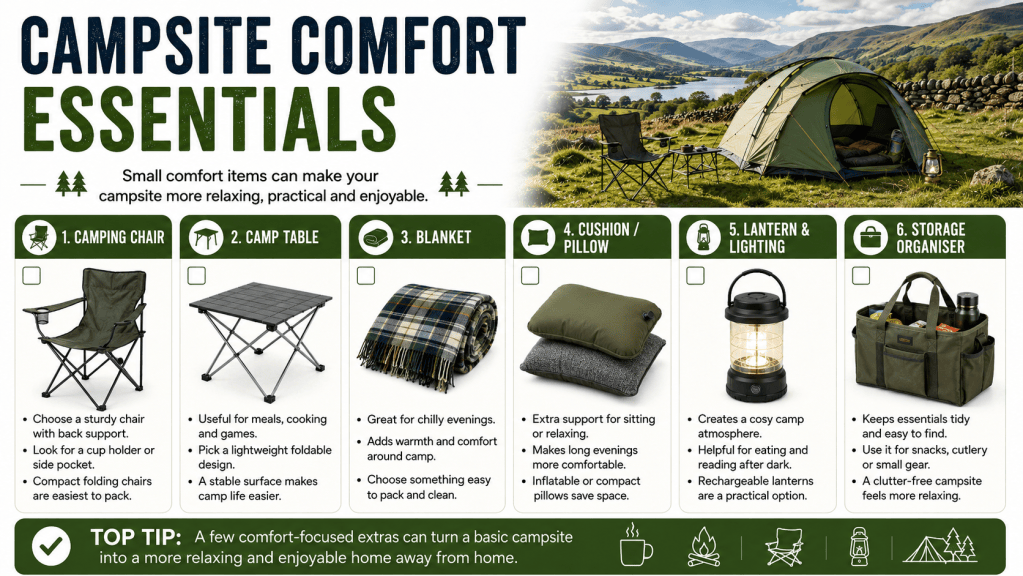
Camping chairs are useful campsite comfort essentials, especially for beginners. Sitting on wet grass, cold ground, or muddy areas can quickly become uncomfortable, particularly in typical UK campsite conditions. A simple folding camping chair gives you a dry and relaxed place to sit while eating, reading, chatting, or enjoying the evening outside your tent. Chairs also make family camping and car camping more comfortable because everyone has their own space to rest. Lightweight folding chairs are ideal for beginners because they are easy to carry, quick to set up, and do not take too much space in the car.
Folding Table
A camping table is useful for cooking, eating, and keeping your gear organised around the campsite. For beginners, a small folding table is usually enough for basic meal preparation, drinks, plates, and small camping items. It helps keep food and equipment off the ground, which is especially useful on wet grass or muddy UK campsites. Family campers may need a larger table or extra surface space because there are more meals, snacks, cups, and personal items to manage. A simple table can make campsite life cleaner, easier, and more comfortable.
Picnic Blanket or Ground Mat
A picnic blanket or ground mat is a useful comfort item for camping, especially when sitting outside the tent, sorting gear, or relaxing with family. It gives you a clean space for snacks, bags, shoes, children’s items, or outdoor meals. A blanket with waterproof backing is especially helpful on damp grass, which is common on UK campsites. It helps stop moisture from soaking through and keeps the sitting area more comfortable. For beginners, a simple foldable picnic blanket or ground mat is an easy way to make the campsite feel cleaner, warmer, and more organised.
Storage Bags and Dry Bags
Storage bags and dry bags are very useful for keeping your camping gear organised and protected. They help keep clothes, electronics, chargers, documents, and small essentials dry, especially in wet UK campsite conditions. Inside the tent, separate bags make it easier to find what you need without creating clutter. You can also use them to separate clean clothes from dirty or damp items after walking, cooking, or packing away in rainy weather. For beginners, a few simple storage bags, zip bags, or waterproof dry bags can make the whole camping setup cleaner, safer, and much easier to manage.
Towels, Doormat and Small Extras
Quick-dry towels, a small doormat, and a few simple extras can make campsite life much cleaner and more comfortable. A quick-dry towel is useful for showers, washing, or drying hands because it takes less space and dries faster than a heavy household towel. A small mat outside the tent entrance is also very helpful, especially on wet grass or muddy UK campsites. It gives you a place to wipe shoes, remove boots, or keep the tent doorway cleaner. This helps reduce mud, dirt, and moisture inside the tent, making your sleeping area more organised and comfortable throughout the trip.
Lighting and Power Checklist
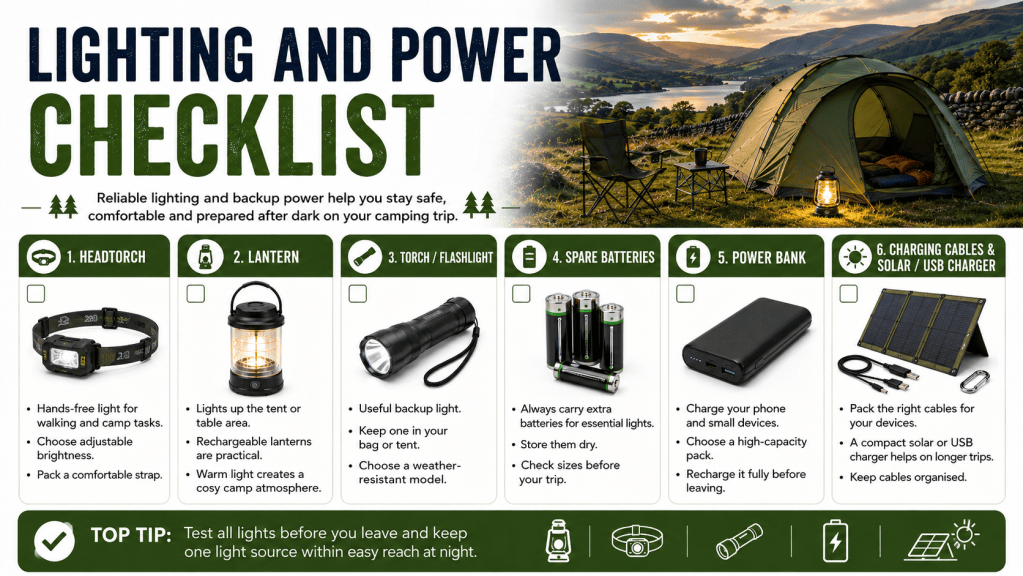
Camping Lantern
A camping lantern is one of the most useful lighting essentials for beginners. It works as the main tent light and makes it easier to find clothes, organise gear, read, or move around safely after dark. A lantern is also helpful for cooking, eating, and setting up your campsite in the evening. Rechargeable lanterns are convenient because they can be powered up before the trip and often last for several hours. Inside the tent, warm light usually feels more comfortable and relaxing than harsh bright light. A good camping lantern can make your campsite safer, calmer, and easier to manage at night.
Head Torch
A head torch is a very practical camping light because it keeps your hands free while you move around the campsite. It is especially useful for walking to the toilets at night, finding items inside the tent, cooking after dark, or setting up camp in low light. Unlike a handheld torch, a head torch lets you carry bags, hold cooking equipment, open zips, or help children without struggling. For beginners, it is one of the easiest and most useful lighting items to pack, especially on campsites with limited lighting.
Spare Batteries and Charging
Spare batteries and charging items are important for keeping your camping lights working throughout the trip. Pack spare batteries for any torch, lantern, or head torch that needs them, especially if you are staying for more than one night. For rechargeable lights, fully charge them before leaving home so they are ready to use when you arrive. It is also useful to keep charging cables, power banks, and adapters in one small pouch, so they are easy to find when needed. Good charging organisation helps avoid stress and keeps your campsite safer after dark.
Power Bank
A power bank is a useful camping essential because it keeps your phone charged when you are away from home or have limited access to electricity. This is important for using maps, checking campsite details, making emergency calls, taking photos, and staying in contact with family or friends. For short solo trips, a small power bank may be enough, but larger power banks are better for family camping, longer stays, or charging several devices. Always charge your power bank fully before leaving and keep the charging cable in the same pouch. This helps you stay organised and prepared outdoors.
Beginner Lighting Mistakes
Beginner lighting mistakes can make a camping trip stressful, especially after sunset. Relying only on a phone torch is not ideal because it drains battery quickly and is not practical for cooking, walking, or setting up camp. Forgetting the charging cable is another common problem, particularly when using rechargeable lanterns, head torches, or power banks. It is also important to keep a light near your sleeping area so you can find it easily during the night. Arriving after dark without a proper setup light can make pitching the tent difficult, unsafe, and frustrating, so always pack reliable campsite lighting.
Safety, Hygiene and Personal Items
First Aid Kit
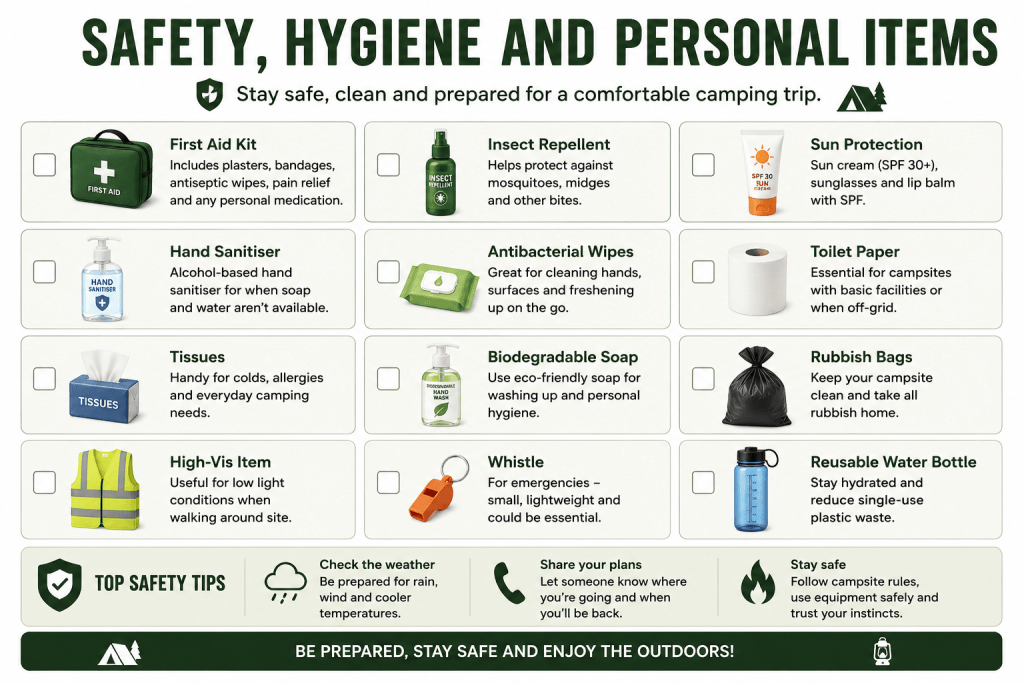
A basic first aid kit is an important part of any camping checklist, especially for beginners and family trips. It should include plasters for small cuts, a bandage for minor sprains or support, antiseptic wipes for cleaning wounds, and blister plasters for walking or hiking. Tweezers can be useful for removing small splinters, while pain relief should only be packed if it is suitable for the person using it. Personal medication is also essential and should be kept in a safe, dry, and easy-to-find place. A small, organised first aid kit helps you deal with minor problems quickly while camping.
Toiletries and Washing
Toiletries and washing items are important for staying clean and comfortable during a camping trip. Pack a toothbrush, toothpaste, soap, hand sanitiser, wet wipes, towel, toilet roll, small mirror, and a simple wash bag to keep everything organised. Hand sanitiser and wet wipes are especially useful when campsite facilities are basic or when water points are not close to your tent. A quick-dry towel is better than a heavy household towel because it saves space and dries faster. Keeping toiletries together in one wash bag makes trips to the shower block easier and helps prevent small items from getting lost.
Sun, Insects and Weather Protection
Sun, insects, and weather protection are important even on a simple camping trip. Pack sunscreen to protect your skin during walks, campsite activities, or sunny breaks in the weather. Insect repellent can help make evenings more comfortable, especially near lakes, woodland, long grass, or damp areas. Lip balm is useful in wind, sun, or cold conditions, while a cap or hat gives extra protection during warmer days. A waterproof bag is also helpful for keeping small personal items, clothes, electronics, or documents dry if rain arrives suddenly. These small items are easy to pack but can make camping much more comfortable.
Campsite Rules and Emergency Details
Campsite rules and emergency details are important to check before and during your trip. Know your campsite check-in time so you can arrive, pitch your tent, and organise your gear before it gets dark. Save the campsite contact number on your phone in case you need help, directions, or urgent information. It is also useful to check quiet hours, especially on family-friendly campsites where noise rules are taken seriously. When you arrive, find out where the toilets, exits, water points, bins, and reception area are located. Keep your phone charged so you can access maps, booking details, and emergency contacts when needed.
Waste and Leave No Trace
Waste management is an important part of responsible camping. Always pack bin bags so you can collect rubbish, food packaging, and other waste during your trip. Some campsites have clear recycling and rubbish points, but if facilities are limited, be prepared to take your rubbish home. Do not leave food waste outside, as it can attract animals, insects, and create problems for other campers. Keep your pitch clean before leaving and check the area for small items such as bottle tops, wrappers, or tent pegs. Following Leave No Trace principles helps protect nature, keeps campsites pleasant, and shows respect for other campers.
Family Camping Checklist UK
Extra Warmth and Comfort
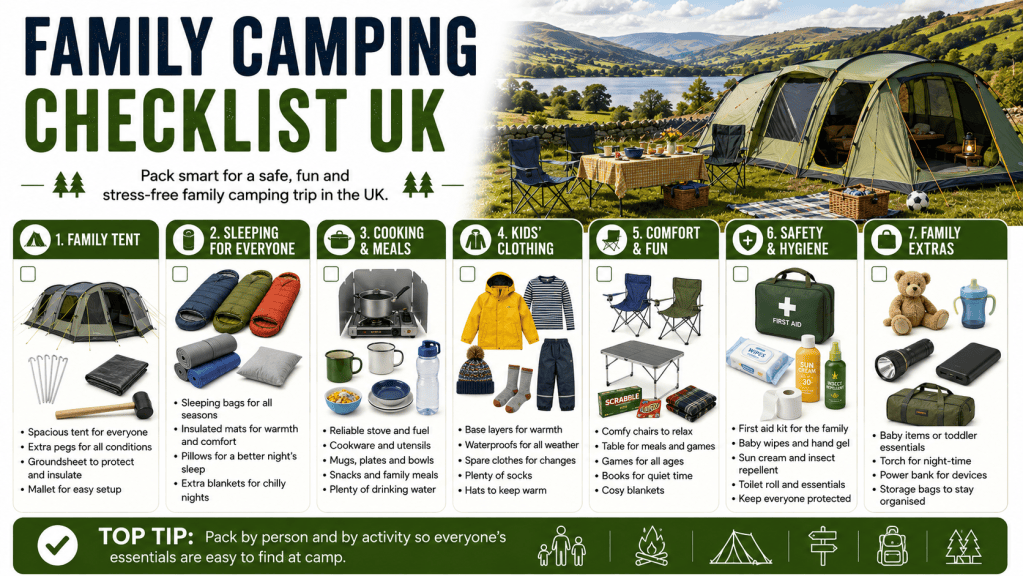
Extra warmth and comfort can make family camping much easier, especially during cooler UK nights. Pack extra blankets so everyone has an additional layer if the temperature drops. A larger tent can also improve comfort by giving more space for bags, shoes, sleeping areas, and moving around inside. Each person should have their own sleeping mat, as this adds insulation from the cold ground and improves sleep quality. Warm sleepwear is also important, particularly for children or spring and autumn trips. Spare socks should always be included, because dry feet help everyone stay warmer, cleaner, and more comfortable overnight.
Children’s Essentials
Children’s essentials can make family camping smoother, calmer, and more enjoyable. Pack plenty of snacks and water bottles so children stay comfortable during travel, campsite setup, walks, and outdoor play. A favourite comfort item, such as a small blanket or soft toy, can help them settle at bedtime in a new environment. Simple games are useful for keeping children entertained without relying only on screens. Waterproof clothes and wellies are important for wet grass, muddy paths, and sudden UK rain. Wipes are also very helpful for sticky hands, spills, and quick clean-ups. A small torch can make children feel safer at night.
Family Food Planning
Family food planning should be simple, practical, and stress-free, especially on a first camping trip. Keep meals easy to prepare with basic cooking equipment, such as pasta, wraps, sandwiches, soup, beans, eggs, or rice packets. Pack familiar foods that children already enjoy, as camping is not always the best time to test completely new meals. Preparing snacks in advance can also save time and reduce stress during travel, walks, or campsite setup. Easy breakfast options like porridge, cereal, fruit, or toast-style snacks help the day start smoothly. Simple food planning keeps everyone fed, comfortable, and happy outdoors.
Family Campsite Organisation
Family campsite organisation helps keep the tent cleaner, calmer, and easier to manage. Keep clothes in labelled bags so each person can find their own items quickly without unpacking everything. Use one main lighting point inside the tent to make evenings easier and safer, especially when children are getting ready for bed. Keep shoes near the tent entrance or just outside under cover to reduce mud and dirt inside the sleeping area. Wet clothes should be stored separately in a dry bag or plastic bag so they do not dampen clean clothing, bedding, or personal items.
Family Camping Mistakes to Avoid
Family camping mistakes can make the trip stressful, especially for beginners. Arriving too late is one of the biggest problems because setting up a tent in the dark is harder with children, bags, and tired family members. Not packing enough warm layers can also make evenings and nights uncomfortable, even in summer. Forgetting entertainment is another common mistake, as children may need games, books, or simple activities during quiet moments or rainy weather. Meals should be kept simple because overcomplicated cooking can cause stress at the campsite. It is also important to choose a campsite with suitable facilities, such as toilets, showers, water points, family areas, and safe spaces for children.
Weekend Camping Checklist UK
2-Nights Camping Packing List
For a 2-night camping trip, pack the main essentials first so you stay warm, dry, and comfortable. Bring a tent, sleeping bag, sleeping mat, and pillow for your sleeping setup. Clothing should include a waterproof jacket, warm layers, 2–3 outfits, and spare socks, especially for wet or chilly UK weather. For cooking and eating, pack a simple stove, easy food, and a refillable water bottle. Lighting is also important, so bring a camping lantern and head torch. A folding chair adds comfort around the campsite, while toiletries, a towel, first aid kit, power bank, and bin bags help with hygiene, safety, charging, and waste. This simple list is enough for most beginner 2-night camping trips.
How to Pack for a Friday-to-Sunday Trip
For a Friday-to-Sunday camping trip, keep your packing simple and organised. Choose easy meals that do not need too much cooking, such as pasta, soup, wraps, porridge, snacks, and hot drinks. Pack first-night setup items near the top of your bag or car, including the tent, pegs, mallet, lantern, head torch, sleeping gear, waterproof jacket, and warm layers. This helps you set up quickly when you arrive. Try to reach the campsite before dark, as pitching a tent and organising gear is much easier in daylight. Bring breakfast items and tea or coffee for the morning, but avoid overpacking luxury items you may not use. A simple, practical setup is best for a short weekend camping trip.
Weekend Car Camping vs Backpack Camping
Weekend car camping and backpack camping need different packing styles. Car camping allows you to bring more comfort gear because you do not have to carry everything on your back. You can pack a larger tent, camping chairs, table, extra blankets, cool box, cooking kit, and more clothing without worrying too much about weight. Backpack camping is different because every item must be lightweight, compact, and useful. You need to carry your tent, sleeping bag, food, water, clothing, and safety items, so overpacking can quickly become tiring. For most beginners, car camping is the better starting point because it offers more comfort, easier packing, and a less stressful first camping experience.
Beginner Camping Essentials: Must-Have vs Nice-to-Have
| Item | Must-Have or Nice-to-Have | Beginner Tip |
|---|---|---|
| Tent | Must-have | Choose one with enough space for people and bags |
| Sleeping bag | Must-have | Check comfort temperature rating |
| Sleeping mat | Must-have | Adds warmth and comfort |
| Camping stove | Must-have for cooking | Check fuel type before leaving |
| Lantern | Must-have | Better than relying on phone light |
| Head torch | Must-have | Useful for night-time toilet trips |
| Waterproof jacket | Must-have | UK weather changes quickly |
| Camping chair | Nice-to-have | Strongly recommended for comfort |
| Folding table | Nice-to-have | Useful for cooking and eating |
| Cool box | Nice-to-have | Helpful for fresh food |
| Camping pillow | Nice-to-have | Improves sleep comfort |
| Dry bags | Nice-to-have | Useful in wet weather |
| Solar charger | Optional | Helpful for longer trips |
What Beginners Often Forget
Small Items That Make a Big Difference
Small items can make a big difference on a camping trip, especially for beginners. A mallet and spare pegs help you pitch the tent properly, while a torch or head torch makes moving around safer after dark. A power bank keeps your phone charged for maps, calls, and photos. Toilet roll, bin bags, washing-up liquid, sponge, and a tea towel are easy to forget but very useful for hygiene and cleaning. A lighter is essential if you are using a stove, and dry socks can improve comfort during wet weather. Also pack a towel and keep your campsite booking confirmation handy for check-in.
Why These Items Matter
- No mallet makes pitching harder.
- No light makes night-time movement difficult.
- No bin bags makes packing wet/dirty gear messy.
- No towel after shower is frustrating.
Final Pre-Trip Check
- Lay items out at home.
- Tick them off.
- Pack essentials first.
- Keep important items accessible.
What You Probably Do Not Need on Your First Camping Trip
Expensive Expedition Gear
- Beginners do not need extreme mountain equipment for a basic campsite.
- Buy for the type of trip you are actually taking.
Too Many Gadgets
- Gadgets add weight and clutter.
- Focus on essentials first.
Oversized Furniture
- Large tables, cupboards and luxury beds can be excessive.
- Useful later for family camping but not essential at first.
Complicated Cooking Setups
- Simple meals are better.
- Avoid bringing half your kitchen.
Too Much Clothing
- Pack useful layers, not random outfits.
- Prioritise warm, dry and comfortable clothing.
Beginner Camping Gear Buying Tips
Start With the Core Kit
Core kit:
Beginner camping gear buying should start with the core kit first. Focus on the items that keep you sheltered, warm, dry, fed, and safe before spending money on extras. Your core kit should include a suitable tent, sleeping bag, sleeping mat, reliable light, waterproof clothing, basic cooking equipment, and a first aid kit. These are the items that matter most on your first trip. A good tent protects you from rain and wind, while a sleeping bag and sleeping mat help you stay warm overnight. Lighting makes the campsite safer after dark, and waterproof clothing is essential for changing UK weather. Cooking basics and a small first aid kit complete the setup. Once these essentials are covered, you can slowly add comfort items later.
Choose Gear for UK Conditions
- Waterproofing
- Wind stability
- Warmth
- Damp ground
- Easy drying
Prioritise Sleep Comfort
- A good sleeping mat and sleeping bag matter more than many gadgets.
- Warmth from below is important.
Think About Pack Size and Storage
- Car camping allows bulkier items.
- Backpacking needs lighter gear.
- Check product dimensions.
Avoid the Cheapest Weak Gear
- Cheap tent pegs, thin mats and poor zips can fail.
- Value means reliable basics, not always lowest price.
Buy Gear You Can Reuse
- Weekend camping
- Family camping
- Festivals
- Road trips
- Garden camping
Printable UK Camping Checklist for Beginners
Shelter
- Tent
- Tent poles
- Tent pegs
- Spare pegs
- Mallet
- Groundsheet or footprint
- Guy lines
Sleeping
- Sleeping bag
- Sleeping mat
- Camping bed
- Pillow
- Blanket
- Warm sleepwear
- Dry socks
Cooking
- Camping stove
- Fuel
- Cookware
- Kettle
- Plates
- Cups
- Cutlery
- Lighter
- Washing-up Sponge
- Tea towel
Food and Drink
- Breakfast
- Lunch
- Dinner
- Snacks
- Tea/coffee
- Water bottle
- Cool box
- Reusable containers
Clothing
- Waterproof jacket
- Fleece or hoodie
- Base layers
- Walking trousers
- Spare socks
- Underwear
- Sleepwear
- Comfortable shoes
- Shower footwear
Lighting and Power
- Camping lantern
- Head torch
- Spare batteries
- Power bank
- Charging cables
Safety and Hygiene
- First aid kit
- Medication
- Sunscreen
- Insect repellent
- Toothbrush
- Toothpaste
- Soap
- Hand sanitiser
- Wet wipes
- Toilet roll
- Towel
Extras
- Camping chair
- Folding table
- Bin bags
- Dry bags
- Campsite booking confirmation
- Bank card/cash
- Phone
- Emergency contact details
Final Packing Tips Before You Leave
Test Your Tent at Home
- Check poles, pegs and zips.
- Learn how to pitch before arrival.
- Avoid stress at campsite.
Check the Weather Forecast
- Pack layers based on forecast.
- Still bring waterproofs.
- Prepare for cooler nights.
Charge Your Devices
- Phone
- Lantern
- Head torch
- Power bank
Pack in the Right Order
- Put first-needed items on top.
- Tent and mallet should be easy to reach.
- Keep waterproof jacket accessible.
- Store food separately.
Confirm Campsite Rules
- Arrival time
- Fire rules
- Quiet hours
- Parking
- Dogs
- Facilities
Arrive Before Dark
- Easier tent setup.
- Safer.
- Less stressful for beginners and families.
Final Thoughts: Build Confidence With the Right Camping Checklist
Your first camping trip does not need to be complicated. The best approach is to follow a clear camping checklist and focus on the essentials first: shelter, sleep, warmth, food, light, and safety. A suitable tent, warm sleeping bag, sleeping mat, waterproof clothing, simple cooking kit, reliable lighting, and a basic first aid kit will cover most beginner needs. UK camping conditions can change quickly, so waterproofs and warm layers are especially important, even in summer. Start simple, avoid buying too much gear at once, and upgrade later as you understand what works best for your style of camping. Good preparation helps you feel more confident, stay comfortable, and enjoy the outdoors without unnecessary stress.
FAQs About UK Camping Checklist for Beginners
1. What should a beginner take camping in the UK?
A beginner should take a tent, sleeping bag, sleeping mat, waterproof jacket, warm layers, cooking kit, food, water, lighting, toiletries, first aid kit and campsite essentials.
2. What is the most important camping item?
The most important camping item is reliable shelter, followed closely by warm sleeping gear. A good tent, sleeping bag and sleeping mat protect you from rain, wind, cold ground and poor sleep.
3. What should I pack for a 2-night camping trip?
For a 2-night camping trip, pack a tent, sleeping bag, sleeping mat, pillow, waterproof clothing, warm layers, simple meals, stove, lantern, head torch, toiletries, towel, power bank and first aid kit.
4. Do I need a camping stove for my first trip?
A camping stove is useful if you want hot drinks or simple meals. Some campsites have food nearby, but a basic stove gives beginners more flexibility.
5. Is a sleeping mat necessary for camping?
Yes, a sleeping mat is strongly recommended because it adds comfort and insulation from the cold ground. Even a warm sleeping bag may feel cold without a mat underneath.
6. What clothes should I pack for UK camping?
Pack waterproof clothing, warm layers, spare socks, comfortable footwear, sleepwear and extra underwear. UK camping weather can change quickly, so layers are better than one heavy item.
7. How do I avoid overpacking for camping?
Focus on shelter, sleep, warmth, food, lighting, hygiene and safety first. Avoid unnecessary gadgets, complicated cooking equipment and too many spare outfits.
8. What should I buy first for camping?
Buy a reliable tent, sleeping bag, sleeping mat, camping light, waterproof jacket and simple cooking kit first. These items form the foundation of a beginner camping setup.


Rechargeable & Solar Camping Lights


Best Dog-Friendly Camping Gear for UK Campsites and Outdoor Holidays

Family Camping Essentials UK: What Parents Should Pack for a Stress-Free Trip

Warcombe Farm Camping Park: Complete Guide to Camping Near Woolacombe, North Devon


