


What Do You Need for Winter Camping in the UK?
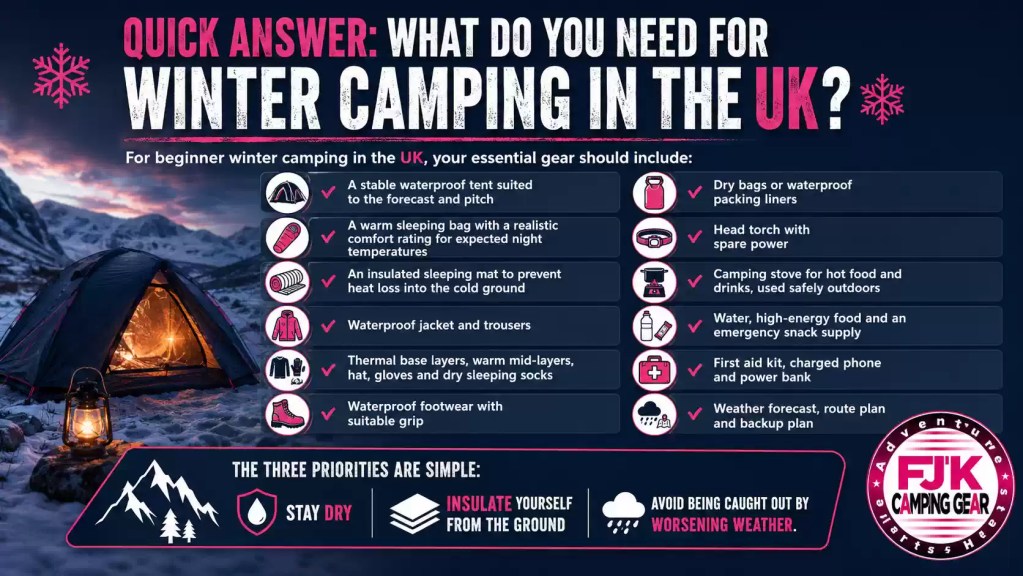
For beginner winter camping in the UK, your essential gear should include:
- A stable waterproof tent suited to the forecast and pitch
- A warm sleeping bag with a realistic comfort rating for expected night temperatures
- An insulated sleeping mat to prevent heat loss into the cold ground
- Waterproof jacket and trousers
- Thermal base layers, warm mid-layers, hat, gloves and dry sleeping socks
- Waterproof footwear with suitable grip
- Dry bags or waterproof packing liners
- Head torch with spare power
- Camping stove for hot food and drinks, used safely outdoors
- Water, high-energy food and an emergency snack supply
- First aid kit, charged phone and power bank
- Weather forecast, route plan and backup plan
The three priorities are simple: stay dry, insulate yourself from the ground, and avoid being caught out by worsening weather.
Yes, provided your first winter camping experience is planned conservatively.
A serviced campsite is usually the best starting point for beginners, especially families, couples and anyone trying cold-weather camping for the first time. A campsite gives you easier vehicle access, toilets, a known pitch, possible electrical hook-up options and a faster retreat if conditions become unpleasant.
Beginner campers should avoid starting with remote winter mountain camping. A wet and windy night in an exposed high-level location is very different from camping on a lowland site close to facilities and your car.
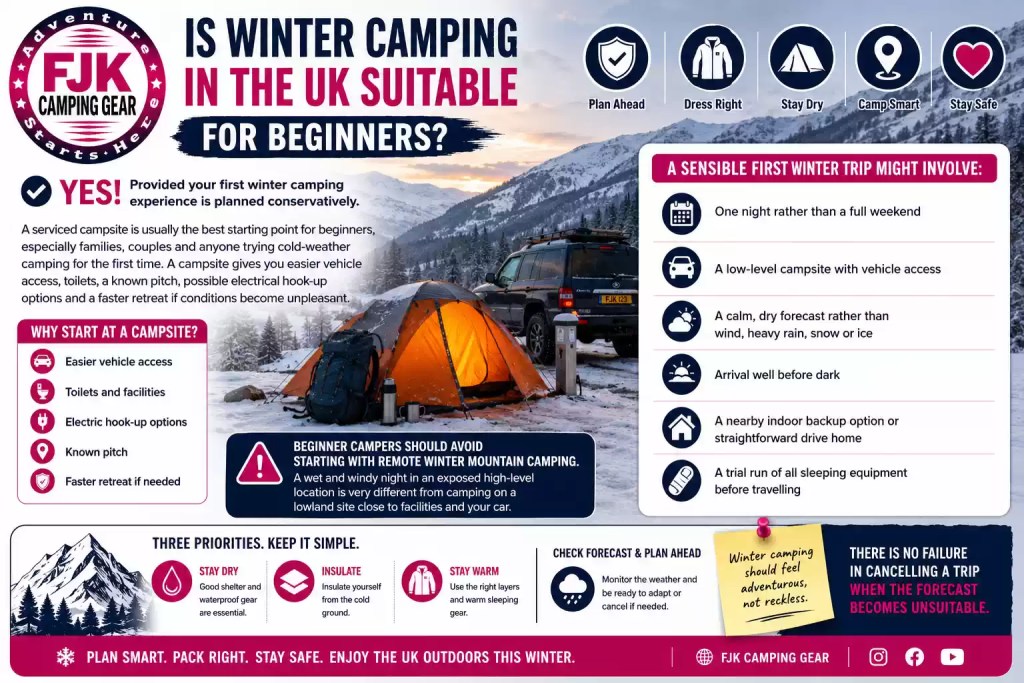
A sensible first winter trip might involve:
- One night rather than a full weekend
- A low-level campsite with vehicle access
- A calm, dry forecast rather than wind, heavy rain, snow or ice
- Arrival well before dark
- A nearby indoor backup option or straightforward drive home
- A trial run of all sleeping equipment before travelling
Winter camping should feel adventurous, not reckless. There is no failure in cancelling a trip when the forecast becomes unsuitable.
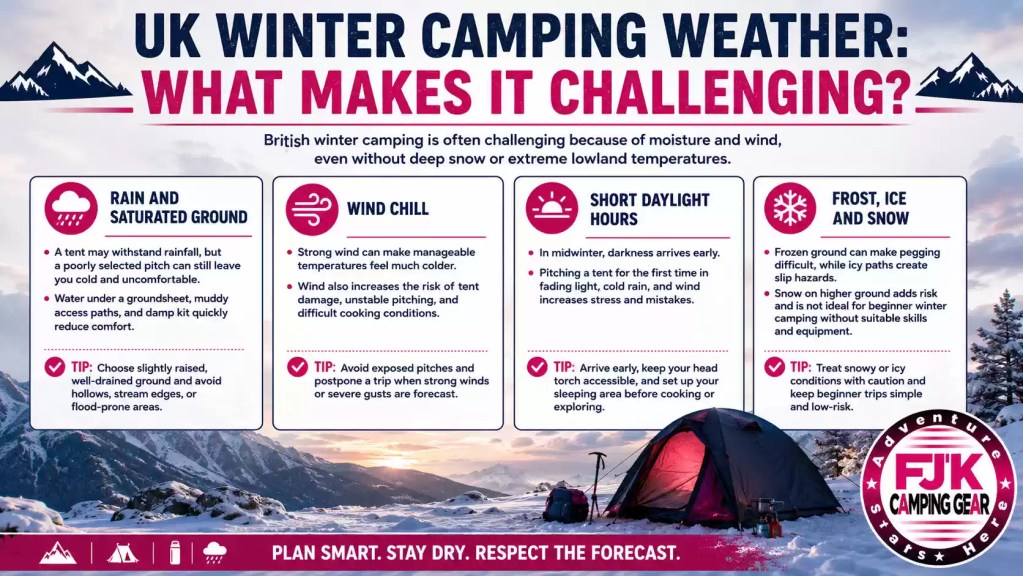
The UK does not always experience deep snow or extreme temperatures at low level, but British winter camping is often challenging because of moisture and wind.
Rain and saturated ground
A tent may withstand rainfall, but a poorly selected pitch can still leave you cold and uncomfortable. Water collecting beneath a groundsheet, muddy access paths and damp kit all reduce comfort quickly.
Choose slightly raised, well-drained ground and avoid hollows, stream edges or areas that may flood after overnight rain.
Wind chill
A forecast temperature may look manageable, yet strong wind can make camp feel much colder. Wind also increases the risk of tent damage, unstable pitching and difficult cooking conditions.
Avoid exposed pitches during strong winds. For a first winter trip, choose a sheltered campsite pitch and postpone the trip when weather warnings or severe gusts are forecast.
Short daylight hours
In midwinter, darkness arrives early. Pitching a tent for the first time in fading light, cold rain and wind is stressful and increases mistakes.
Plan to arrive early, keep your head torch within easy reach, and set up your sleeping area before preparing food or exploring.
Frost, ice and snow
Frozen ground can make pegging difficult, while icy paths create slip hazards. Snow on higher ground introduces additional risks and should not be treated as a beginner camping experience without suitable skills, judgement and equipment.
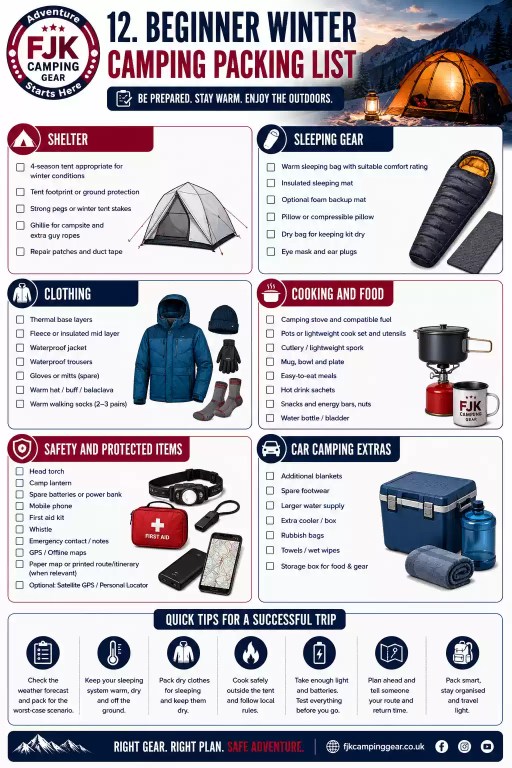
| Category | Essential Winter Camping Gear | Why It Matters |
|---|---|---|
| Shelter | Waterproof tent, strong pegs, footprint, spare guylines | Protects you from rain, wind and wet ground |
| Sleep system | Warm sleeping bag, insulated sleeping mat, dry sleepwear | Retains body warmth overnight |
| Clothing | Base layers, fleece or insulated jacket, waterproof shell, hat and gloves | Keeps you warm while managing damp conditions |
| Footwear | Waterproof boots or shoes, spare dry socks | Helps prevent cold, wet feet |
| Food and drink | Stove, fuel, kettle/pan, warm drinks, easy meals, water | Provides warmth and energy |
| Lighting | Head torch, rechargeable lantern, spare battery/power bank | Essential during long winter nights |
| Packing | Dry bags, waterproof rucksack cover or liner | Keeps sleeping gear and clothing dry |
| Safety | First aid kit, charged phone, emergency blanket or shelter, whistle | Supports safe decisions and emergencies |
| Responsible camping | Rubbish bags, toilet kit where relevant, no-trace plan | Protects countryside and respects other users |
Your tent is your first line of protection from winter conditions. Beginners do not always need specialist expedition equipment for a calm lowland campsite, but they do need a tent that is waterproof, stable and straightforward to pitch.
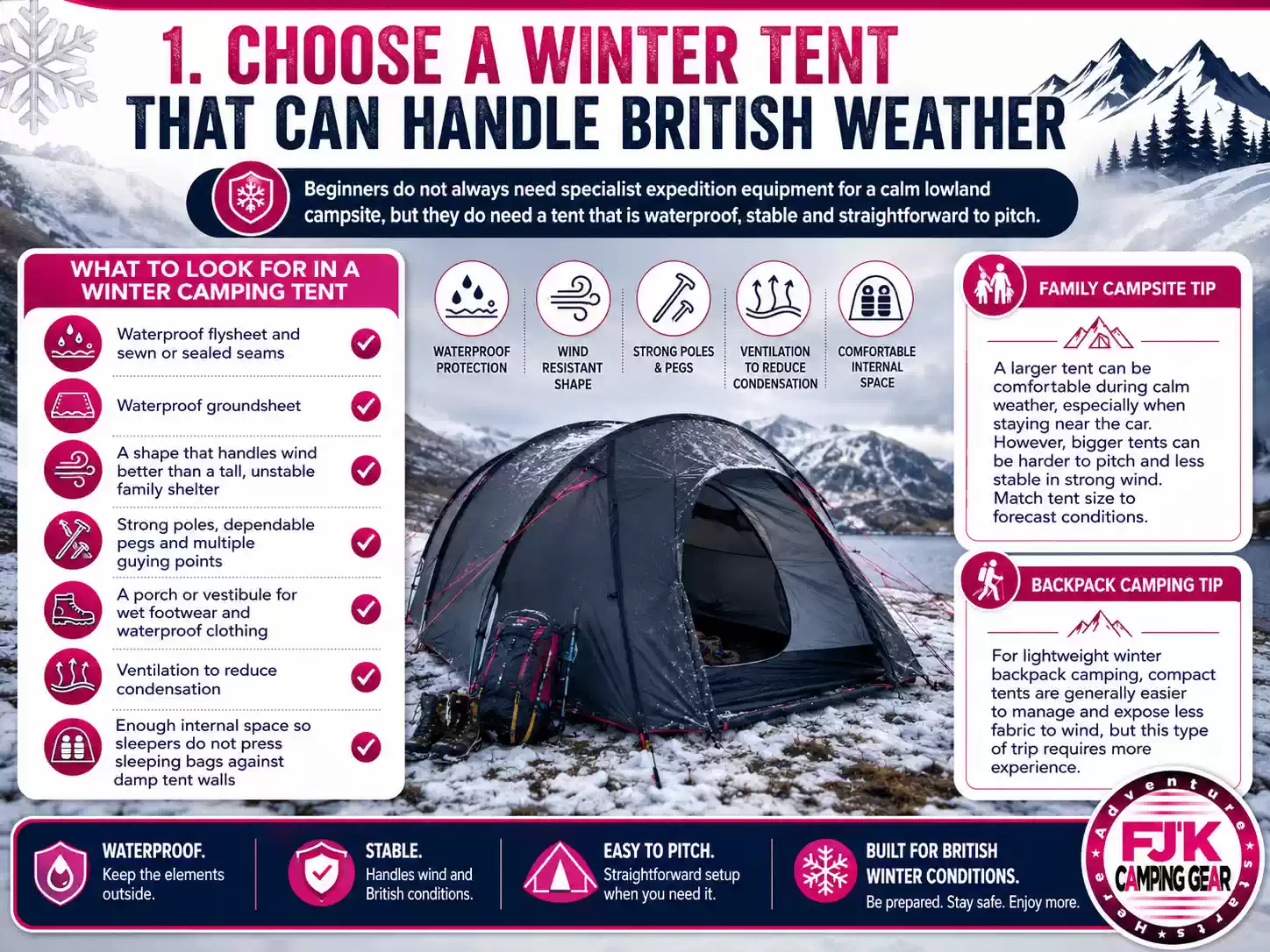
What to look for in a winter camping tent
A practical UK winter camping tent should have:
- A waterproof flysheet and sewn or sealed seams
- A waterproof groundsheet
- A shape that handles wind better than a tall, unstable family shelter
- Strong poles, dependable pegs and multiple guying points
- A porch or vestibule for wet footwear and waterproof clothing
- Ventilation to reduce condensation
- Enough internal space for sleepers without pressing sleeping bags against damp tent walls
For family campsite camping, a larger tent can be comfortable during calm weather, particularly when staying near the car. However, bigger tents can be harder to pitch and less stable in strong wind. Always match tent size to forecast conditions.
For lightweight winter backpack camping, compact tents are generally easier to manage and expose less fabric to wind, but this type of trip requires much more experience.
Many first-time winter campers worry mainly about coats and blankets. In reality, your warmth overnight depends heavily on your complete sleeping system: your sleeping bag, sleeping mat and dry sleepwear.
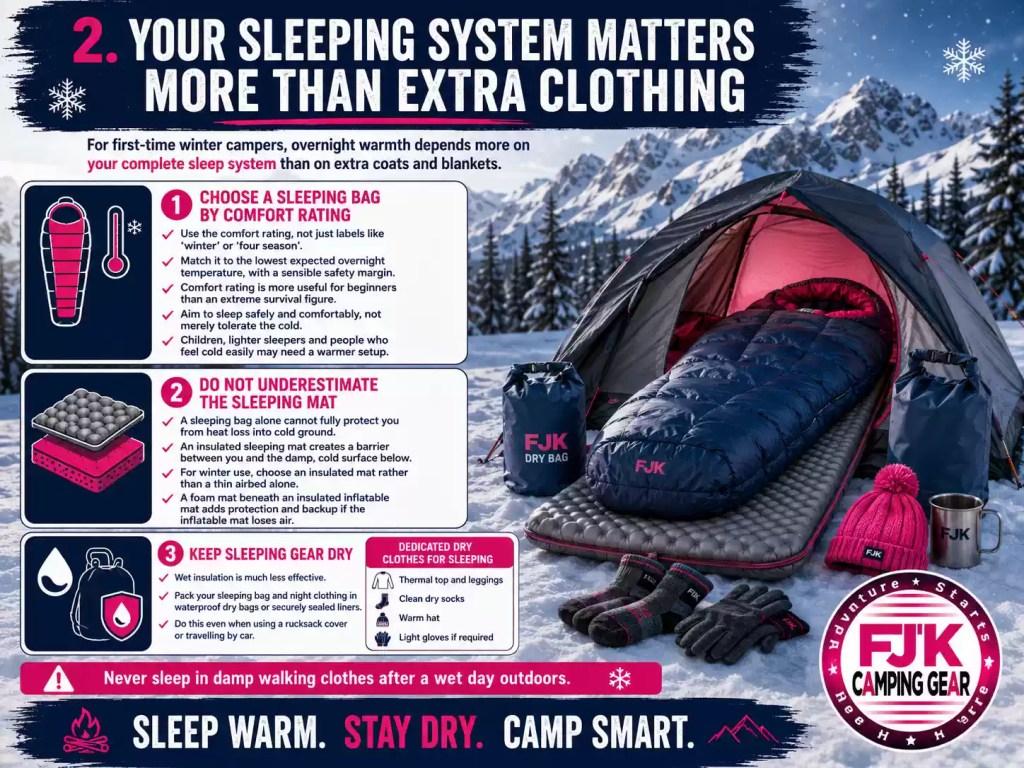
Choose a sleeping bag by comfort rating
Do not rely only on a product labelled “winter” or “four season”. Look for a clear comfort temperature rating and match it to the lowest expected overnight temperature, with a sensible safety margin.
A sleeping bag’s comfort rating is more useful for beginner purchasing decisions than an extreme survival figure. The aim is to sleep safely and comfortably, not merely tolerate the cold.
Remember that people feel cold differently. Children, lighter sleepers and those who naturally feel the cold may need a warmer setup.
Do not underestimate the sleeping mat
A sleeping bag cannot fully protect you from heat loss into cold ground. An insulated sleeping mat forms a protective layer between you and the damp, cold surface below.
For winter use, choose an insulated mat rather than relying on a thin airbed alone. A foam mat beneath an insulated inflatable mat can add protection and provide backup if the inflatable mat loses air.
Keep sleeping gear dry
Wet insulation becomes much less effective. Pack your sleeping bag and night clothing in waterproof dry bags or securely sealed liners, even when you are using a rucksack cover or travelling by car.
Keep one dedicated set of dry clothing for sleeping:
- Thermal top and leggings
- Clean dry socks
- Warm hat
- Light gloves if required
Never sleep in damp walking clothes after a wet day outdoors.
Layering allows you to adjust warmth as conditions change and helps control moisture.
Base layer
A thermal base layer sits close to the skin and helps manage moisture. Avoid relying on cotton for cold, wet outdoor conditions because it holds moisture and can leave you chilled.
Mid-layer
A fleece or insulated mid-layer traps warm air. Carry a spare dry layer where possible, particularly if you will be outside for several hours.
Outer waterproof layer
A waterproof jacket and waterproof trousers are essential for British winter camping. Even when the forecast looks dry, showers, wet grass and sudden weather changes can soak ordinary clothing.

Winter accessories
Small items make a major difference:
- Warm hat
- Waterproof or insulated gloves
- Neck warmer
- Several pairs of socks
- Waterproof walking boots or shoes
- Spare footwear for campsite use, kept dry if possible
For campsite campers and car campers, storing a second complete dry outfit in the vehicle is a simple and highly useful precaution.
Staying warm is not about filling a tent with heat. It is about preserving body heat safely.
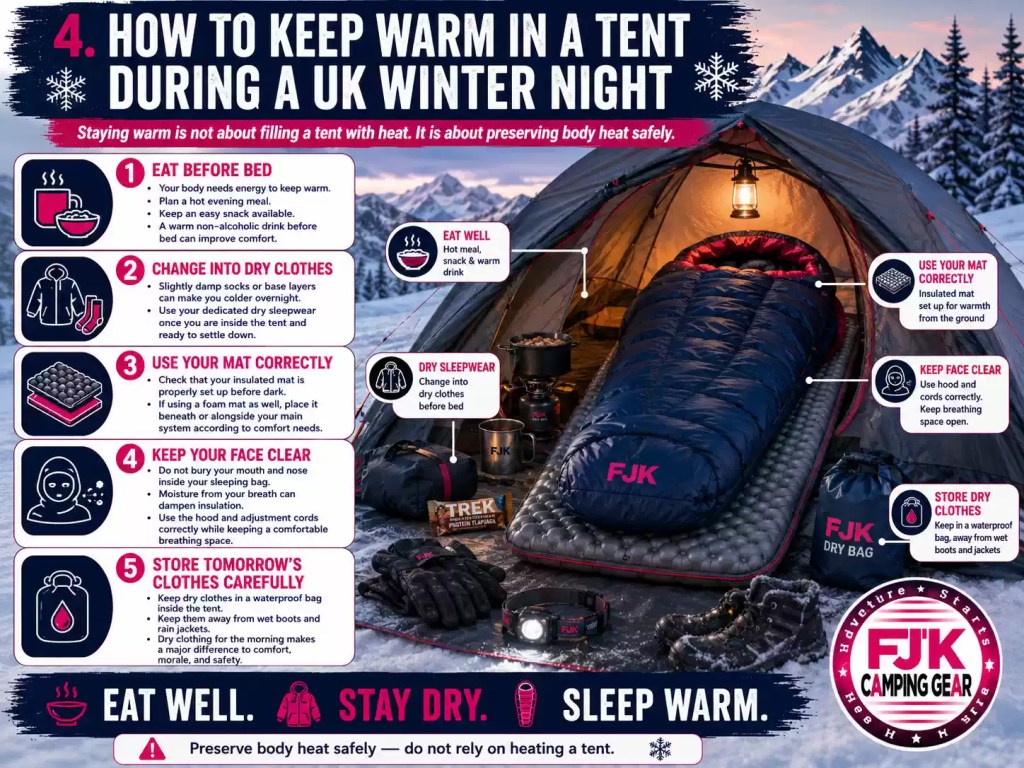
Eat before bed
Your body needs energy to keep warm. Plan a hot evening meal and keep an easy snack available. A warm non-alcoholic drink before bed can also improve comfort.
Change into dry clothes
Even slightly damp socks or base layers can make you feel colder overnight. Use your dedicated dry sleepwear set only once you are inside the tent and ready to settle down.
Use your mat correctly
Check that your insulated mat is properly set up before dark. If you are using a foam mat as well, place it beneath or alongside your primary system according to your comfort needs.
Keep your face clear
Do not bury your mouth and nose inside your sleeping bag. Moisture from your breath can dampen insulation. Use the hood and adjustment cords correctly while keeping a comfortable breathing space.
Store tomorrow’s clothes carefully
Keep dry clothes in a waterproof bag inside the tent, away from wet boots and rain jackets. Putting on dry clothing in the morning makes a major difference to morale and safety.
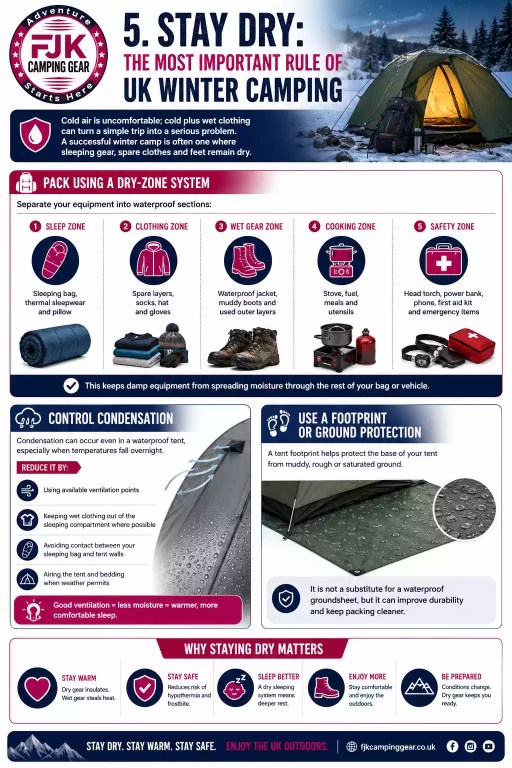
Cold air is uncomfortable; cold plus wet clothing can turn a simple trip into a serious problem. A successful winter camp is often one where sleeping gear, spare clothes and feet remain dry.
Pack using a dry-zone system
Separate your equipment into waterproof sections:
- Sleep zone: sleeping bag, thermal sleepwear and pillow
- Clothing zone: spare layers, socks, hat and gloves
- Wet gear zone: waterproof jacket, muddy boots and used outer layers
- Cooking zone: stove, fuel, meals and utensils
- Safety zone: head torch, power bank, phone, first aid kit and emergency items
This keeps damp equipment from spreading moisture through the rest of your bag or vehicle.
Control condensation
Condensation can occur even in a waterproof tent, especially when temperatures fall overnight. Reduce it by:
- Using available ventilation points
- Keeping wet clothing out of the sleeping compartment where possible
- Avoiding contact between your sleeping bag and tent walls
- Airing the tent and bedding when weather permits
Use a footprint or ground protection
A tent footprint helps protect the base of your tent from muddy, rough or saturated ground. It is not a substitute for a waterproof groundsheet, but it can improve durability and keep packing cleaner.
Warm meals and hot drinks are particularly valuable on winter trips. They help with comfort, hydration and energy, especially after setting up camp in cold conditions.
For beginners, simple meals are best:
- Porridge or instant breakfast options
- Soup
- Pasta or noodle meals
- Ready-to-heat camping meals
- Hot chocolate, tea or coffee
- High-energy snacks such as oat bars, nuts or chocolate
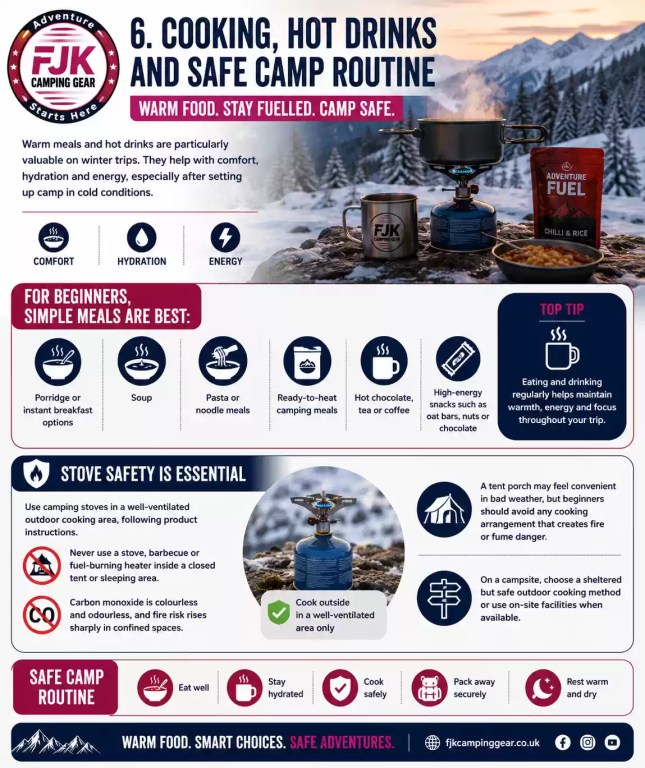
Stove safety is essential
Use camping stoves in a well-ventilated outdoor cooking area, following product instructions. Never use a stove, barbecue or fuel-burning heater inside a closed tent or sleeping area. Carbon monoxide is colourless and odourless, and fire risk rises sharply in confined spaces.
A tent porch may feel convenient in bad weather, but beginners should avoid any cooking arrangement that creates fire or fume danger. On a campsite, choose a sheltered but safe outdoor cooking method or use on-site facilities when available.
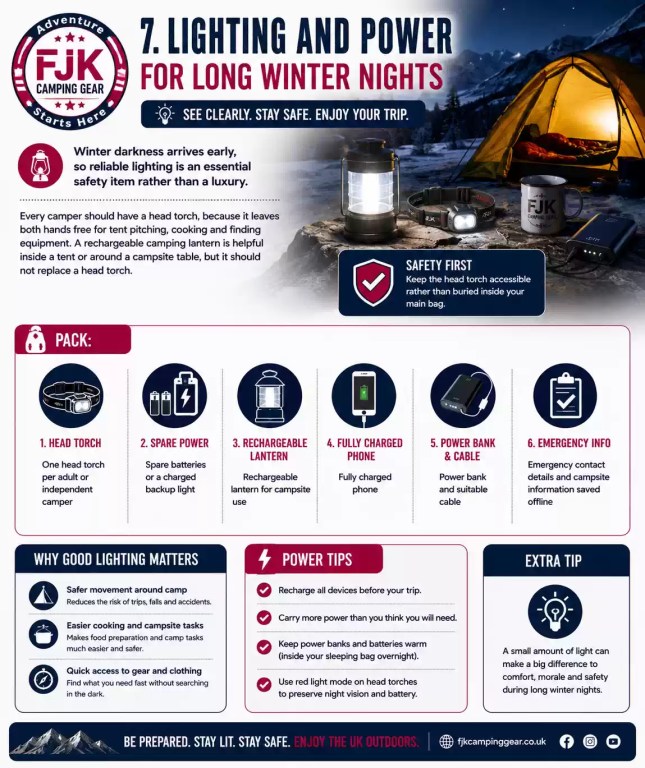
Winter darkness arrives early, so reliable lighting is an essential safety item rather than a luxury.
Every camper should have a head torch, because it leaves both hands free for tent pitching, cooking and finding equipment. A rechargeable camping lantern is helpful inside a tent or around a campsite table, but it should not replace a head torch.
Pack:
- One head torch per adult or independent camper
- Spare batteries or a charged backup light
- Rechargeable lantern for campsite use
- Fully charged phone
- Power bank and suitable cable
- Emergency contact details and campsite information saved offline
Keep the head torch accessible rather than buried inside your main bag.
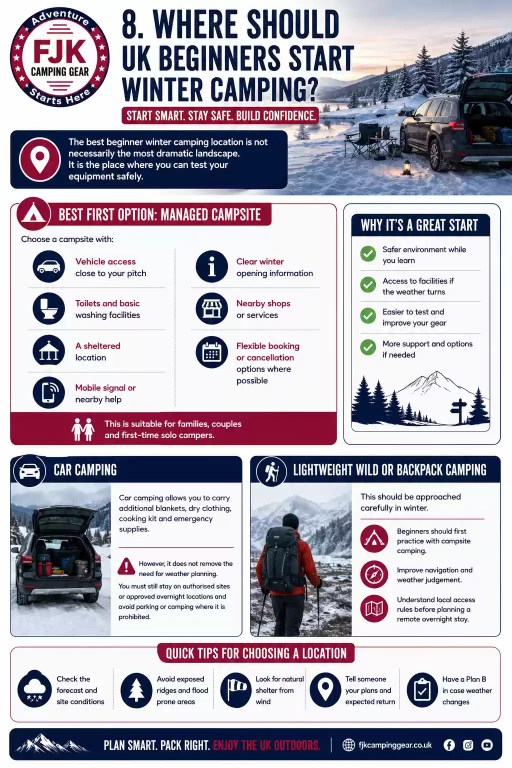
The best beginner winter camping location is not necessarily the most dramatic landscape. It is the place where you can test your equipment safely.
Best first option: managed campsite
Choose a campsite with:
- Vehicle access close to your pitch
- Toilets and basic washing facilities
- A sheltered location
- Mobile signal or nearby help
- Clear winter opening information
- Nearby shops or services
- Flexible booking or cancellation options where possible
This is suitable for families, couples and first-time solo campers.
Car camping
Car camping allows you to carry additional blankets, dry clothing, cooking kit and emergency supplies. However, it does not remove the need for weather planning. You must still stay on authorised sites or approved overnight locations and avoid parking or camping where it is prohibited.
Lightweight wild or backpack camping
This should be approached carefully in winter. Beginners should first practise with campsite camping, improve navigation and weather judgement, and understand local access rules before planning a remote overnight stay.
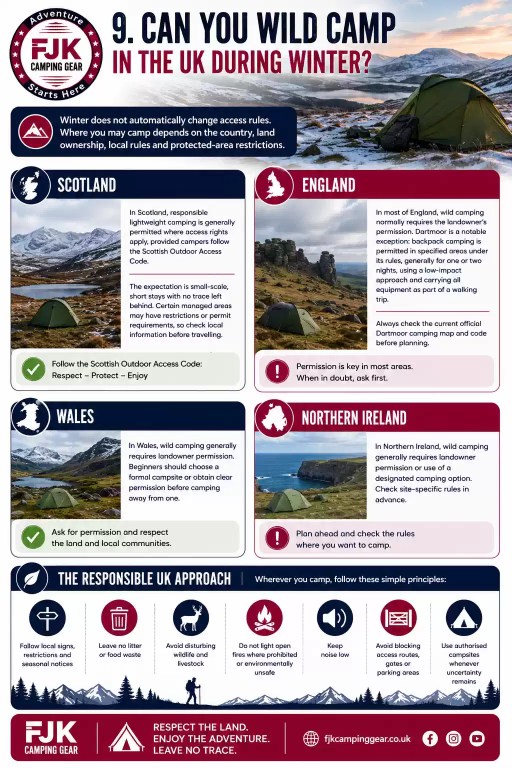
Winter does not automatically change access rules. Where you may camp depends on the country, land ownership, local rules and protected-area restrictions.
Scotland
In Scotland, responsible lightweight camping is generally permitted where access rights apply, provided campers follow the Scottish Outdoor Access Code. The expectation is small-scale, short stays with no trace left behind. Certain managed areas may have restrictions or permit requirements, so check local information before travelling.
England
In most of England, wild camping normally requires the landowner’s permission. Dartmoor is a notable exception: backpack camping is permitted in specified areas under its rules, generally for one or two nights, using a low-impact approach and carrying all equipment as part of a walking trip. Always check the current official Dartmoor camping map and code before planning.
Wales
In Wales, wild camping generally requires landowner permission. Beginners should choose a formal campsite or obtain clear permission before camping away from one.
Northern Ireland
In Northern Ireland, wild camping generally requires landowner permission or use of a designated camping option. Check site-specific rules in advance.
The responsible UK approach
Wherever you camp:
- Follow local signs, restrictions and seasonal notices
- Leave no litter or food waste
- Avoid disturbing wildlife and livestock
- Do not light open fires where prohibited or environmentally unsafe
- Keep noise low
- Avoid blocking access routes, gates or parking areas
- Use authorised campsites whenever uncertainty remains
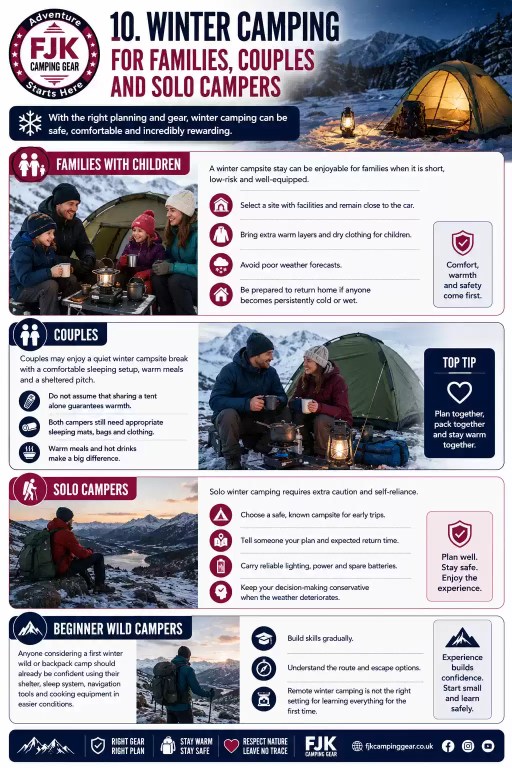
Families with children
A winter campsite stay can be enjoyable for families when it is short, low-risk and well-equipped. Select a site with facilities, remain close to the car and bring extra warm layers and dry clothing for children. Avoid poor weather forecasts and be prepared to return home if anyone becomes persistently cold or wet.
Couples
Couples may enjoy a quiet winter campsite break with a comfortable sleeping setup, warm meals and a sheltered pitch. Do not assume that sharing a tent alone guarantees warmth; both campers still need appropriate sleeping mats, bags and clothing.
Solo campers
Solo winter camping requires extra caution. Choose a safe, known campsite for early trips, tell someone your plan and expected return time, carry reliable lighting and power, and keep your decision-making conservative when the weather deteriorates.
Beginner wild campers
Anyone considering a first winter wild or backpack camp should already be confident using their shelter, sleep system, navigation tools and cooking equipment in easier conditions. Remote winter camping is not the right setting for learning everything for the first time.
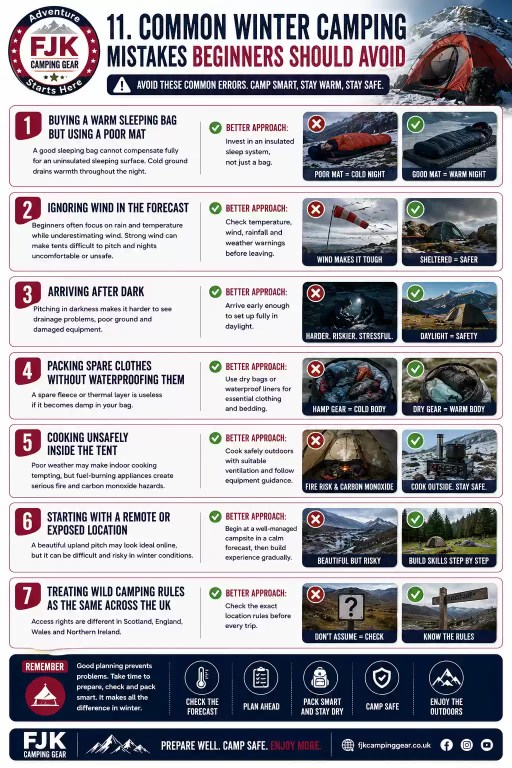
Mistake 1: Buying a warm sleeping bag but using a poor mat
A good sleeping bag cannot compensate fully for an uninsulated sleeping surface. Cold ground drains warmth throughout the night.
Better approach: Invest in an insulated sleep system, not just a bag.
Mistake 2: Ignoring wind in the forecast
Beginners often focus on rain and temperature while underestimating wind. Strong wind can make tents difficult to pitch and nights uncomfortable or unsafe.
Better approach: Check temperature, wind, rainfall and weather warnings before leaving.
Mistake 3: Arriving after dark
Pitching in darkness makes it harder to see drainage problems, poor ground and damaged equipment.
Better approach: Arrive early enough to set up fully in daylight.
Mistake 4: Packing spare clothes without waterproofing them
A spare fleece or thermal layer is useless if it becomes damp in your bag.
Better approach: Use dry bags or waterproof liners for essential clothing and bedding.
Mistake 5: Cooking unsafely inside the tent
Poor weather may make indoor cooking tempting, but fuel-burning appliances create serious fire and carbon monoxide hazards.
Better approach: Cook safely outdoors with suitable ventilation and follow equipment guidance.
Mistake 6: Starting with a remote or exposed location
A beautiful upland pitch may look ideal online, but it can be difficult and risky in winter conditions.
Better approach: Begin at a well-managed campsite in a calm forecast, then build experience gradually.
Mistake 7: Treating wild camping rules as the same across the UK
Access rights are different in Scotland, England, Wales and Northern Ireland.
Better approach: Check the exact location rules before every trip.
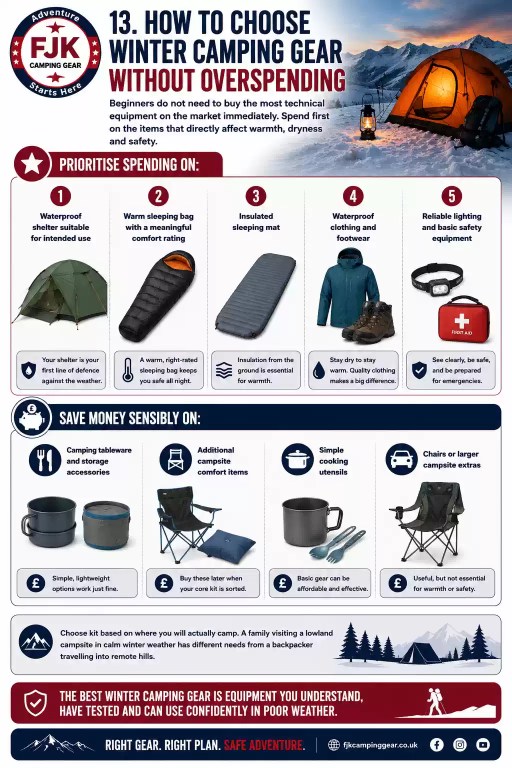
Beginners do not need to buy the most technical equipment on the market immediately. Spend first on the items that directly affect warmth, dryness and safety.
Prioritise spending on:
- Waterproof shelter suitable for intended use
- Warm sleeping bag with a meaningful comfort rating
- Insulated sleeping mat
- Waterproof clothing and footwear
- Reliable lighting and basic safety equipment
Save money sensibly on:
- Camping tableware and storage accessories
- Additional campsite comfort items
- Simple cooking utensils
- Chairs or larger campsite extras, unless car camping comfort is a priority
Choose kit based on where you will actually camp. A family visiting a lowland campsite in calm winter weather has different needs from a backpacker travelling into remote hills.
The best winter camping gear is equipment you understand, have tested and can use confidently in poor weather.
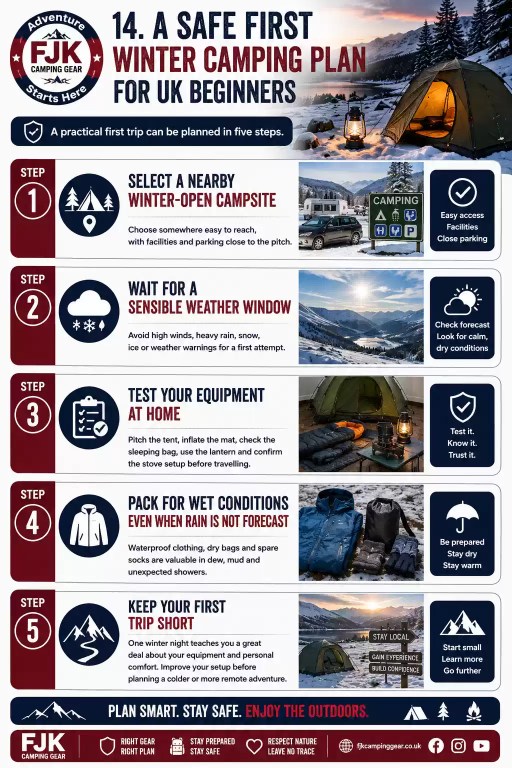
Step 1: Select a nearby winter-open campsite
Choose somewhere easy to reach, with facilities and parking close to the pitch.
Step 2: Wait for a sensible weather window
Avoid high winds, heavy rain, snow, ice or weather warnings for a first attempt.
Step 3: Test your equipment at home
Pitch the tent, inflate the mat, check the sleeping bag, use the lantern and confirm the stove setup before travelling.
Step 4: Pack for wet conditions even when rain is not forecast
Waterproof clothing, dry bags and spare socks are valuable in dew, mud and unexpected showers.
Step 5: Keep your first trip short
One winter night teaches you a great deal about your equipment and personal comfort. Improve your setup before planning a colder or more remote adventure.




Best Dog-Friendly Camping Gear for UK Campsites and Outdoor Holidays

Family Camping Essentials UK: What Parents Should Pack for a Stress-Free Trip

Warcombe Farm Camping Park: Complete Guide to Camping Near Woolacombe, North Devon

Land’s End Camping and Glamping Guide: Best Places to Stay and What to Pack
Camping Checklist Printable – Free UK Download
Looking for a reliable camping checklist printable for your next UK adventure? Our free, easy-to-use PDF helps you pack smart and avoid last-minute stress. Designed specifically for UK weather and campsite conditions, it covers essentials like tents, sleeping gear, cooking equipment, clothing layers, and safety items.
Whether you’re planning a summer weekend in the Lake District or a family camping trip in Scotland, this camping checklist printable keeps everything organised in one place.
Download your free UK camping checklist printable today and camp with confidence.
Best Dog-Friendly Camping Gear for UK Campsites and Outdoor Holidays
Camping holidays have become one of the fastest-growing outdoor activities across the United Kingdom, and for many people, a camping adventure would not feel complete without bringing their dog along.
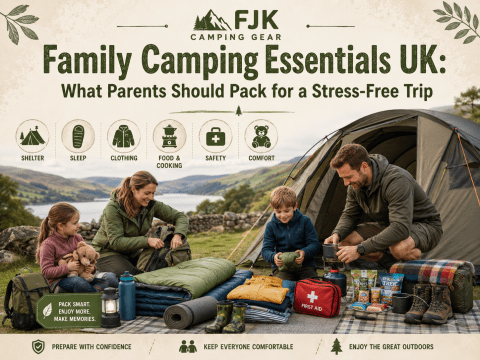
Family Camping Essentials UK: What Parents Should Pack for a Stress-Free Trip
Family camping in the UK can be one of the most rewarding ways to spend time outdoors, but it can also become stressful very quickly if parents arrive underprepared.
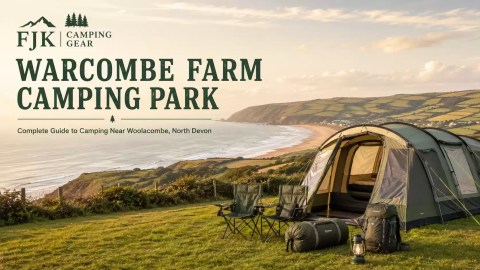
Warcombe Farm Camping Park: Complete Guide to Camping Near Woolacombe, North Devon
Warcombe Farm Camping Park is a family-focused and dog-friendly camping and touring park at Mortehoe, near Woolacombe on the North Devon coast. With pitch options for tents and touring units, a private coarse fishing lake, woodland dog exercise area and access to coastal walking, it may suit visitors planning beach days, walking breaks and relaxed campsite holidays.

Land’s End Camping and Glamping Guide: Best Places to Stay and What to Pack
Land’s End Camping and Glamping Guide: Best Places to Stay and What to Pack Land’s End is one of the most dramatic places in Britain to plan a camping or
Best Places to Visit in Lake District and Cumbria in 2026
Lake District and Cumbria in 2026 offers unforgettable lakes, fells, market towns, coastal routes, and quieter valleys—discover the best places to visit and plan your perfect UK escape.

Air Bed vs Sleeping Mat for Camping UK: Which Is Better?
For most UK campers, a sleeping mat is the more practical and reliable choice, especially for cooler nights, walking trips, smaller tents and beginner wild camping.
